
Jonathan Franzen Books in Order
See Jonathan Franzen's books in order, with short summaries, series background, a friendly author bio, and clear suggestions on the best place to start reading.
Last updated:
As an Amazon Associate, we earn from qualifying purchases (at no extra cost to you).
Jonathan Franzen books in publication order
11 books
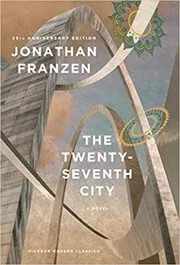
The Twenty-Seventh City
by Jonathan Franzen
1988
In 1980s St. Louis, a charismatic former Bombay police chief arrives to run the county, setting off a shadowy political scheme that entangles contractor Martin Probst and his family in conspiracies, cultural clashes, and a slow unravelling of their comfortable lives.
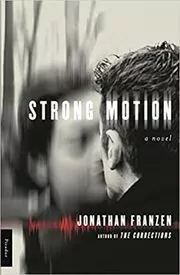
Strong Motion
by Jonathan Franzen
1992
After a freak New England earthquake kills his grandmother, restless Louis Holland is drawn into an uneasy alliance with seismologist Reneé Seitchek, uncovering links between a powerful petrochemical company, increasing tremors, and the fault lines running through his own family.
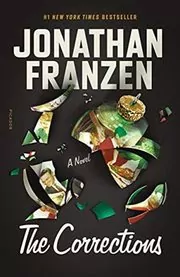
The Corrections
by Jonathan Franzen
2001
An ailing Midwestern patriarch and his determined wife try to gather their three adult children for one last Christmas, exposing decades of ambition, resentment, and secrecy in a darkly funny, emotionally precise portrait of late twentieth century family life.
Recommended by
2 people Ev Williams recommended this book
Ev Williams
On the "books read" section of Ev Williams' GoodReads profile.
Ev Williams's recommendation of this book  Oprah Winfrey recommended this book
Oprah Winfrey
"A grandly entertaining novel for the new century." - Oprah Winfrey
Oprah Winfrey's recommendation of this book
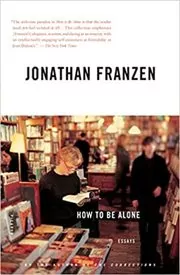
How to Be Alone
by Jonathan Franzen
2002
This essay collection ranges from prison visits to postal politics and the fate of the novel, but keeps circling one question, how to protect attention, intimacy, and individuality in a noisy culture that seems determined to crowd people out of their own lives.
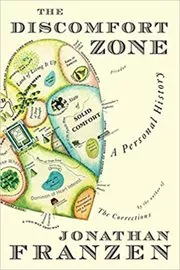
The Discomfort Zone
by Jonathan Franzen
2006
Part memoir and part cultural history, this book follows Franzen from suburban Missouri childhood through church youth groups, failed teenage bravado, German studies, and obsessive birdwatching, sketching how an anxious, bookish kid slowly grows into an adult with stubborn passions.
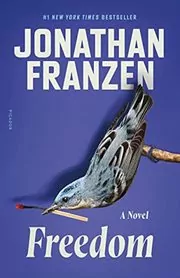
Freedom
by Jonathan Franzen
2010
Following Patty and Walter Berglund and their children from idealistic young parents to a fractured middle age, this novel traces marriage, friendship, politics, and environmental compromise across decades, asking what personal freedom really costs the people we love.
Recommended by
1 person- Oprah Winfrey recommended this book
Oprah Winfrey
"It’s got everything—sex and love, even rock n’ roll, and everything you want in a book." - Oprah Winfrey
Oprah Winfrey's recommendation of this book
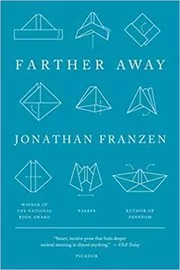
Farther Away
by Jonathan Franzen
2012
Gathering speeches and essays, Farther Away moves from a remote Pacific island to city streets and birding trips, reflecting on friendship, grief after David Foster Wallace's death, technology, and the ways literature can still connect people who feel very much alone.
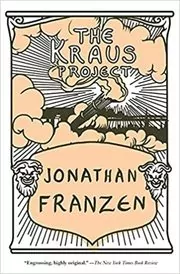
The Kraus Project
by Jonathan Franzen
2013
Combining new translations of satirist Karl Kraus with dense, funny footnotes, this book lets Franzen argue with a cranky genius across time while examining modern media, language, and his own uneasy place inside the culture he is busy criticizing.
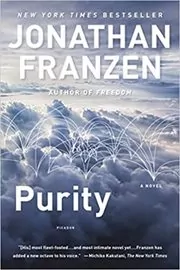
Purity
by Jonathan Franzen
2015
Twenty-something Purity Pip Tyler is drowning in student debt and unanswered questions about her father when she joins a radical leak organization in Bolivia, pulling her into a decades long web of secrecy, online exposure, and tangled loyalties between parents and children.
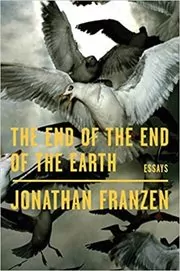
The End of the End of the Earth
by Jonathan Franzen
2018
In these late career essays, Franzen weaves travel, birdwatching, climate anxiety, and literary reflection, from Antarctic cruises to city streets, arguing for paying close attention to what we love even when the planet's future feels frighteningly uncertain.
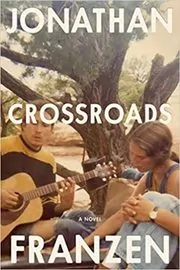
Crossroads
by Jonathan Franzen
2021
Set in a Chicago area suburb in the early 1970s, Crossroads follows pastor Russ Hildebrandt, his wife Marion, and their four children as faith, drugs, desire, and a restless church youth group push each of them toward risky, life changing choices.
Where to start with Jonathan Franzen
If you want the classic starting point: The Corrections → Freedom
If you prefer his most recent fiction: Purity → Crossroads
If you like essays and memoir: How to Be Alone → The Discomfort Zone → Farther Away → The End of the End of the Earth
If you're curious about his early novels: The Twenty-Seventh City → Strong Motion
Jonathan Franzen sub-series and character series
A Key to All Mythologies books in order
Explore this seriesA Key to All Mythologies books in chronological order
Jonathan Franzen collections, short stories, and related book types
Non-Fiction
Standalone Jonathan Franzen books
Author bio
Jonathan Franzen is an American novelist and essayist whose books often turn the ordinary mess of family life into something big enough to hold politics, faith, and the environment. Born on August 17, 1959, he has spent much of his career asking how people try to stay honest and connected in a culture that seems built to distract them. His fiction is rooted in recognisable Midwestern places and middle class households, even when it ranges across continents. Readers often come to him for the mix of humor, unease, and moral seriousness in that world.
He was born in Western Springs, Illinois, and grew up in the St. Louis suburb of Webster Groves, the youngest of three sons in a household shaped by an engineer father and a practical, often skeptical mother.
At Swarthmore College he studied German, graduating with high honors in 1981 after a year abroad in Munich. Grants then took him back to Berlin, where he studied at a university and soaked up German literature and satire. Those years abroad sharpened the sense of distance that later runs through his work, especially his essays about language, technology, and mass culture. His German training later fed into his work translating and annotating the satirist Karl Kraus.
In 1982 he married writer Valerie Cornell, and the couple moved to Somerville, Massachusetts, so he could try to become a novelist. To pay the bills he worked weekends at a university seismology lab, which fed directly into the earthquake research that underpins his second novel, Strong Motion. During these years he drafted two long, ambitious books that found critical attention faster than they found readers. Those years were marked by doubt and stubbornness, and he has written about how long it took him to feel he had earned the title of novelist.
His debut, The Twenty-Seventh City (1988), is a politically charged portrait of St. Louis in the mid 1980s, where an outsider police chief and a quiet Midwestern family get caught in the same web of power. Strong Motion (1992) moves to Boston, following earthquakes, corporate pollution, and a group of young people trying to decide what kind of moral responsibility they owe the world around them. Both novels showed his early interest in big systems and satire alongside close attention to private lives.
Everything changed with The Corrections in 2001. The novel follows the Lambert family through illness, ambition, and one last Christmas together, and it won the National Book Award for fiction along with other major honors. Its selection for a very famous television book club briefly turned into a public feud, then later into a reconciliation on air, and made Franzen unexpectedly central to arguments about how serious fiction fits into popular culture.
Since then he has kept returning to big, knotty family stories. Freedom (2010) tracks the Berglund family through marriage, rock music, environmental politics, and the war on terror. Purity (2015) jumps between East Germany, Bolivia, and the American West, tying a young woman’s search for her father to questions about digital transparency and secrecy. With Crossroads (2021), the first volume of a planned trilogy called A Key to All Mythologies, he turns to a Midwestern pastor, his wife, and their four children in the early 1970s, focusing on religion, moral choice, and the small decisions that echo across generations.
Alongside the novels, his essay collections How to Be Alone, The Discomfort Zone, Farther Away, The Kraus Project, and The End of the End of the Earth follow his preoccupations with solitude, reading, climate change, and the pull of new technologies. They also contain self portraits of him as an awkward son, a struggling writer, a grieving friend, and a traveler trying to see both birds and people clearly.
He is also an obsessive birdwatcher. For years he has written about migratory birds, conservation, and climate policy, and he has served on the board of a national bird protection group. Those interests eventually helped draw him west, and he now lives in Santa Cruz, California, where the ocean, ravines, and local bird life are never far from his desk.
Franzen has spent decades in conversation with both the 19th century novels he loves and the distracted, wired world he writes about. The through line is simple: he keeps trying to see people clearly, on the page and in life, in all their stubbornness and vulnerability.





Edited by
Software engineer whose passion for tracking book recommendations from podcasts inspired the creation of MRB.
Lead investor at 3one4 Capital whose startup expertise and love for books helped shape MRB and its growth.
Comments
Did we miss something? Have feedback?
Help us improve this page by sharing your thoughts