
Jonathan Coe Books in Order
Explore Jonathan Coe’s books in order, with summaries, reading-order tips and series guides across his political satires, family sagas and children’s stories.
Last updated:
As an Amazon Associate, we earn from qualifying purchases (at no extra cost to you).
Jonathan Coe books in publication order
22 books
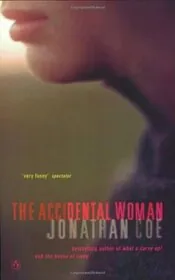
The Accidental Woman
by Jonathan Coe
1987
Maria drifts through university, work, marriage and motherhood as if everything happens by chance, watched by an intrusive narrator who keeps questioning her choices. The novel quietly asks how much of a life is shaped by accident and how much by decisions we barely notice making.
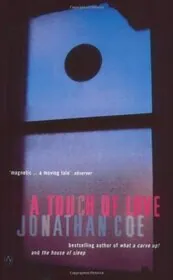
A Touch of Love
by Jonathan Coe
1989
Robin, a postgraduate student in Coventry, has spent years not writing his thesis and hiding from adult life. After a humiliating incident in a public park, his carefully limited existence unravels into a darkly funny story of embarrassment, blocked ambition and late‑blooming responsibility.
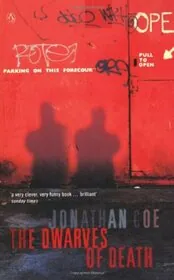
The Dwarves of Death
by Jonathan Coe
1990
William dreams of musical greatness but is stuck in a hopeless London band and a going‑nowhere relationship. When he witnesses a bizarre murder linked to another group, he’s pulled into a comic noir mystery that tangles music‑scene ambitions with genuine danger.
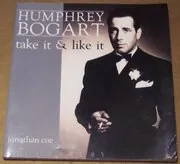
Humphrey Bogart
by Jonathan Coe
1992
In this compact life of Humphrey Bogart, Coe follows the actor from early struggles on stage and in gangster roles to classics such as The Maltese Falcon, Casablanca and The African Queen, exploring how he crafted his tough yet oddly vulnerable screen persona.
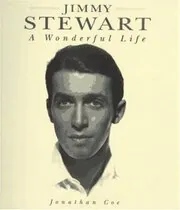
Jimmy Stewart
by Jonathan Coe
1994
This illustrated biography traces James Stewart’s journey from small‑town Pennsylvania to Hollywood legend and decorated wartime pilot. Coe follows his key films and off‑screen life to show how Stewart’s hesitant drawl and decency came to embody a particular idea of American heroism.
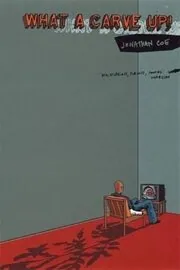
What a Carve Up!
by Jonathan Coe
1994
Struggling novelist Michael Owen is commissioned to write the history of the fabulously wealthy Winshaw clan, whose members dominate banking, media, farming, politics and arms dealing. As he digs into their lives, this darkly comic mystery becomes a savage portrait of 1980s Britain.
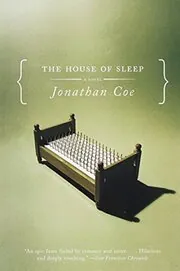
The House of Sleep
by Jonathan Coe
1997
A group of students share a cliff‑top house in the 1980s, then meet again years later when it has become a clinic for sleep disorders. Narcolepsy, insomnia and an obsessive doctor draw their lives back together in a twisting story about love, identity and control.
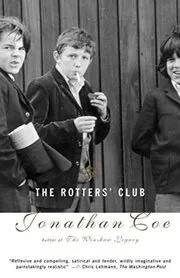
The Rotters' Club
by Jonathan Coe
2001
Four school friends and the Trotter family come of age in 1970s Birmingham amid strikes, factory politics, IRA bombings and the rise of punk. The novel blends awkward first love and teenage dreams with a sharp portrait of a city and country in upheaval.
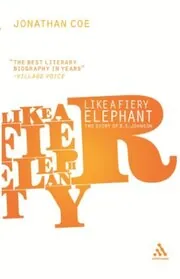
Like A Fiery Elephant
by Jonathan Coe
2004
In this unconventional biography, Coe pieces together the life of experimental novelist B.S. Johnson from letters, interviews and his own reflections. The book traces Johnson’s fierce commitment to literary innovation alongside the personal struggles that led to his early death.
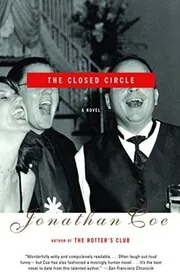
The Closed Circle
by Jonathan Coe
2004
Set in the early 2000s, The Closed Circle picks up the Rotters’ Club characters as adults juggling careers, marriages and political compromise. From New Labour spin to the looming Iraq War, their tangled relationships show how idealism hardens—or survives—over time.

9th and 13th
by Jonathan Coe
2005
This brief collection gathers several of Coe’s shorter pieces, including the title story set around two New York avenues. Snapshots of travel, friendship and obsession offer a compact, often playful glimpse of the concerns that run through his larger novels.
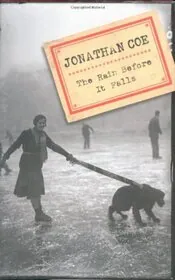
The Rain Before it Falls
by Jonathan Coe
2007
After elderly Rosamond dies, she leaves cassette tapes describing twenty old photographs for a blind young relative she has lost touch with. As the recordings are played, a quiet, haunting family history of love, neglect and inherited damage emerges across three generations of women.
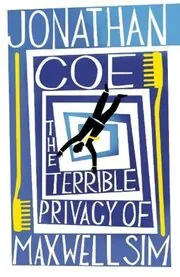
The Terrible Privacy of Maxwell Sim
by Jonathan Coe
2010
Recently divorced and painfully lonely, Maxwell Sim accepts a strange marketing job that sends him driving a car full of eco‑toothbrushes from London to the Shetland Islands. The trip, punctuated by emails, old stories and a talking satnav, forces him to face how disconnected he’s become.
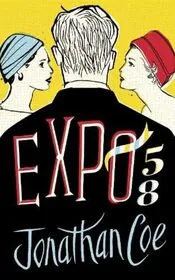
Expo 58
by Jonathan Coe
2011
Shy civil servant Thomas Foley is sent to oversee a mock English pub at the 1958 Brussels World’s Fair. Between flirtations, diplomatic mishaps and Cold War spying, he has to decide what kind of life he wants beyond the safe routines of his suburban home.

The Story of Gulliver
by Jonathan Coe
2011
In this retelling of Gulliver’s Travels for younger readers, Coe follows Lemuel Gulliver from tiny Lilliput to the giant land of Brobdingnag and beyond. The lively adventures highlight questions about power, perspective and what makes a society humane.

Pentatonic
by Jonathan Coe
2012
During their daughter’s school prize‑giving, a couple are nudged into painful memories—a childhood piano recording for him, a wartime family loss for her. This short story, structured like a five‑note scale, links music, memory and the quiet cracks in a long marriage.

The Broken Mirror
by Jonathan Coe
2012
Claire finds a fragment of mirror that shows better versions of her town and her own future, from unspoiled streets to smoother teenage years. As she and fellow owner Peter grow up, they must choose between the mirror’s comforting illusions and the demands of real life.
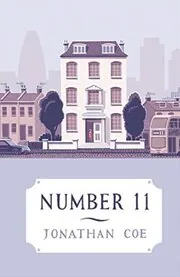
Number 11
by Jonathan Coe
2015
Structured as five linked stories, Number 11 follows characters connected to an old childhood friendship as they collide with reality TV, political scandal and a billionaire’s eleven‑storey basement. The novel echoes What a Carve Up! while skewering inequality and modern media culture.
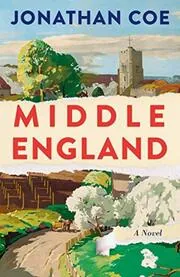
Middle England
by Jonathan Coe
2018
Middle England returns to Benjamin Trotter and his circle between 2010 and the aftermath of the Brexit referendum, as family ties and friendships strain under political change. Weddings, protests, riots and work dramas mirror a country arguing about what it wants to be.
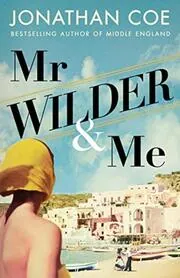
Mr Wilder & Me
by Jonathan Coe
2020
Calista, a middle‑aged film composer, looks back to the late 1970s when a chance meeting led her to work with director Billy Wilder on his film Fedora. The job becomes a formative adventure about cinema, exile and the costs of trying to stay in step with changing times.
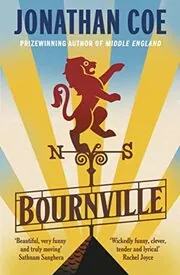
Bournville
by Jonathan Coe
2022
Set around a famous chocolate factory in a Birmingham suburb, Bournville follows Mary and her family from 1945 to the Covid era. Seven landmark national occasions frame a warm, questioning portrait of how one family, and Britain itself, change over seventy‑five years.

The Proof of My Innocence
by Jonathan Coe
2024
Phyl, a bored English graduate serving food at Heathrow, is drawn into a real‑life mystery when a journalist dies at a country‑house conference run by a shadowy think tank. What begins as cosy crime twists into a playful, politically charged puzzle about truth and storytelling.
Where to start with Jonathan Coe
If you want his sharpest political satire: What a Carve Up! → Number 11 → The Proof of My Innocence
If you like long-running character arcs: The Rotters’ Club → The Closed Circle → Middle England
If you’re drawn to intimate, character‑driven stories: The House of Sleep → The Rain Before it Falls → The Terrible Privacy of Maxwell Sim
If you enjoy fiction about film and Hollywood history: Mr Wilder & Me → Jimmy Stewart → Humphrey Bogart
If you prefer standalone snapshots of Britain: Expo 58 → Bournville → Pentatonic
Jonathan Coe sub-series and character series
Jonathan Coe collections, short stories, and related book types
Short Stories/Novellas
Collections
Non-Fiction
Standalone Jonathan Coe books
Author bio
Jonathan Coe was born in 1961 in Bromsgrove, on the south‑west edge of Birmingham, to a research physicist father and a mother who taught music and physical education. He grew up in a house where records and books were always close at hand, and he started writing early: by eight he had produced a detective story, and as a teenager he was already mailing comic novels to publishers.
At King Edward’s School in Birmingham he was, by his own account, shy and bookish, more comfortable observing than competing. Those schooldays, with their mix of privilege and industrial Midlands reality, would later feed directly into The Rotters’ Club. After school he went to Trinity College, Cambridge, then to the University of Warwick, where he completed an MA and PhD in English literature and taught poetry.
Music runs through almost everything he does.
Alongside academia he played keyboards in bands, wrote jazz and cabaret tunes and scraped a living as a legal proofreader. Fiction was always running in parallel. He wrote several unpublished novels before his debut, The Accidental Woman, appeared in 1987, followed by A Touch of Love and The Dwarves of Death, tart comedies about awkward young men adrift in late‑twentieth‑century Britain.
The book that changed his career was What a Carve Up!, a ferocious yet funny portrait of the fictional Winshaw family, whose fingers are in every pie of 1980s Britain: tabloid newspapers, agribusiness, banking, politics and arms deals. It established him as a novelist who could take on big political subjects without losing sight of human folly, slapstick and despair.
Through the late 1990s and 2000s Coe kept widening his canvas. The House of Sleep spins a love story out of narcolepsy, insomnia and a sinister sleep clinic. The Rotters’ Club, The Closed Circle and Middle England follow Benjamin Trotter, his friends and relatives from 1970s Birmingham through New Labour and into the Brexit years, using one family’s fortunes to think about how a country changes.
He has always seemed most at home when big public events brush up against small, private crises.
Later novels show how restless that curiosity is. The Rain Before it Falls is an intimate, almost plotless monologue about memory and three generations of women. The Terrible Privacy of Maxwell Sim sends a lonely salesman on a road trip to the Shetland Islands, worrying about social media and the story of doomed sailor Donald Crowhurst. Expo 58, Mr Wilder & Me and Bournville draw on his love of film and post‑war history, while The Proof of My Innocence plays with cosy crime conventions to talk about contemporary politics.
Non‑fiction and shorter work sit alongside the novels. In Like a Fiery Elephant he tried to honour the formally daring writer B.S. Johnson with a biography that borrows some of Johnson’s own tricks. His slimmer volume 9th and 13th collects shorter prose, and he has collaborated with musicians on spoken‑word and jazz projects that echo through his fiction.
Coe also writes for younger readers. For the Save the Story project he retold Gulliver’s Travels as The Story of Gulliver, and in The Broken Mirror he used a shard of magic glass and a changing English town to think about imagination, adolescence and the way the world hardens as you grow up.
Over the years he has received prizes in Britain and across Europe, including the John Llewellyn Rhys Prize, the Samuel Johnson Prize for non‑fiction, the Prix Médicis Étranger, the Costa Novel Award and the European Book Prize. His novels have been widely translated, yet they keep circling back to the Midlands, to class, work and the texture of everyday English life.
He lives in London with his wife, Janine McKeown, and their two daughters, and still divides his time between writing and music. Readers come to him for the politics, the jokes or the formal games, but they tend to stay for something quieter: an underlying belief that even in a messy, unfair country, ordinary lives are worth following closely.
Edited by
Software engineer whose passion for tracking book recommendations from podcasts inspired the creation of MRB.
Lead investor at 3one4 Capital whose startup expertise and love for books helped shape MRB and its growth.
Comments
Did we miss something? Have feedback?
Help us improve this page by sharing your thoughts