
John W Campbell Books in Order
Browse John W Campbell books in order, with short summaries, series guides, and tips on where to start with his classic science fiction and Don A. Stuart stories.
Last updated:
As an Amazon Associate, we earn from qualifying purchases (at no extra cost to you).
John W Campbell books in publication order
14 books
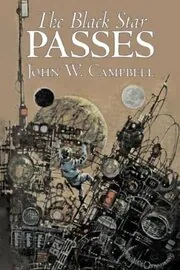
The Black Star Passes
by John W Campbell
1930
Arcot, Morey, and Wade tackle one crisis after another, from a deadly encounter with alien intelligence to a battle against an invisible pirate and a threat from a dark star. It is Campbell's early super-science mode at full speed.
The Mightiest Machine
by John W Campbell
1934
Aarn Munro, a Jupiter-born physicist with unusual strength, helps build the Sunbeam, a ship powered by the Sun itself. That invention launches a roaring adventure of alien contact, huge ideas, and danger on a solar-system scale.
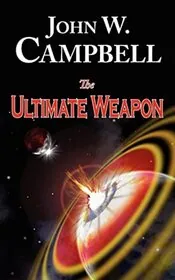
The Ultimate Weapon
by John W Campbell
1936
When invaders from the unstable star Mira set their sights on the Solar System, Earth looks helpless. Buck Kendall's discovery of a radical new weapon turns the story into a race between overwhelming force and one desperate scientific breakthrough.
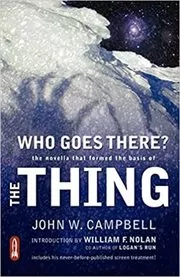
Who Goes There?
by John W Campbell
1938
At an isolated Antarctic station, a buried alien wakes and reveals a terrifying gift, it can imitate any living thing perfectly. Campbell turns that setup into a tight, paranoid survival story where nobody can be fully trusted.

The incredible planet
by John W Campbell
1949
In this linked sequel to The Mightiest Machine, Aarn Munro and his companions push the Sunbeam into even stranger reaches of space. The stories pile on alien worlds, superscience speculation, and the thrill of going farther than anyone should.
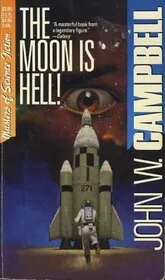
The Moon is Hell!
by John W Campbell
1950
A lunar expedition goes badly wrong, leaving a handful of men stranded with shrinking supplies and no easy rescue. What follows is a tough, practical survival story driven by engineering, pressure, and hard choices.
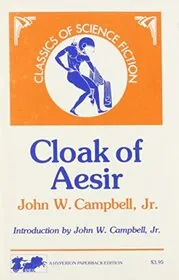
Cloak of Aesir
by John W Campbell
1952
This collection gathers Campbell's Don A. Stuart stories, where ideas matter as much as atmosphere. Expect clever scientific puzzles, eerie future settings, and a moodier side of the writer than his straight-ahead adventure novels.
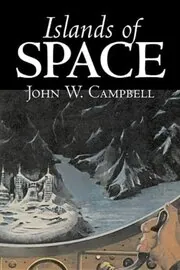
Islands of Space
by John W Campbell
1956
After pushing faster-than-light travel further than ever, Arcot, Morey, Wade, and Fuller plunge beyond their own galaxy. Strange civilizations, stranger physics, and an escalating space war make this one of Campbell's purest early space operas.
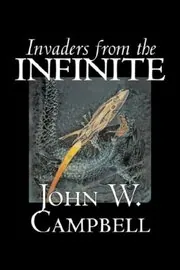
Invaders from the Infinite
by John W Campbell
1961
Arcot, Morey, and Wade answer a plea from a colossal alien ship and find themselves drawn into a war far beyond Earth. The novel mixes first contact, superscience problem-solving, and battles fought on a truly cosmic scale.

The Best of John W. Campbell
by John W Campbell
1973
This retrospective collection samples both sides of Campbell's fiction, the big, gadget-rich adventures and the darker Don A. Stuart stories. It is a smart way to see how wide his range could be before editing took over his career.

The Space Beyond
by John W Campbell
1976
Published after Campbell's death, this book gathers three previously unpublished novellas from the 1930s. The stories are rough, ambitious, and packed with the huge speculative leaps that defined his earliest science fiction.
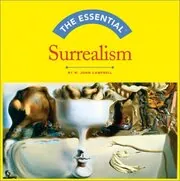
The Essential Surrealism
by John W Campbell
2002
A compact guide to the surrealist movement, this book introduces the artists, ideas, and dream logic that shaped it. Expect a quick survey of key figures, startling imagery, and the movement's playful break with realism.

A New Dawn
by John W Campbell
2003
This volume brings together Campbell's complete Don A. Stuart stories, including some of his strangest and best-known work. It shows the quieter, eerier side of a writer often remembered mainly for hard-charging space opera.

Cosmic Kill & Beyond the End of Space
by John W Campbell
2014
This paired volume combines Robert Silverberg's Cosmic Kill with Campbell's Beyond the End of Space. On Campbell's side, expect early superscience, giant scale, and the headlong energy of pulp-era interstellar adventure.
Where to start with John W Campbell
For classic alien horror: Who Goes There?
For escalating super-science adventure: The Black Star Passes → Islands of Space → Invaders from the Infinite
For Jupiter-born pulp space opera: The Mightiest Machine → The Incredible Planet
For Campbell's darker Don A. Stuart side: A New Dawn → Cloak of Aesir
John W Campbell sub-series and character series
Arcot, Wade and Morey books in order
Explore this seriesArcot, Wade and Morey books in chronological order
John W Campbell collections, short stories, and related book types
Short Story Collections
Non-Fiction
Standalone John W Campbell books
Author bio
John W Campbell was born in Newark, New Jersey, on June 8, 1910, and he spent most of his life in New Jersey. He grew up around practical, mechanical thinking, and that habit stayed with him. Even when his stories got strange, they usually began with somebody trying to reason a problem through.
He started selling science fiction while he was still a student at MIT, and he was only eighteen when the first stories began finding a market. College did not go in a straight line, though. After leaving MIT, Campbell transferred to Duke University, where he earned a physics degree in 1934. That training mattered, because his fiction was never just about rockets and ray guns. It was about the fun of taking an idea seriously and pushing it as far as it would go.
His first big run as a writer was pure superscience.
Books like The Black Star Passes, Islands of Space, Invaders from the Infinite, and The Mightiest Machine made his name with readers who wanted scale, speed, and technical bravado. The characters in these stories are often scientists first and people second, but that is part of the appeal. Campbell loved laboratories, engines, and the moment when one new invention suddenly makes the whole map of space look smaller.
Then he took a sharp turn. In 1934 he began publishing under the name Don A. Stuart, a pseudonym drawn from his wife's maiden name, and the stories changed almost at once. Pieces like Twilight, Who Goes There?, and the work later gathered in Cloak of Aesir and A New Dawn are quieter, darker, and more interested in mood, fear, and the long shadow of the future. Readers who only know the noisy early adventures are often surprised by how uneasy and controlled these later stories feel.
That second career led to the third, and biggest, one.
In 1937 Campbell took over Astounding, later Analog Science Fiction and Fact, and for more than three decades he sat near the center of American science fiction. He helped shape the field not only by editing stories, but by pushing writers toward clearer thinking, bigger ideas, and tighter links between science and plot. He also launched Unknown, a fantasy magazine that brought some of the same editorial toughness to fantasy. Writers such as Isaac Asimov, Robert A. Heinlein, and A. E. van Vogt all felt his influence, whether they agreed with him or not.
That influence is a big part of why people still connect Campbell to the Golden Age of science fiction. His reputation, though, is not simple. Later in life he could be stubborn, narrow, and drawn to ideas that many readers now find troubling. Even so, his importance is hard to miss. If you want to understand how science fiction became more idea-driven, more technical, and more confident about treating science itself as drama, you keep running into him. Who Goes There?, his Antarctic novella about a shapeshifting alien hidden among men at a remote outpost, is still the clearest example of how well he could mix hard logic with dread.
Campbell lived for many years in Mountainside, New Jersey, and died there on July 11, 1971. Long after his death, readers still come to him from two directions. Some want the editor who helped define modern science fiction. Others want the stories, from the giant machinery of the early novels to the icy paranoia of Who Goes There?.





Edited by
Software engineer whose passion for tracking book recommendations from podcasts inspired the creation of MRB.
Lead investor at 3one4 Capital whose startup expertise and love for books helped shape MRB and its growth.
Comments
Did we miss something? Have feedback?
Help us improve this page by sharing your thoughts