
Arcot, Wade and Morey Books in Order
Part ofJohn W Campbell Books in OrderExplore the Arcot, Wade and Morey books by John W Campbell in order, with quick summaries, series background, and notes on where to start.
Last updated:
As an Amazon Associate, we earn from qualifying purchases (at no extra cost to you).
Arcot, Wade and Morey books in publication order
3 books
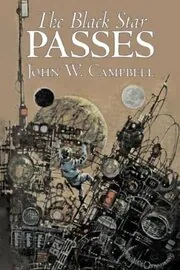
The Black Star Passes
by John W Campbell
1930
Arcot, Morey, and Wade tackle one crisis after another, from a deadly encounter with alien intelligence to a battle against an invisible pirate and a threat from a dark star. It is Campbell's early super-science mode at full speed.
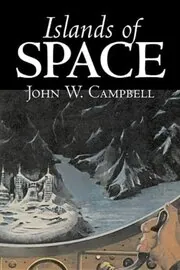
Islands of Space
by John W Campbell
1956
After pushing faster-than-light travel further than ever, Arcot, Morey, Wade, and Fuller plunge beyond their own galaxy. Strange civilizations, stranger physics, and an escalating space war make this one of Campbell's purest early space operas.

Invaders from the Infinite
by John W Campbell
1961
Arcot, Morey, and Wade answer a plea from a colossal alien ship and find themselves drawn into a war far beyond Earth. The novel mixes first contact, superscience problem-solving, and battles fought on a truly cosmic scale.
Arcot, Wade and Morey books in chronological order
Series background & context
The Arcot, Wade and Morey books are John W. Campbell in full early superscience mode. The series begins with The Black Star Passes, continues through Islands of Space, and ends with Invaders from the Infinite. At the center are three brilliant young scientists, Richard Arcot, Robert Morey, and William Wade, men who meet almost every problem by building something faster, stronger, or stranger than what came before. These are books of momentum, invention, and scale. Subtlety is not the main event.
Arcot is the lead physicist, Morey is the mathematical partner who can keep up with him, and Wade completes the core team as an inventor and practical problem-solver. In the first book they move through linked adventures that start close to home and quickly stop feeling local at all. There are invisible raiders, alien enemies, wild new materials, and entire civilizations pushed toward war. Campbell likes the feeling that one breakthrough in a workshop can suddenly change the fate of planets.
And the stakes only keep rising.
By Islands of Space, the series has pushed beyond the Solar System and into the kind of territory later space opera would treat as normal. Faster-than-light travel, strange star systems, and distant galactic realms become part of the working landscape. Fuller joins the expedition, and the quartet spends as much time testing ideas as they do firing weapons. One reason these books still matter historically is that Campbell helped set the template for the scientist-explorer team whose technical curiosity is as important as courage.
In Invaders from the Infinite, the pattern reaches its biggest scale. A call for help from an enormous alien craft turns into alliance, deep-space war, and another round of problem-solving on almost absurdly grand terms. The appeal is not psychological realism. It is the joy of watching Campbell keep asking what the next machine, the next equation, or the next tactical leap might do if nobody told it to stay small.
So what should you expect as a reader? Fast ideas. Lots of talk about engines, rays, drives, and forces. Heroes who are more like thinking machines with nerves than modern, vulnerable protagonists. If you enjoy classic pulp science fiction for its optimism, its giant leaps, and its belief that intelligence can improvise its way through almost anything, this series has that spirit in concentrated form.














Edited by
Software engineer whose passion for tracking book recommendations from podcasts inspired the creation of MRB.
Lead investor at 3one4 Capital whose startup expertise and love for books helped shape MRB and its growth.
Comments
Did we miss something? Have feedback?
Help us improve this page by sharing your thoughts