
John Varley Books in Order
Explore John Varley books in order, from Eight Worlds to Gaea and beyond, with short summaries, series guides, and clear tips on where to start.
Last updated:
As an Amazon Associate, we earn from qualifying purchases (at no extra cost to you).
John Varley books in publication order
32 books
In the Bowl
by John Varley
1975
Set on Venus, this early story uses an offworld trip to ask what people value, and what they are willing to pay for it. The result is intimate science fiction with a sharp moral edge.
The Black Hole Passes
by John Varley
1975
Far out in space, a small black hole threatens an outpost and everyone working there. Varley turns the cosmic danger into a tense, personal story about labor, loneliness, and survival at the edge of the system.
Air Raid
by John Varley
1977
Time travelers need healthy people to rebuild humanity, so they target passengers on planes doomed to crash. Varley packs that grim premise into a tight, fast story that later grew into Millennium.
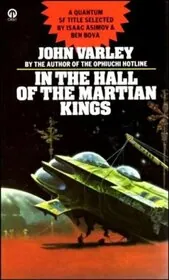
In The Hall of the Martian Kings
by John Varley
1977
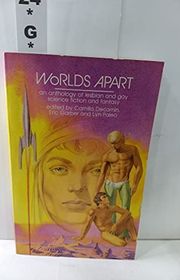
This UK edition of The Persistence of Vision collects Varley's early standout stories, from Mars and Mercury to deep space. It's a smart place to sample his short fiction and the big ideas that shaped his later books.
Lollipop and the Tar Baby
by John Varley
1977
A brush with a black hole bends more than physics in this eerie, idea-driven tale. Varley turns a deep-space setup into a story about warped reality, isolation, and the strange company you can find out there.
The Ophiuchi Hotline
by John Varley
1977
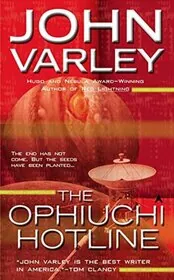
Centuries after aliens drove humanity from Earth, people survive across the solar system with help from mysterious transmissions called the Hotline. Then the messages stop being a gift and become a demand, and geneticist Lilo must face the bill.
The Persistence of Vision
by John Varley
1978
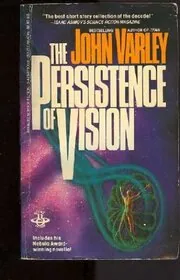
This award-winning collection gathers some of Varley's best early stories, including tales of Mars, time travel, black holes, and altered bodies. It's a strong entry point for readers who want the breadth of his short fiction.
Titan
by John Varley
1979
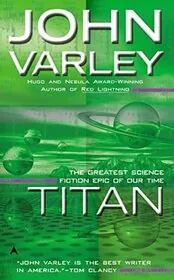
When the starship Ringmaster investigates a strange object near Saturn, Captain Cirocco Jones and her crew find a giant living world hidden inside it. What begins as exploration becomes a trek through a bizarre realm ruled by the unpredictable Gaea.
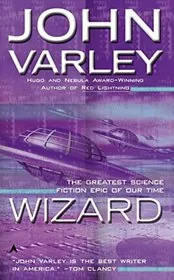
Wizard
by John Varley
1979
Cirocco Jones is now the Wizard of Gaea, with power, scars, and plenty to fear from the being she serves. As unrest grows across the living world, she has to decide whether survival means obedience or rebellion.
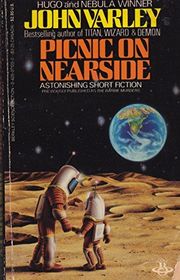
Picnic On Nearside
by John Varley
1980
Two young people on Luna step out into a wider world and discover that growing up may mean changing more than they expected. It's an early Varley story, compact, wistful, and full of lunar atmosphere.
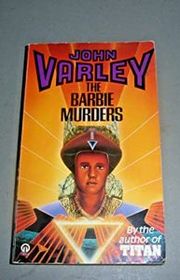
The Barbie Murders
by John Varley
1980
In a culture that makes radical body change almost casual, the pressure to fit in can turn deadly. Varley uses a murder mystery to explore identity, beauty, and how conformity mutates in the future.
The Pusher
by John Varley
1981
In a world where time doesn't pass evenly for everyone, love becomes a scheduling problem as much as an emotional one. Varley uses that science fiction twist to tell a sharp, bittersweet relationship story.
Millennium
by John Varley
1983
After a midair collision over California, an air-disaster investigator uncovers evidence that should be impossible. The answer reaches into the far future, where time travelers are stealing doomed passengers for a desperate reason of their own.
Demon
by John Varley
1984
Gaea has gone mad and kidnapped the son of Robin, the witch who once challenged her. Cirocco Jones and her allies head back into the living world for a final confrontation with a godlike enemy that never plays fair.
Press Enter
by John Varley
1984
Victor Apfel inherits more than he expected after a neighbor's apparent suicide. Teaming up with computer expert Lisa Foo, he follows a trail of hacking and hidden power into a chilling story about technology, surveillance, and who is really watching whom.
The Manhattan Phone Book (Abridged)
by John Varley
1984
A very short story with a long aftertaste, this one imagines how much history and danger can hide inside a city full of names. It lands as a quiet, cold shock.
Tango Charlie and Foxtrot Romeo
by John Varley
1986
Police chief Anna-Louise Bach is pulled into a rescue mission when signs of life appear aboard a quarantined, decaying space station. Saving the child inside means facing old plagues, failing systems, and impossible choices.
Just Another Perfect Day
by John Varley
1989
A man wakes to the same day again and again, trapped in a life that resets before memory can settle. The story starts playful, then turns sad and unsettling as the pattern's real purpose comes into view.
Steel Beach
by John Varley
1992
On Luna, reporter Hildy Johnson lives in a society where bodies can be remade and almost every need is met. But beneath the comfort lies mass depression, computer unease, and a mystery that turns Hildy's personal crisis into something much larger.
Truth, Justice and the Politically Correct Socialist Path
by John Varley
1995
Varley takes the Superman origin story, drops it into Stalinist Russia, and lets the political consequences run wild. The result is an alternate-history satire that's funny, bleak, and pointed.
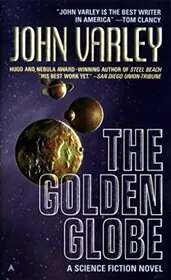
The Golden Globe
by John Varley
1998
Actor, con man, and shape-changing performer Sparky Valentine drifts through the outer solar system carrying Shakespeare and trouble in equal measure. A chance at a major production on Luna sends him racing home while enemies close in from every side.

In Fading Suns and Dying Moons
by John Varley
2003
Starting from the old question of where the aliens are, Varley answers with a bleak sense of scale. It's a later story about first contact, cosmic silence, and the possibility that absence is the warning.
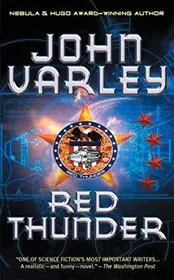
Red Thunder
by John Varley
2003
With China poised to reach Mars first, seven Florida misfits build a homemade spaceship from tanker cars and nerve. Their wild plan is not just to beat the competition, but to rescue a stranded crew and prove the old space dream still works.
The Bellman
by John Varley
2003
Set on Varley's lunar frontier, this later novelette begins like a police case and opens into something larger. Quiet dread and a widening sense of consequence give it a thoughtful, eerie pull.
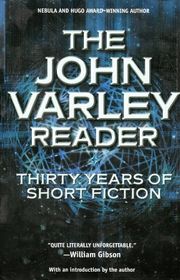
The John Varley Reader
by John Varley
2004
This career-spanning collection offers eighteen stories, including five new ones, each with a brief autobiographical introduction by Varley. It's one of the best single-volume ways to sample his range, from Eight Worlds tales to stand-alone experiments.
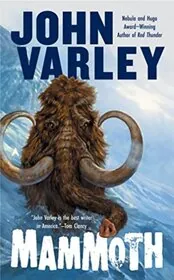
Mammoth
by John Varley
2005
Eccentric billionaire Howard Christian wants to clone a mammoth, and the project starts as bold science with impossible ambitions. Then a physicist and an elephant expert are thrown into a time-travel mess that turns the experiment into a survival story.
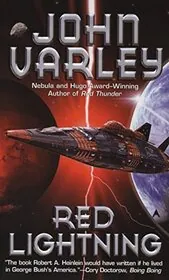
Red Lightning
by John Varley
2006
Ray Garcia-Strickland hates life on tourist-packed Mars until a mysterious impact devastates Earth. Forced back into the crisis, he and his family are drawn into another big scientific gamble and a puzzle with planetary consequences.
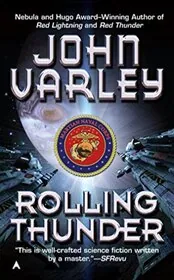
Rolling Thunder
by John Varley
2008
Third-generation Martian Podkayne joins the Martian Navy expecting music, travel, and a family legacy to live up to. Her posting to Europa brings danger, politics, and the kind of adventure that makes growing up happen fast.
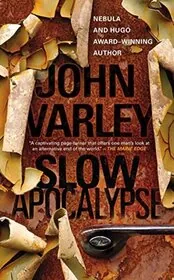
Slow Apocalypse
by John Varley
2012
A scientist's petroleum-eating virus slips loose and begins collapsing the oil economy, then the world around it. In Los Angeles, screenwriter Dave Marshall has just enough warning to try getting his family out before disaster turns personal.

Good-Bye, Robinson Crusoe and Other Stories
by John Varley
2013
This later collection brings together eleven previously uncollected or hard-to-find stories and novellas. It ranges across Varley's solar system settings, mixing dark jokes, big science fiction ideas, and some of his strangest side roads.
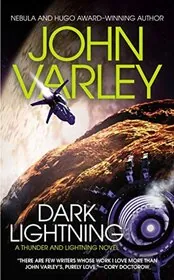
Dark Lightning
by John Varley
2014
Cassie and Polly, identical twin descendants of Mars pioneers, are halfway to another star aboard the starship Rolling Thunder when their father says the mission must stop. Suddenly the girls are at the center of a crisis that could decide the future of interstellar travel.
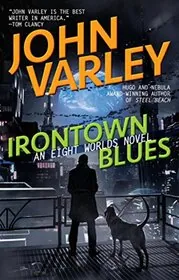
Irontown Blues
by John Varley
2018
On a future Luna, ex-cop Christopher Bach works as a private detective with his altered dog, Sherlock. When a client is infected with an engineered virus, the case pulls him into Irontown's biohacker underworld and a threat that could spread far beyond one city.
Where to start with John Varley
If you want the core future history: The Ophiuchi Hotline → Steel Beach → The Golden Globe → Irontown Blues
If you want a big, strange trilogy: Titan → Wizard → Demon
If you want lighter, family-driven Mars stories: Red Thunder → Red Lightning → Rolling Thunder → Dark Lightning
If you want to sample the short fiction first: The Persistence of Vision → The John Varley Reader
If you want stand-alone twists on time travel and disaster: Millennium → Mammoth → Slow Apocalypse
John Varley sub-series and character series
Gaea Trilogy books in order
Explore this seriesThunder and Lightning books in order
Explore this seriesThunder and Lightning books in chronological order
John Varley collections, short stories, and related book types
Short Stories/Novellas
Chapbooks
Short Story Collections
Standalone John Varley books
Author bio
John Varley was born in Austin, Texas, on August 9, 1947, and grew up on the Gulf Coast, mostly in Nederland. He liked to joke about running behind DDT trucks during mosquito season, which tells you a lot about both the place and his sense of humor. Small-town Texas, heat, bugs, and open skies stayed somewhere in the background even after his fiction headed for the Moon and beyond.
A National Merit Scholarship sent him to Michigan State University, where he started in physics, drifted into English, and then discovered that college itself was not the plan. He left school, spent time on the road, and landed in San Francisco during the Summer of Love. After years of wandering around the country, he decided in 1973 that being a science fiction writer was finally going to count as work.
The decision stuck. His first published story, Picnic on Nearside, appeared in 1974, and he quickly built a reputation through short fiction before publishing his first novel, The Ophiuchi Hotline, in 1977. That book opened one version of his Eight Worlds future, where humanity has been pushed off Earth and learns to survive across the solar system with biotech, cloning, and a lot of nerve.
He arrived fast.
Varley was especially good at the short form. The Persistence of Vision, Press Enter, and The Pusher all won major awards, and they still show why readers latched onto him so hard. He could take a big science fiction idea, body modification, time distortion, computer paranoia, exile from Earth, and make it feel immediate, odd, and very human.
His novels stretch that same mix across bigger canvases. In the Gaea books, Titan, Wizard, and Demon, he turns a giant alien habitat near Saturn into a wild, funny, dangerous adventure led by Cirocco Jones. In Steel Beach and The Golden Globe, he returns to a future Luna full of easy sex changes, recorded personalities, media chaos, and people who are still trying to figure out what makes a life matter. Readers often come to Varley for the ideas, but they stay for the characters who keep stumbling into them.
He was also a writer who could change tone without losing himself. Millennium, based on his story Air Raid, plays with time travel and disaster. The Thunder and Lightning books, starting with Red Thunder, have a younger, more playful energy, full of homemade spaceships, Martian families, and engineering daydreams. Later novels like Mammoth and Slow Apocalypse show that he never really lost his appetite for strange premises that sound a little nuts until he makes them work.
He liked big toys, big questions, and people messy enough to make both interesting.
There was a long Hollywood detour in the middle, roughly a decade, when he worked on screen projects and wrote scripts. It paid the bills better than fiction, by his own account, but only one movie really came out of it, Millennium. He eventually returned to books, essays, and his own website, where his voice remained dry, funny, and conversational.
In later years he lived in the Pacific Northwest, and health problems slowed his output after Irontown Blues in 2018. He died on December 10, 2025. What remains is a body of work that helped push science fiction toward more fluid ideas of identity, gender, technology, and everyday life in space, while still remembering that the future is full of stubborn, funny, vulnerable people.




Edited by
Software engineer whose passion for tracking book recommendations from podcasts inspired the creation of MRB.
Lead investor at 3one4 Capital whose startup expertise and love for books helped shape MRB and its growth.
Comments
Did we miss something? Have feedback?
Help us improve this page by sharing your thoughts