
John Sutcliffe Books in Order
Part ofRobert Barnard Books in OrderFind the John Sutcliffe books by Robert Barnard in order, with short summaries, series background, and where to start with these political mysteries.
Last updated:
As an Amazon Associate, we earn from qualifying purchases (at no extra cost to you).
John Sutcliffe books in publication order
2 books
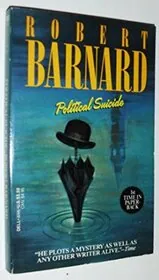
Political Suicide
by Robert Barnard
1986
A conscientious Tory MP is pulled from the Thames, and the easy verdict of accident or suicide will not satisfy Superintendent Sutcliffe. As a by-election begins, Barnard turns party politics into a steadily dirtier murder inquiry.

A Scandal in Belgravia
by Robert Barnard
1991
Retired MP Peter Proctor sets out to write dull memoirs and instead becomes obsessed with the unsolved 1950s murder of his friend Timothy Wycliffe. The deeper he digs into Belgravia's old secrets, the uglier the past looks.
John Sutcliffe books in chronological order
Series background & context
The John Sutcliffe books are a small but interesting corner of Robert Barnard's work. They are mysteries, certainly, but they are also studies of British public life: politics, class, reputation, and the awkward afterlife of old scandals. If some Barnard series lean toward village life or police procedure, these books spend more time around Westminster, party machines, and the people who know how to keep a straight face in public while panicking in private.
John Sutcliffe himself is a veteran London police superintendent, thoughtful rather than flashy.
In Political Suicide, the death of a Member of Parliament opens the way to a by-election, and Barnard uses that campaign season brilliantly. The official question is whether the MP died by accident, suicide, or murder. The deeper pleasure comes from watching candidates, party workers, fixers, spouses, and local worthies maneuver around one another. Everyone has a version of events. Almost no one is wholly clean.
A Scandal in Belgravia works a little differently, which is part of what makes this mini-series distinctive. The book looks back to an unsolved killing in the 1950s, and its emotional center is the retired politician Peter Proctor as he revisits the death of his friend Timothy Wycliffe. Sutcliffe is still part of the Barnard frame here, but the novel is just as interested in memory, social change, and the codes of a fading class. In other words, these are not only detective stories. They are novels about the worlds that make certain crimes possible and certain truths inconvenient.
That is really the unifying thread of the series. Barnard keeps asking how respectable systems absorb damage. Political parties do it. Old families do it. Public schools, clubs, newspapers, ministries, all of them have ways of smoothing over shame until someone digs in the wrong place. Sutcliffe, as Barnard uses him, is valuable because he is steady and skeptical. He is not easily impressed, and he has spent long enough in public life to know how much theater goes into official behavior.
The tone is measured, observant, and quietly satirical. There is wit here, but it is the kind that sharpens the social picture rather than turning everything into farce. The stakes are often reputational before they become physical. That gives these books a slightly different rhythm from some of Barnard's more straightforward murder mysteries.
With only two novels, this is less a full-scale long series than a pair of companion pieces linked by outlook and by Sutcliffe's presence. Still, if you enjoy crime fiction that pays close attention to politics, class language, and the slow uncoiling of old lies, the John Sutcliffe books are well worth your time.






Edited by
Software engineer whose passion for tracking book recommendations from podcasts inspired the creation of MRB.
Lead investor at 3one4 Capital whose startup expertise and love for books helped shape MRB and its growth.
Comments
Did we miss something? Have feedback?
Help us improve this page by sharing your thoughts