
John Pilger Books in Order
Browse John Pilger’s books in order, with short summaries, major themes, and clear suggestions on where to start with his journalism and politics.
Last updated:
As an Amazon Associate, we earn from qualifying purchases (at no extra cost to you).
John Pilger books in publication order
12 books
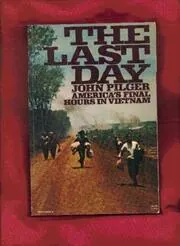
The Last Day
by John Pilger
1976
Pilger reconstructs the final hours of the American war in Vietnam as Saigon falls and panic closes in. Working almost hour by hour, he captures confusion, fear, and the human wreckage left behind.
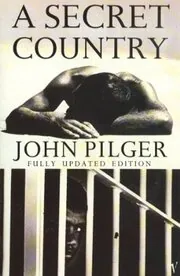
A Secret Country
by John Pilger
1980
Pilger turns to Australia and strips away its cheerful national story to examine colonial violence, silence, and the treatment of Indigenous people. It is both a personal reckoning and a fierce history from the underside.
Aftermath
by John Pilger
1982
Written with Anthony Barnett, this book follows Cambodia and Vietnam after the war, when devastation, hunger, and propaganda continued. It challenges Western myths and asks what survival looks like once the cameras move on.
The Outsiders
by John Pilger
1985
This book collects interviews from Pilger’s Channel 4 series with writers, reporters, and political nonconformists including Martha Gellhorn and Jessica Mitford. It is a lively set of conversations about truth-telling, dissent, and refusing the approved line.
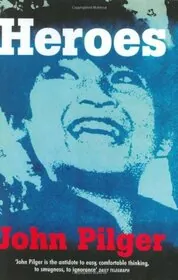
Heroes
by John Pilger
1986
In this wide-ranging collection, Pilger writes about Vietnam, Cambodia, Central America, the Middle East, and the lives caught inside those conflicts. The title points to ordinary people who endure, resist, and keep their dignity.
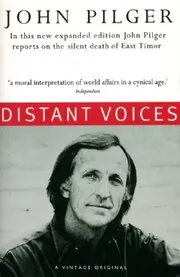
Distant Voices
by John Pilger
1992
Built around Pilger’s reporting on East Timor and expanded with essays from elsewhere, this collection listens for stories the news cycle leaves out. It is sharp on war, politics, and the cost of silence.
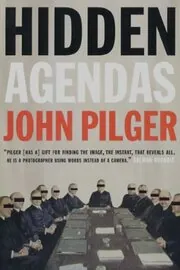
Hidden Agendas
by John Pilger
1998
Pilger ranges from Britain and Burma to Vietnam, South Africa, and Australia, digging into the stories that official language smooths over. It is a big, searching collection about power, media, and the people who resist both.
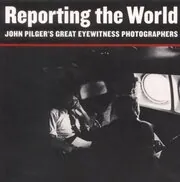
Reporting The World
by John Pilger
2001
Part photo book and part tribute, this volume brings together documentary photographers who captured war, poverty, resistance, and everyday life. It shows how images can deepen reportage and make distant events feel immediate.
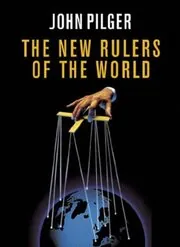
New Rulers of the World
by John Pilger
2002
This collection tracks globalization, war, and propaganda from Indonesia and Iraq to Australia. Pilger argues that corporate and state power work hand in hand, while ordinary people pay the price.
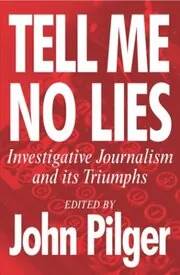
Tell Me No Lies
by John Pilger
2004
Pilger gathers landmark pieces of investigative journalism, from war crimes to political cover-ups, and explains why they mattered. It doubles as a defense of reporting that challenges power instead of repeating official stories.
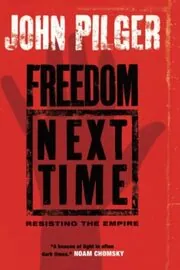
Freedom Next Time
by John Pilger
2006
Pilger travels through South Africa, India, Palestine, Afghanistan, and the Chagos Islands to ask why promised freedom keeps slipping away. It is part travel report, part political inquiry, always focused on people living with the cost of empire.

South Africa
by John Pilger
2006
Pilger looks at South Africa after apartheid and asks who really benefited from the transition. He listens to township voices, measures broken promises against daily life, and argues that political freedom did not automatically bring economic justice.
Where to start with John Pilger
If you want his broadest political critique: Hidden Agendas → The New Rulers of the World → Freedom Next Time
If you want war reporting from the ground: The Last Day → Aftermath → Distant Voices
If you want his writing on Australia: A Secret Country → Hidden Agendas
If you want books about journalism itself: Tell Me No Lies → Reporting The World → The Outsiders
John Pilger collections, short stories, and related book types
Non-Fiction
Author bio
John Pilger was born in Bondi, Sydney, on October 9, 1939, and grew up in a part of the city that was rougher and more working class than the postcard version people know now. His mother taught French, his father came from the Hunter Valley coalfields, and politics was not an abstract thing at home. He grew up around strong opinions, a sense of fairness, and the feeling that public life mattered to ordinary people.
Journalism started early.
At Sydney Boys' High he helped launch a student paper called The Messenger, then went into a four year cadetship with Australian Consolidated Press. He worked as a copy boy on the Sydney Sun and later at the Daily Telegraph in Sydney, learning habits that stayed with him for life: keep sentences short, prefer the active voice, and do not hide weak reporting behind fancy adjectives. In 1962 he headed to Europe, tried a brief freelance venture in Italy, and soon landed in London, first at Reuters and then at the Daily Mirror.
He liked to get close to the story.
At the Mirror he became chief foreign correspondent and reported from wars and political crises around the world, especially Vietnam. He was in the United States during the upheavals of the late 1960s, marched with poor Americans after the assassination of Martin Luther King Jr., and was in the room when Robert Kennedy was shot in Los Angeles. Still in his twenties, he became the youngest winner of Britain’s Journalist of the Year award, and later the first to win it twice.
Television gave him another way to work. His 1970 film The Quiet Mutiny looked at collapsing morale among American troops in Vietnam, and it set the pattern for much of what followed. He kept returning to places that powerful countries preferred to treat as background noise: Cambodia after the Khmer Rouge, East Timor under Indonesian occupation, Iraq under sanctions, and Indigenous communities in Australia. His film Year Zero: The Silent Death of Cambodia had an enormous public impact, and his investigations into the thalidomide scandal helped pressure authorities into a settlement for children who had been left out.
The books follow the same trail.
The Last Day captures Saigon at the end of the American war in Vietnam, almost hour by hour. Aftermath, written with Anthony Barnett, stays with Cambodia and Vietnam after the headlines moved on. A Secret Country turns back to Australia and asks what the country hides from itself, especially about its treatment of Aboriginal people. Later books such as Hidden Agendas, The New Rulers of the World, and Freedom Next Time widen the frame to media, empire, propaganda, and the distance between official promises and lived reality. Readers who come to Pilger usually stay for the eyewitness detail, the impatience with euphemism, and the way he keeps ordinary people at the center of the story.
He was not interested in neutrality as performance.
That made him admired by many readers and deeply argued with by plenty of other journalists. Pilger saw mainstream reporting as too ready to echo power, especially on war, colonial history, and foreign policy. Whether he was writing about Vietnam, Palestine, East Timor, South Africa, or Australia, the same concerns kept coming back: who gets to tell the story, whose suffering is made invisible, and what happens when language is used to soften brutality. In 2001 he also curated Reporting The World, a major exhibition and book about the photographers whose images shaped the way he understood news.
He kept writing and filming for decades, received honors including an Emmy, a BAFTA, the Sophie Prize, and the Sydney Peace Prize, and saw the British Library create an archive of his work in 2017. He remained active late in life, still arguing, still revisiting old battles, still swimming when he could. Pilger died in London on December 30, 2023, at the age of 84. By then he had left behind a body of work that is hard to confuse with anyone else’s: restless, angry, plainspoken, and always pushing readers to look again.




Edited by
Software engineer whose passion for tracking book recommendations from podcasts inspired the creation of MRB.
Lead investor at 3one4 Capital whose startup expertise and love for books helped shape MRB and its growth.
Comments
Did we miss something? Have feedback?
Help us improve this page by sharing your thoughts