
John Darnton Books in Order
Explore John Darnton books in order, with quick summaries, reading paths, and help choosing between his science thrillers, memoir, and newest novel.
Last updated:
As an Amazon Associate, we earn from qualifying purchases (at no extra cost to you).
John Darnton books in publication order
7 books
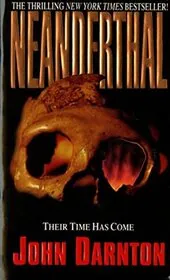
Neanderthal
by John Darnton
1996
When a Harvard paleoanthropologist vanishes in the mountains of Central Asia, two former lovers follow his trail. What they find is a hidden population of Neanderthals, and a discovery that could upend science and politics alike.
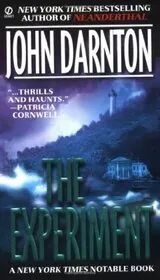
The Experiment
by John Darnton
1999
A ragged escapee from a secret island colony turns up in Manhattan, looking exactly like young reporter Jude Hurley. Their meeting opens the door to a chilling conspiracy involving cloning, identity, and ruthless scientific ambition.
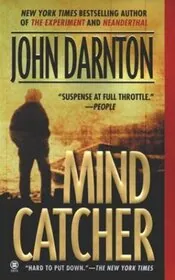
Mind Catcher
by John Darnton
2002
After thirteen-year-old Tyler suffers a catastrophic brain injury, his father is drawn into a fight between ambitious scientists. The novel blends hospital drama, artificial intelligence, and unsettling questions about whether consciousness can be captured.
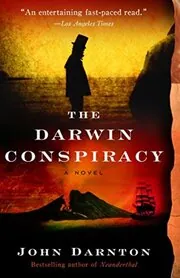
The Darwin Conspiracy
by John Darnton
2005
Darnton braids Charles Darwin’s voyage on the Beagle with a modern hunt through family papers and hidden diaries. Two scholars chase a secret that could recast Darwin’s long delay in publishing his theory.
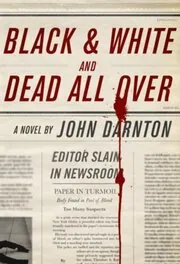
Black and White and Dead All Over
by John Darnton
2008
When a feared editor is murdered in the offices of the struggling New York Globe, suspects are everywhere. A young detective and a rebellious reporter dig through newsroom rivalries, ambition, and panic as more bodies appear.
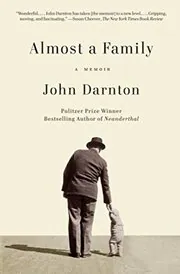
Almost a Family
by John Darnton
2011
Darnton turns his reporter’s eye on his own family, tracing the death of his father, a war correspondent, and the myths that shaped his childhood. It is part investigation, part memoir, and deeply personal throughout.
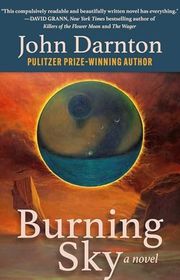
Burning Sky
by John Darnton
2024
In a warming near future, a powerful scientist builds a shield in the sky to block the sun, then helps create a dictatorship around it. His own children may be the ones who can undo the damage.
Where to start with John Darnton
For his core science thrillers: Neanderthal → The Experiment → Mind Catcher
If you want history mixed with suspense: The Darwin Conspiracy
If you want a newsroom mystery: Black and White and Dead All Over
If you want the personal book first: Almost a Family
If you want the newest novel: Burning Sky
John Darnton collections, short stories, and related book types
Non-Fiction
Standalone John Darnton books
Author bio
John Darnton was born in New York City in 1941, and he grew up in a family where journalism was part trade, part calling, and part family legend. His father, Byron Barney Darnton, was a foreign correspondent who was killed in the Pacific during World War II when John was still a baby. That loss, and the long shadow it cast, would later shape both his memoir and the steady curiosity that runs through his work.
He spent part of his childhood in Westport, Connecticut, before later years in Washington and New York. His mother, Eleanor Darnton, was also a reporter and editor, so the world of newspapers was never far away. It was not always an easy home life, but it gave him an early sense that stories have layers, and that facts do not always line up neatly with family myth.
News was the family trade, whether he wanted it or not.
After studying psychology at the University of Wisconsin, he joined The New York Times as a copyboy in 1966. Within two years he was reporting, first around New York and Connecticut and then much farther afield. He covered the Black Panther trials in New Haven, city politics, and the kind of local upheaval that teaches a reporter to notice detail fast and ask one more question than everyone else.
He learned reporting the hard way.
In the late 1970s he worked out of Lagos and Nairobi, covering coups, corruption, the fall of Idi Amin, and conflict across Africa. Nigeria expelled him in 1977. Soon after, he moved to Warsaw, where he reported on Poland in the Solidarity era and during martial law. Those dispatches, some smuggled out when normal channels were blocked, helped win him the Pulitzer Prize for International Reporting in 1982, along with one of his two George Polk Awards.
For years he kept moving. He went on to serve as bureau chief in Madrid and London and later held senior editing jobs back in New York, including culture editor. Somewhere along the way, the reporter who had spent decades chasing other people’s stories started writing fiction, carrying over the same appetite for research, institutions under pressure, and people pushed into moral corners.
That shift produced Neanderthal, his 1996 breakout novel, a science thriller that sends rival scholars into Central Asia after a vanished Harvard paleontologist. Readers who like Darnton’s fiction usually come for the mix of real-world knowledge and big speculative questions. He followed it with The Experiment, which digs into cloning and identity, and Mind Catcher, which pushes into brain science, artificial intelligence, and the uneasy border between body and mind.
He also likes using ideas as engines for suspense. The Darwin Conspiracy turns Charles Darwin’s life into a historical mystery, while Black and White and Dead All Over draws on Darnton’s own newsroom experience for a murder story set inside a failing newspaper. Across the novels, the pattern is pretty clear: science, power, institutions in trouble, and smart people who think they can manage forces bigger than themselves.
With Almost a Family, he turned the reporter’s notebook inward. The memoir follows his search for the real man behind the heroic family legend of his father, and it also reckons with his mother’s alcoholism and the emotional weather of his childhood. He later returned to fiction with Burning Sky, a climate thriller about geoengineering, authoritarian power, and the mess one generation leaves to the next. He retired from The New York Times in 2005, later taught journalism, became curator of the George Polk Awards, and lives in New York.





Edited by
Software engineer whose passion for tracking book recommendations from podcasts inspired the creation of MRB.
Lead investor at 3one4 Capital whose startup expertise and love for books helped shape MRB and its growth.
Comments
Did we miss something? Have feedback?
Help us improve this page by sharing your thoughts