
John Bude Books in Order
Explore John Bude books in order, with quick summaries, reading order guides for Meredith and others, and help choosing the best place to start.
Last updated:
As an Amazon Associate, we earn from qualifying purchases (at no extra cost to you).
John Bude books in publication order
14 books
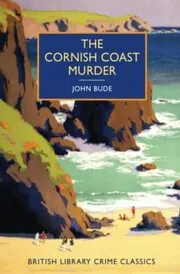
The Cornish Coast Murder
by John Bude
1935
A bad-tempered magistrate is found shot in the Cornish village of Boscawen, with almost no clues to guide the police. Inspector Bigswell and Reverend Dodd must sift village loyalties and old resentments to find the killer.

The Lake District Murder
by John Bude
1935
When a body is found at an isolated garage, the case looks like suicide, until the details start refusing to fit. Meredith follows money troubles, false appearances, and rural gossip through a sharply drawn Lakeland setting.
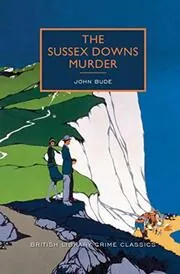
The Sussex Downs Murder
by John Bude
1936
A missing man, a bloodied hat, and bones turning up in lime deliveries make this one look simple at first. Meredith keeps digging after an apparent confession, and the South Downs case grows stranger and darker.
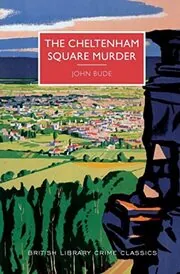
The Cheltenham Square Murder
by John Bude
1937
A man is killed in his chair by an arrow fired through an open window in a neat Cheltenham square. With archery club members all around him, Meredith faces a locked-in neighborhood full of rivalries and hidden motives.

Hand on the Alibi of Detection
by John Bude
1939
In a quiet country-town case, Superintendent Green has to look past respectable habits and one carefully arranged alibi. Bude turns everyday routines into a neat puzzle of timing, motive, and concealed tension.

Death in White Pyjamas
by John Bude
1944
Actors gather at a Sussex country house before rehearsals, and petty theft, blackmail, and desire soon poison the weekend. When the scheming Deidre Lehaye is found dead in the lake, Inspector Harting has a crowded suspect list.
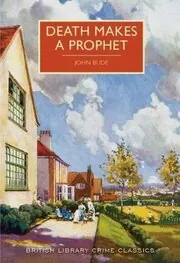
Death Makes a Prophet
by John Bude
1947
In a forward-looking garden city, the cult of the Children of Osiris is split by jealousy, money, and power. When murder follows, Meredith has to pick his way through rival prophets, private grudges, and spiritual nonsense.

Death Steals the Show
by John Bude
1950
A new musical is trying out at a South Coast theatre when its leading lady vanishes from her dressing room and turns up dead. Meredith steps into a lively backstage world full of ego, nerves, and opportunity.
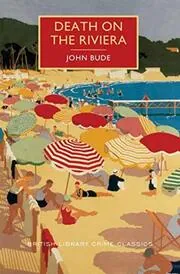
Death on the Riviera
by John Bude
1952
Superintendent Meredith heads to the French Riviera to investigate a counterfeiting ring, only for a death at an eccentric Englishwoman's villa to complicate everything. It is a sunny setting with plenty of shadows.

Two Ends to the Town
by John Bude
1955
When a body is washed up near the pier, Inspector Sherwood has to investigate both the respectable and rougher sides of a seaside town. The case looks built for hidden histories, local division, and patient police work.

A Shift of Guilt
by John Bude
1956
A chance attraction leads into a very odd trail involving a bitter invalid, a shabby showman with performing pigs, and three linked murders. Meredith has to make sense of a case that grows stranger with every stop.

A Telegram from Le Touquet
by John Bude
1956
Nigel Derry follows a telegram to the south of France and finds himself caught up in his aunt Gwenny's murder. Inspector Blampignon then takes over, untangling a case that stretches between England and the Riviera.
The Night the Fog Came Down
by John Bude
1958
The death of bedridden Mrs. Arkwright draws Inspector Sherwood into a fog-soaked case where household loyalties and local secrets keep shifting. It promises a tight mystery built on atmosphere and suspicion.

Murder in Montparnasse
by John Bude
2026
In Paris's Montparnasse quarter, the death of paralysed old Pierre Lebrun and the disappearance of an artist start a compact, atmospheric investigation. Inspector Moreau works through cafes, studios, and shaky alibis.
Where to start with John Bude
If you want the classic entry point: The Lake District Murder → The Sussex Downs Murder → The Cheltenham Square Murder
If you prefer a village mystery first: The Cornish Coast Murder
If you like stranger Golden Age setups: Death Makes a Prophet → Death on the Riviera → A Telegram from Le Touquet
If you want theatre and backstage tension: Death in White Pyjamas → Death Steals the Show
John Bude sub-series and character series
British Library Crime Classics (John Bude) books in order
Explore this seriesBritish Library Crime Classics (John Bude) books in chronological order
Superintendent Green books in order
Explore this seriesSuperintendent Green books in chronological order
Superintendent William Meredith books in order
Explore this seriesSuperintendent William Meredith books in chronological order
John Bude collections, short stories, and related book types
Short Stories/Novellas
Author bio
John Bude was the pen name of Ernest Carpenter Elmore, born in Maidstone, Kent, on 4 November 1901. He died in Hastings, Sussex, on 8 November 1957, only a few days after his fifty-sixth birthday. Between those dates he managed a busy life in schools, theatres, village halls, and publishing offices, and that mix of practical work and people-watching helps explain why his mysteries feel so grounded.
He knew ordinary English institutions from the inside.
Elmore boarded at Mill Hill School until 1919, then went to secretarial college in Cheltenham, where he learned to type, a useful skill for a future working writer. He later became a games master at St Christopher School in Letchworth and also helped with the school's dramatic activities, which nudged him toward the stage.
Theatre came next. He joined the Lena Ashwell Players as a stage manager and toured the country with the company, and he also acted at the Everyman Theatre in Hampstead. He was said to write whenever he could, often in dressing rooms between jobs, which feels exactly right for a man who later wrote so many neatly built mysteries.
He was busy long before he was widely read.
By the early 1930s he was back in Kent, producing plays for a local dramatic society in Maidstone. There he met Muriel Betty Sharp, whom he married in 1933. The couple moved to Beckley in Sussex, and Elmore settled into life as a full-time writer. They had two children, Jennifer and Richard.
Under his own name he published fantasy and children's books, including The Steel Grubs, This Siren Song, and later The Lumpton Gobbelings. But crime fiction paid the bills and, clearly, held his attention. Writing as John Bude, he began his detective fiction run in 1935 with The Cornish Coast Murder and The Lake District Murder.
Those books show what readers still come to him for. The Cornish Coast Murder gives you a Cornish village, a stubborn local case, and a nice balance between police work and amateur observation. The Lake District Murder and The Sussex Downs Murder show his liking for regional settings and careful investigation, while The Cheltenham Square Murder turns an elegant square and an archery club into a sharp puzzle. Later books such as Death Makes a Prophet and Death on the Riviera prove he could stretch into stranger territory without losing his steady, clue-based style.
Bude's detectives are usually less flashy than those of some Golden Age rivals. Superintendent Meredith, his main series policeman, is patient, methodical, and more interested in facts than theatrics. Again and again, Elmore returns to the same pleasures: close communities, local grudges, money troubles, odd institutions, theatrical types, and English places described well enough that you can almost walk the roads yourself.
There was more to his life than fiction. During the Second World War he ran his local Home Guard unit after being judged unfit for military service. In 1953 he was among the founding members of the Crime Writers' Association, which tells you he was not just producing books but helping to build the world around them.
His last years were spent in Sussex, and he enjoyed golf and painting, though he never learned to drive. He delivered his final manuscript to his publisher, went into hospital in Hastings for what was meant to be a routine operation, and died there in November 1957. It is a plain ending to a very industrious life, and somehow that suits John Bude: no fuss, a lot of work, and a shelf of mysteries still easy to pick up.









Edited by
Software engineer whose passion for tracking book recommendations from podcasts inspired the creation of MRB.
Lead investor at 3one4 Capital whose startup expertise and love for books helped shape MRB and its growth.
Comments
Did we miss something? Have feedback?
Help us improve this page by sharing your thoughts