
Johanne Hildebrandt Books in Order
Browse Johanne Hildebrandt books in order, with quick summaries, Valhalla reading guidance, and background on her blend of Norse history and myth.
Last updated:
As an Amazon Associate, we earn from qualifying purchases (at no extra cost to you).
Johanne Hildebrandt books in publication order
2 books
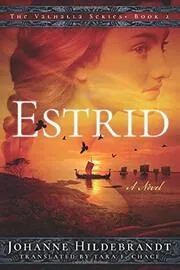
Estrid
by Johanne Hildebrandt
2016
Queen Sigrid fights to protect her children when enemies seize her daughter, Estrid. As bloodlines, loyalty, and royal power come under pressure, both mother and daughter are pulled into another brutal struggle over family, faith, and the future.
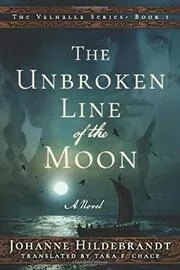
The Unbroken Line of the Moon
by Johanne Hildebrandt
2016
Sigrid, a chieftain's daughter gifted with visions from Freya, agrees to a marriage meant to keep the peace between rival peoples. Then she meets the ambitious warrior Sweyn, and her private choices start to reshape the struggle for the Nordic lands.
Where to start with Johanne Hildebrandt
If you want her Norse saga in English: The Unbroken Line of the Moon → Estrid
If you want the strongest mix of prophecy and royal intrigue: The Unbroken Line of the Moon
If you want to meet the reporter before the novelist: Blackout → The Unbroken Line of the Moon
Johanne Hildebrandt sub-series and character series
Author bio
Johanne Hildebrandt was born in 1964 in Lycksele, in northern Sweden, and grew up in Västerbotten. Long before readers knew her as a novelist or war reporter, she came from a working-class background and held a range of jobs, including work on the railway. She has lived in places such as Stockholm and Mariefred as an adult, but much of her writing still carries the feel of the North, hard weather, stubborn people, and lives shaped by history.
She did not take a straight road into books.
Hildebrandt moved into journalism, and the real turning point came in the early 1990s. While on holiday in Croatia as the Yugoslav wars were beginning, she decided to report on the conflict instead of turning away from it. That choice sent her into the work she became best known for, and over the next decade she covered war in the Balkans before later reporting from Iraq and Afghanistan.
Her first major book, Blackout, was published in 2001 and grew directly out of those years. It drew on her time in Bosnia and won the Swedish journalism prize Guldspaden. The book helped establish her as a writer who could take a huge, chaotic conflict and bring it down to the level of fear, survival, and the daily lives of people stuck inside it.
Then she turned to fiction.
Hildebrandt's breakthrough as a novelist came with the Valhalla books, which blend Scandinavian history, legend, and Norse religion with the pace of a political thriller. The earlier Valhalla novels include Freya, Idun, and Saga. Later she returned to that world with the Sigrid books, and English-language readers know that branch of the story through The Unbroken Line of the Moon and Estrid. Across these novels, gods walk close to humans, rulers make bargains they cannot control, and private desire keeps colliding with public duty.
Readers who like Hildebrandt's fiction usually respond to that mix of myth and mud. Her books are full of queens, warriors, mothers, lovers, and children caught between old loyalties and new religions. Again and again she comes back to power, faith, motherhood, sexual politics, and the price of holding a kingdom together. Even when the setting is full of prophecy and gods, the emotions are earthy and immediate.
She also kept one foot in nonfiction. After spending time with Swedish soldiers in Afghanistan, she published Krigare, another book shaped by close reporting from a conflict zone. She has gone on writing columns and commentary as well as novels, and that helps explain why even her mythic fiction often feels grounded in logistics, propaganda, and the consequences of political decisions made far from the people who carry them out.
In 2012 she became the first woman elected to the Royal Swedish Academy of War Sciences since the academy was founded in 1796. A few years later, Karlstad University named her guest professor in global media studies, drawing on her experience in war reporting, crisis communication, and media. She has also remained active in public debate, which suits a writer who has never shown much interest in staying politely on the sidelines.
For new readers, the through line is easy to spot. Whether she is writing about Bosnia, Afghanistan, or a queen who dreams of Freya, Hildebrandt keeps asking the same hard question: what do people do when history stops being abstract and lands right in front of them?

Edited by
Software engineer whose passion for tracking book recommendations from podcasts inspired the creation of MRB.
Lead investor at 3one4 Capital whose startup expertise and love for books helped shape MRB and its growth.
Comments
Did we miss something? Have feedback?
Help us improve this page by sharing your thoughts