
Jill Lepore Books in Order
Browse Jill Lepore books in order, with quick summaries, reading suggestions, and background on her histories of America, politics, culture, and evidence.
Last updated: 1 new book added
As an Amazon Associate, we earn from qualifying purchases (at no extra cost to you).
Jill Lepore books in publication order
17 books
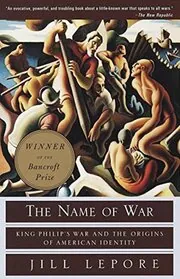
The Name of War
by Jill Lepore
1998
Lepore revisits King Philip's War, one of the deadliest conflicts in early American history, and the stories later generations told about it. The book is about violence, memory, and the making of American identity.
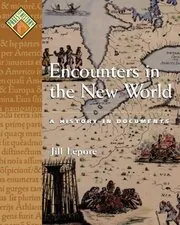
Encounters in the New World: A History in Documents
by Jill Lepore
1999
This sourcebook collects letters, diaries, petitions, maps, and eyewitness accounts from 1492 to 1789. Lepore's commentary helps readers follow the clash of cultures, empires, and lives across the early Americas.
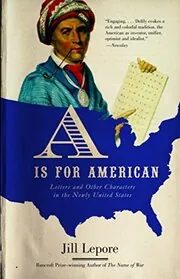
A is for American
by Jill Lepore
2002
Through seven lives, Lepore shows how language, spelling, alphabets, and speech shaped the early United States. It is a history of nation-building told through words and the people who tried to standardize, teach, or reinvent them.
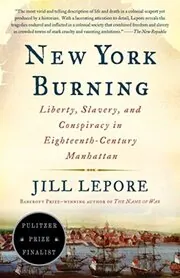
New York Burning
by Jill Lepore
2005
Set amid the 1741 fires in Manhattan, this book examines slavery, fear, and the alleged conspiracy that followed. Lepore reconstructs the trials and asks what liberty meant in a city built on bondage.
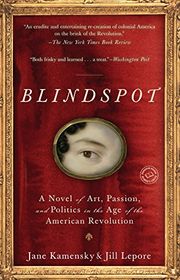
Blindspot
by Jill Lepore
2008
Scottish portrait painter Stewart Jameson arrives in revolutionary Boston seeking a fresh start. His new apprentice is actually Fanny Easton, a disgraced young woman in disguise, whose deception complicates their relationship amid the city’s political upheaval.
The Whites of Their Eyes
by Jill Lepore
2010
Lepore looks at the long fight over who gets to claim the American Revolution, from the nineteenth century to the Tea Party. It is a brisk study of how history gets turned into political ammunition.
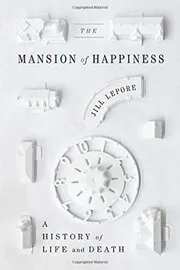
The Mansion of Happiness
by Jill Lepore
2012
Lepore follows American ideas about life and death from the seventeenth century to the age of cryonics. Science, religion, medicine, and everyday objects all enter the story.
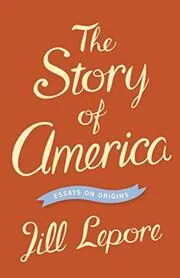
The Story of America
by Jill Lepore
2012
A linked set of essays on origin stories, print, and democracy in the United States. Lepore moves from Jamestown to Obama, showing how ballots, pamphlets, dictionaries, and stories helped build public life.
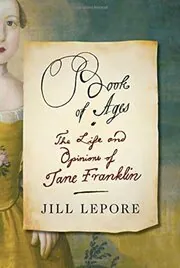
Book of Ages
by Jill Lepore
2013
A life of Jane Franklin, Benjamin Franklin's younger sister, pieced together from letters and scattered traces. Lepore uses Jane's overlooked life to open up the everyday world of eighteenth-century America.
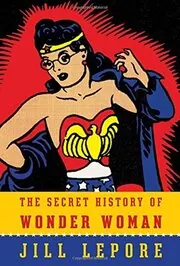
The Secret History of Wonder Woman
by Jill Lepore
2014
Lepore traces Wonder Woman back to William Moulton Marston, his unusual household, and the politics of early feminism. The result is both a pop-culture history and a story about women's rights.
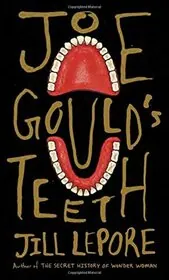
Joe Gould's Teeth
by Jill Lepore
2016
Part literary mystery, part archival investigation, this book follows the legend of Joe Gould and his vanished manuscript, The Oral History of Our Time. Lepore uses the chase to uncover race, obsession, and bohemian New York.
These Truths
by Jill Lepore
2018
Lepore's sweeping one-volume history of the United States asks how well the nation has lived up to political equality, natural rights, and popular sovereignty. It combines big narrative with sharp attention to conflict, exclusion, and argument.
Recommended by
2 people Bill Gates recommended this book
Bill Gates
"The most honest account of the American story I’ve ever read, and one of the most beautifully written." - Bill Gates
Bill Gates's recommendation of this book - Roman Mars recommended this book
Roman Mars
"Brilliant." - Roman Mars
Roman Mars's recommendation of this book
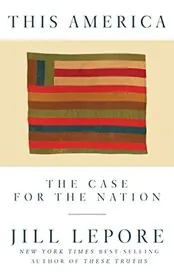
This America
by Jill Lepore
2019
A short, forceful argument about liberalism, nationalism, and the American nation-state. Lepore looks at how ideas of belonging and citizenship have been used both to widen democracy and to shut people out.
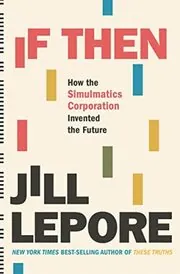
If Then
by Jill Lepore
2020
A history of the Simulmatics Corporation, the Cold War firm that tried to predict voters, consumers, and public opinion with computers. Lepore shows how today's data-driven politics has deeper roots than Silicon Valley likes to admit.

The Deadline
by Jill Lepore
2023
This essay collection ranges from pandemic life and race commissions to toys, technology, politics, and personal loss. It shows Lepore working in her shorter form, connecting present-day arguments to longer histories.

We the People
by Jill Lepore
2025
Lepore argues that the Constitution was built to be amended, not treated as untouchable scripture. She tells that history through generations of Americans who tried to change the document and, through it, the country.

The Rise and Fall of the Artificial State
by Jill Lepore
2026
In this forthcoming book, Lepore examines how machine rule, platform power, and artificial intelligence have reshaped public life. It extends her long-running interest in technology, democracy, and who gets to govern.
Where to start with Jill Lepore
If you want one big overview of the country: These Truths → This America → We the People
If you like early America and archival detective work: The Name of War → New York Burning → Book of Ages
If you want culture, feminism, and biography: The Secret History of Wonder Woman → Joe Gould's Teeth
If you're curious about media, data, and modern power: The Story of America → If Then → The Deadline
Jill Lepore sub-series and character series
Jill Lepore collections, short stories, and related book types
Non-Fiction
Standalone Jill Lepore books
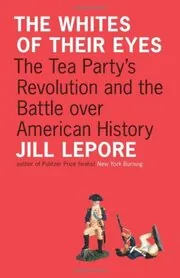
by Jill Lepore
2010The Tea Party's Revolution and the Battle Over American History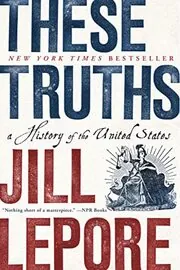
Author bio
Jill Lepore grew up in West Boylston, Massachusetts, outside Worcester, in a family where reading and teaching were part of everyday life. Her father had a typewriter at home, which was unusual in her world, and she loved using it as a kid. She has said that the town library mattered just as much. Long before she had a plan for becoming a historian, she was already drawn to words, paper, and the idea that writing could keep something from being lost.
She wanted to be a writer before she knew what kind of writer she could be.
At Tufts University, Lepore started out as a math major and joined ROTC. Then writing pulled harder. She switched to English and finished her B.A. in 1987, later earning an M.A. in American Culture from the University of Michigan and a Ph.D. in American Studies from Yale, where she specialized in early American history. Between college and graduate school, she worked as a temp and secretary at Harvard, wrote constantly, and sat in on classes when she could.
Archives changed everything.
Much of Lepore's work begins with a stubborn question hiding in old papers. Her first major book, The Name of War, revisited King Philip's War and asked how memory shapes national identity after violence. Then New York Burning took up the 1741 fires and slave conspiracy trials in Manhattan, using a tightly focused episode to explore the larger knot of liberty and slavery in American life. Readers often come to her for the storytelling, but stay for the way she turns documents into arguments without making the prose feel heavy.
That same habit drives Book of Ages, her life of Jane Franklin, Benjamin Franklin's younger sister. By following letters and fragments left by a woman history almost passed over, Lepore opens up everyday eighteenth-century Boston and the limits of who gets remembered. She has a knack for finding the person at the edge of the frame and moving them to the center, not to make a point in the abstract, but to show how the record itself was built.
Her range is wider than early America.
In The Secret History of Wonder Woman, she connects a comic-book icon to feminism, family life, and the strange world around creator William Moulton Marston. In Joe Gould's Teeth, she follows the mystery of a missing manuscript through literary New York. In If Then, she digs into the Simulmatics Corporation and the Cold War roots of data mining, voter targeting, and prediction. However different these books look on the shelf, they return to some of the same interests: evidence, power, language, media, and the stories institutions tell about themselves.
Her broadest book so far is These Truths, a one-volume history of the United States. She followed it with This America, a shorter argument about nationalism and liberalism, and later We the People, a history of the Constitution centered on amendment and self-government. The Deadline gathers essays on politics, technology, culture, and grief, and shows how comfortable she is moving between the archive and the news cycle. She has been contributing to The New Yorker since 2005, and her audio work includes The Last Archive.
Today, Lepore teaches at Harvard, where she is the David Woods Kemper Professor of American History and, since 2024, a professor of law at Harvard Law School. What ties the whole body of work together is a simple but demanding curiosity. Who made the record? What got left out? And what happens to a democracy when it forgets how to argue with evidence?






Edited by
Software engineer whose passion for tracking book recommendations from podcasts inspired the creation of MRB.
Lead investor at 3one4 Capital whose startup expertise and love for books helped shape MRB and its growth.
Comments
Did we miss something? Have feedback?
Help us improve this page by sharing your thoughts