
Jeffrey Eugenides Books in Order
Explore Jeffrey Eugenides books in order, with quick summaries, notes on major themes, and simple advice on where to start with his novels and stories.
Last updated:
As an Amazon Associate, we earn from qualifying purchases (at no extra cost to you).
Jeffrey Eugenides books in publication order
4 books
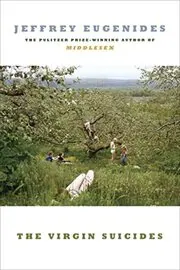
The Virgin Suicides
by Jeffrey Eugenides
1993
In a quiet Detroit suburb, neighborhood boys look back on the five Lisbon sisters and try to understand the deaths that marked their youth. The mystery matters, but so does the aching, half-seen world of adolescence around it.
Recommended by
1 person Tavi Gevinson recommended this book
Tavi Gevinson
"For articulating, intentionally or not, what it means to be in love with the idea of love, in love with your own memories, with your own control, with a prevailing aloneness." - Tavi Gevinson
Tavi Gevinson's recommendation of this book

Middlesex
by Jeffrey Eugenides
2002
Cal Stephanides traces a Greek American family's journey from Asia Minor to Detroit while uncovering the history behind Cal's own intersex identity. It is a sweeping family saga about inheritance, belonging, and the making of a self.
Recommended by
1 person Oprah Winfrey recommended this book
Oprah Winfrey
"I promise it will grab you from the first sentence." - Oprah Winfrey
Oprah Winfrey's recommendation of this book
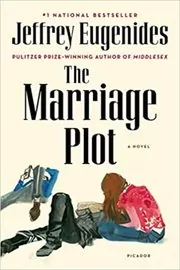
The Marriage Plot
by Jeffrey Eugenides
2011
At Brown in the early 1980s, Madeleine Hanna is torn between brilliant Leonard Bankhead and old friend Mitchell Grammaticus. The result is a smart, humane novel about love, ideas, mental illness, and the shaky start of adult life.
Recommended by
1 person Mindy Kaling recommended this book
Mindy Kaling
Mindy Kaling recommended this book in a Today.com interview.
Mindy Kaling's recommendation of this book
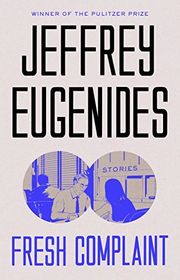
Fresh Complaint
by Jeffrey Eugenides
2013
This story collection follows students, schemers, parents, and outsiders as they face desire, money, family pressure, and bad decisions. It shows Jeffrey Eugenides working on a smaller scale, with the same sharp eye for identity, embarrassment, and self-invention.
Where to start with Jeffrey Eugenides
If you want the classic entry point: The Virgin Suicides → Middlesex
If you want the big family epic: Middlesex
If you like campus novels and complicated romance: The Marriage Plot
If you want his shorter fiction first: Fresh Complaint
Jeffrey Eugenides collections, short stories, and related book types
Short Story Collections
Standalone Jeffrey Eugenides books
Author bio
Jeffrey Eugenides was born in Detroit in 1960 and spent much of his youth in nearby Grosse Pointe. He grew up with the city still carrying the force of the auto industry, and that landscape stayed with him. The split between city and suburb, between old immigrant families and newer American dreams, would later become some of the strongest material in his fiction.
He knew surprisingly early that he wanted to be a writer.
While still in high school, he made that plan concrete and chose Brown largely so he could study with novelist John Hawkes. He graduated magna cum laude, after taking a year away from school to travel in Europe and volunteer with Mother Teresa in Calcutta. At Brown he majored in English rather than narrowing too quickly, because he wanted the widest possible reading life. He later went to Stanford and earned an M.A. in English and creative writing in 1986.
The writing life did not arrive in a neat straight line. After school he supported himself with odd jobs, including driving a cab and writing for a sailing magazine, while he tried to build a daily practice. His fiction began appearing in literary magazines, and the spark for The Virgin Suicides came from a stray conversation back in Grosse Pointe. Once he started writing about his hometown instead of circling around it, the book found its eerie, collective voice.
The Virgin Suicides was published in 1993 and later became a film directed by Sofia Coppola. The novel announced several things that would keep showing up in his work: adolescence seen from the outside, desire mixed with confusion, and a strong sense that whole neighborhoods can become characters too.
Detroit never really left the page.
His second novel, Middlesex, made that especially clear. The book follows Cal Stephanides and traces a Greek American family from Asia Minor to Detroit and then to suburban Michigan, folding immigration, family secrecy, biology, and the history of the city into one long narrative. Eugenides worked on it for years, including a long stretch in Berlin on a fellowship, and the book won the Pulitzer Prize for Fiction in 2003. Readers often respond to him because his novels can think big without losing the intimate scale of family life.
That balance shows up again in The Marriage Plot, which turns to Brown in the early 1980s and follows Madeleine Hanna, Leonard Bankhead, and Mitchell Grammaticus after graduation. It is a campus novel, a love triangle, and a coming-of-age story all at once. Ideas matter in the book, semiotics, religion, feminism, mental illness, but Eugenides never lets theory float free from the ordinary mess of love and fear. He is very good at writing smart people who are not nearly as in control as they think they are.
Then there is Fresh Complaint, his first story collection. The book moves across decades and moods, from adolescence to middle age, and shows the same interests that run through all his work: identity, family pressure, class, reinvention, and the uneasy comedy of modern life. Even when his premises are unusual, his characters usually want familiar things, love, freedom, dignity, and a clearer idea of who they are.
Eugenides spent several years in Berlin, and later joined Princeton's faculty in 2007, which was his first full-time teaching post. He still teaches creative writing there. He has published three novels and one story collection, which is not a huge shelf of books, but it helps explain why each one feels carefully made. He tends to stay with an idea for a long time, then bring back something that feels fully lived in.









Edited by
Software engineer whose passion for tracking book recommendations from podcasts inspired the creation of MRB.
Lead investor at 3one4 Capital whose startup expertise and love for books helped shape MRB and its growth.
Comments
Did we miss something? Have feedback?
Help us improve this page by sharing your thoughts