
Jeanette Winterson Books in Order
Explore Jeanette Winterson books in order, with short summaries, where to start, and background on her fiction, memoir, essays, and children's books.
Last updated:
As an Amazon Associate, we earn from qualifying purchases (at no extra cost to you).
Jeanette Winterson books in publication order
29 books
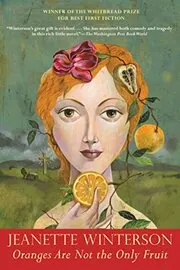
Oranges Are Not the Only Fruit
by Jeanette Winterson
1985
Jeanette is adopted and raised in a strict Pentecostal home, where she seems destined for missionary life until she falls for another girl. Winterson turns that break with family and church into a funny, sharp coming-of-age novel.
Recommended by
1 person Emma Watson recommended this book
Emma Watson
On the "books read" section of Emma Watson's GoodReads profile.
Emma Watson's recommendation of this book
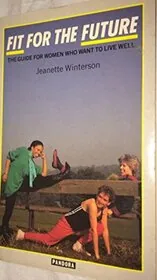
Fit for the Future
by Jeanette Winterson
1986
An early non-fiction guide, this book offers practical advice for women who want to build healthier habits into busy everyday life. It sits apart from Winterson's novels, but it shows her interest in self-invention and change.
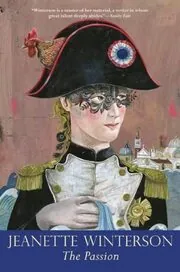
The Passion
by Jeanette Winterson
1987
Henri serves Napoleon with devotion until war strips the glory from empire. In Venice he meets Villanelle, a magnetic woman with webbed feet, and together they move through a dreamlike story of obsession, chance, and transformation.
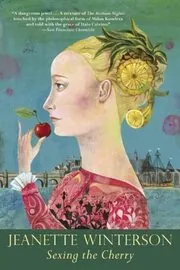
Sexing the Cherry
by Jeanette Winterson
1989
A baby found floating on the Thames is raised by the huge, fierce Dog-Woman, and from there the book spins through centuries and fairy tales. It is bawdy, strange, and alive with questions about love, truth, and time.
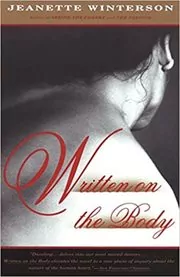
Written on the Body
by Jeanette Winterson
1992
In a quiet English suburb, a nameless narrator falls into a consuming affair with Louise, a married woman who changes everything. When illness and Louise's husband force a reckoning, love becomes both intimate and unbearable.
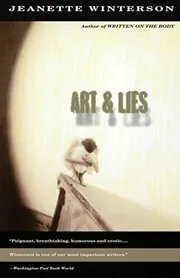
Art and Lies
by Jeanette Winterson
1994
In a near-future London, Sappho, Picasso, and Handel board the same train and find their stories knotted together by a mysterious book. This is one of Winterson's most experimental novels, obsessed with art, pain, and the healing force of language.
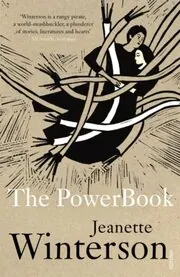
The Powerbook
by Jeanette Winterson
1994
Ali, or Alix, is an online writer who will invent any story a client wants, if they are willing to step inside it. The result is a slippery novel about desire, freedom, reinvention, and the identities we build online.
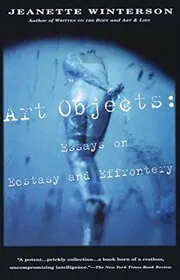
Art Objects
by Jeanette Winterson
1995
In these essays, Winterson argues that art is not remote or ornamental but alive in ordinary life. She writes about fiction, painting, modernism, Virginia Woolf, and the books that shaped her, with plenty of heat and opinion.
Gut Symmetries
by Jeanette Winterson
1997
Alice, a brilliant English physicist, begins an affair with the married American scientist Jove, then falls for his wife, Stella. Winterson turns the love triangle into a heady mix of desire, physics, comedy, and danger.

The World and Other Places
by Jeanette Winterson
1998
Winterson's first story collection moves through worlds that feel familiar and oddly tilted at the same time. These pieces are brief, imaginative, and unsettling, testing the line between the everyday and the uncanny.
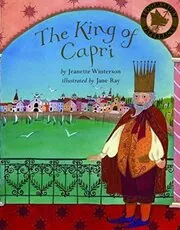
The King of Capri
by Jeanette Winterson
2003
A greedy king loses his clothes, possessions, and swagger when a great wind blows them across the bay to Naples. This playful picture book turns an Italian folktale into a lesson about hunger, humility, and sharing.
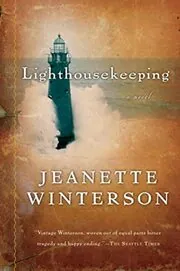
Lighthousekeeping
by Jeanette Winterson
2004
Orphaned Silver is taken in by Pew, a blind lighthouse keeper on the Scottish coast, who teaches through stories. As his tale of Babel Dark unfolds, Silver begins to understand love, history, and how people make meaning from darkness.

Weight
by Jeanette Winterson
2005
Atlas has been condemned to bear the world forever, until Heracles arrives and changes the terms of the myth. Winterson uses that meeting to ask hard questions about freedom, fate, burden, and whether anyone can lay a past down.
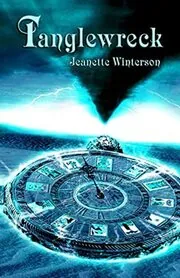
Tanglewreck
by Jeanette Winterson
2006
Silver lives in a strange house with her guardian, Mrs Rokabye, unaware that a seventeenth-century watch called the Timekeeper could reshape everything. When time begins to go wrong, she is pulled into a clever, fast fantasy adventure.
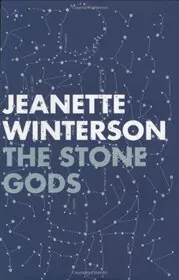
The Stone Gods
by Jeanette Winterson
2007
Humanity is preparing to leave a ruined world for Planet Blue, a new home that looks alarmingly familiar. At the same time, Billie and Spike fall in love, turning this futuristic story into a warning about desire, repetition, and survival.
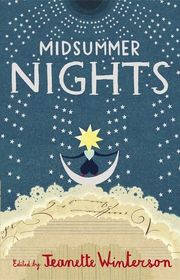
Midsummer Nights
by Jeanette Winterson & Joanna Trollope
2009
Created for Glyndebourne’s seventy-fifth anniversary, this anthology gathers short fiction inspired by opera. Edited by Jeanette Winterson, it includes Joanna Trollope and other writers responding to individual works with stories of comedy, tragedy, love, and transformation.
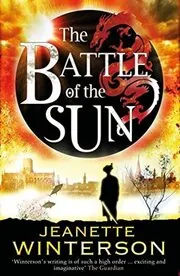
The Battle of the Sun
by Jeanette Winterson
2009
In seventeenth-century London, Jack is marked as the Radiant Boy an evil Magus needs for his alchemy. Instead of obeying, he fights back in a fast-moving adventure with dragons, danger, and a city that may be turned to gold.
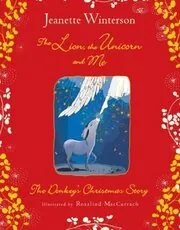
The Lion, The Unicorn And Me
by Jeanette Winterson
2009
Told from the donkey's point of view, this retelling of the Nativity follows the least glamorous animal in the stable as he is chosen for a holy task. It is tender, funny, and built for Christmas reading.
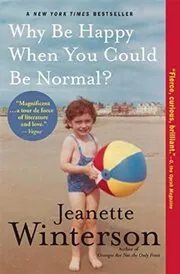
Why Be Happy When You Could Be Normal?
by Jeanette Winterson
2011
Winterson returns to the life behind Oranges Are Not the Only Fruit, writing directly about adoption, Pentecostal childhood, first love, breakdown, and survival. It is a memoir about searching for her birth mother and learning how to live.
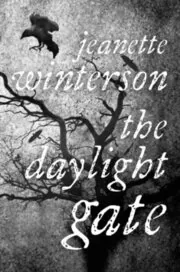
The Daylight Gate
by Jeanette Winterson
2012
Set around the 1612 Pendle witch trials, this dark historical novel follows Alice Nutter as fear, superstition, and power close in. It is a lean, gothic story about persecution, secrecy, and what people name as magic.

The Gap of Time
by Jeanette Winterson
2015
Winterson reworks The Winter's Tale as a modern story of jealousy, exile, and repair. An abandoned baby grows up as Perdita in New Bohemia, while the damage done by her parents waits years to be faced.
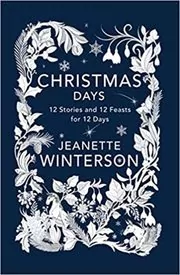
Christmas Days
by Jeanette Winterson
2016
Twelve Christmas stories sit alongside twelve festive recipes in this warm, odd, and ghost-touched holiday collection. Winterson mixes family memory, winter magic, love, and food, making the book part storybook and part seasonal ritual.

Love
by Jeanette Winterson
2017
This small Vintage Minis volume gathers passages from Winterson's work about romance, heartbreak, work, longing, and the many shapes love takes. It is brief, reflective, and a good sampler of one of her central themes.
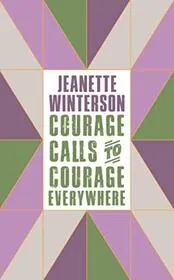
Courage Calls to Courage Everywhere
by Jeanette Winterson
2018
Written a century after women first won the vote in Britain, this short book argues that equality is unfinished work. Winterson looks at politics, law, technology, and protest, then calls for courage from women and men alike.
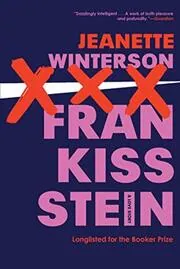
Frankissstein
by Jeanette Winterson
2019
As Brexit-era Britain wrestles with AI, sex robots, and cryonics, Ry, a young trans doctor, becomes entangled with visionary scientist Victor Stein. Winterson threads that story through Mary Shelley's world to ask what being human means now.
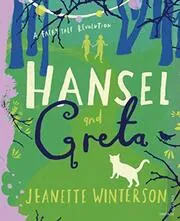
Hansel and Greta
by Jeanette Winterson
2020
Winterson's retelling turns Hansel and Greta into young forest defenders with an aunt named GreedyGuts on their trail. Funny, dark, and brisk, it keeps the fairy tale bones while giving the story an eco-minded twist.
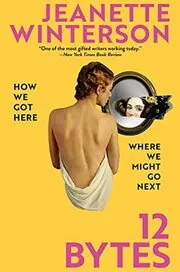
12 Bytes
by Jeanette Winterson
2021
Across twelve lively essays, Winterson asks how artificial intelligence is changing the way we live, think, and love. She pulls in myth, history, politics, and computer science to make a fast, curious introduction to a huge subject.

Night Side of the River
by Jeanette Winterson
2023
This collection mixes ghost stories with Winterson's own brushes with the supernatural, moving from haunted houses to seances and uncanny tech. It is both old-fashioned and sharply modern, with grief and the afterlife always close by.

One Aladdin Two Lamps
by Jeanette Winterson
2026
Blending memoir, essay, and a feminist reworking of One Thousand and One Nights, Winterson returns to the idea that stories can keep us alive. It is a book about reading, imagination, and changing the script you inherit.
Where to start with Jeanette Winterson
If you want the essential starting point: Oranges Are Not the Only Fruit → Why Be Happy When You Could Be Normal?
If you want love, desire, and queer intimacy: The Passion → Written on the Body → The Powerbook
If you like myth, fable, and time-slip fiction: Sexing the Cherry → Weight → Lighthousekeeping
If you want speculative, tech-minded Winterson: The Stone Gods → Frankissstein → 12 Bytes
If you want something darker and ghostlier: The Daylight Gate → Night Side of the River
Jeanette Winterson sub-series and character series
Jeanette Winterson collections, short stories, and related book types
Short Stories/Novellas
Picture Books
Collections
Non-Fiction
Standalone Jeanette Winterson books
Author bio
Jeanette Winterson was born in Manchester in 1959 and adopted as a baby by John and Constance Winterson, who lived in Accrington, Lancashire. She grew up in a strict Pentecostal household where the Bible was read aloud every day and where she was expected to become a missionary.
Books came late, but language came early. The King James Bible gave her rhythm, story, and a sense of what words could do.
Home was hard. When she fell in love with another girl as a teenager, she had to choose between that life and the church she had been raised in. She left home at sixteen, moved from place to place for a while, and worked a run of jobs, including market work, library work, helping in a funeral home, and a year in a mental hospital, while saving for university.
Oxford changed the scale of her life. She read English at St Catherine's College, then moved to London and worked at the Roundhouse theatre. A turning point came when she applied for a job at the feminist press Pandora. She did not get the job, but after hearing her talk about her life, the publisher told her to write it down.
That became Oranges Are Not the Only Fruit in 1985. The novel turned her Pentecostal upbringing into something funny, fierce, strange, and deeply human. It won the Whitbread Prize for a first novel, and the BBC adaptation, which Winterson scripted herself, later won a BAFTA.
She never settled into one lane. The Passion and Sexing the Cherry bend history, myth, and time until they feel dreamlike but emotionally sharp. Written on the Body became one of her best-known love stories, with its famously ungendered narrator and its close attention to desire, illness, and the body itself. Much later, Why Be Happy When You Could Be Normal? returned to her early life more directly, as memoir instead of disguise.
Then came the books that pushed into science, technology, and the future. The Stone Gods, Frankissstein, and 12 Bytes show how interested she is in the border between human feeling and invention, whether that means space travel, artificial intelligence, cryonics, or the stories we tell about progress. Even when the ideas get big, the question underneath is usually intimate: how do we live, who do we love, and what are we becoming?
She has also written ghost stories, children's books, essays, and retellings, including Night Side of the River, Tanglewreck, and Weight. Across all of it, certain things keep returning: outsiders, chosen families, queer desire, old tales retold, and characters trying to rewrite the scripts they were handed.
Winterson has said that if you are the story, you can change the story. That feels like a key to all her work.
Now she lives between the Cotswolds and Spitalfields in London, and she teaches at the University of Manchester as Professor of New Writing. After four decades of work, she still seems most interested in the next question, the next form, and the next way a story might open a door.




Edited by
Software engineer whose passion for tracking book recommendations from podcasts inspired the creation of MRB.
Lead investor at 3one4 Capital whose startup expertise and love for books helped shape MRB and its growth.
Comments
Did we miss something? Have feedback?
Help us improve this page by sharing your thoughts