
JD Salinger Books in Order
Browse J.D. Salinger books in order, with short summaries, background on his major works, and a quick guide to the best place to start reading.
Last updated:
As an Amazon Associate, we earn from qualifying purchases (at no extra cost to you).
JD Salinger books in publication order
5 books
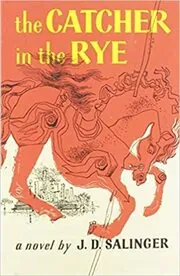
The Catcher in the Rye
by JD Salinger
1951
After being expelled from prep school, Holden Caulfield drifts through New York for a few raw, lonely days. His voice is funny and defensive, but the novel's real pull is the grief, confusion, and longing underneath it.
Recommended by
8 people Bill Gates recommended this book
Bill Gates
"My favorite book." - Bill Gates
Bill Gates's recommendation of this book  Jennifer Lawrence recommended this book
Jennifer Lawrence
"I'm so drawn to [the author]'s view of society back then, and to his sarcasm." - Jennifer Lawrence
Jennifer Lawrence's recommendation of this book  Gretchen Rubin recommended this book
Gretchen Rubin
"Was not written to be a young adult book. It’s an adult book. But it sort of drifted there because the protagonist is a teenager." - Gretchen Rubin
Gretchen Rubin's recommendation of this book  Ev Williams recommended this book
Ev Williams
On the "books read" section of Ev Williams' GoodReads profile.
Ev Williams's recommendation of this book  Larry King recommended this book
Larry King
"I love [this book]. I read it at four different times in my life. Teenager and later." - Larry King
Larry King's recommendation of this book  Tim Draper recommended this book
Tim Draper
"My [mother] recommended [this book]." - Tim Draper
Tim Draper's recommendation of this book +2
More recommendations
- Kathie Lee Gifford
"It was the first 'anti-hero' I had ever encountered and I thoroughly fell for Holden Caulfield." - Kathie Lee Gifford
- Sarah Jessica Parker
"Things to do to pass the time before Friday night’s event at Ulta in New Jersey? Re-read [this book]." - Sarah Jessica Parker
- Kathie Lee Gifford
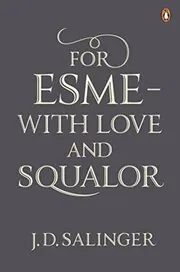
For Esmé
by JD Salinger
1953
Centered on one of Salinger's best-known wartime pieces, this slim volume follows a shaken soldier and an unexpectedly tender connection that stays with him. It is brief, precise, and quietly moving.
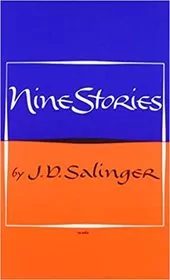
Nine Stories
by JD Salinger
1953
This collection gathers nine short stories about children, soldiers, spouses, and drifting adults trying to reach one another. It includes some of Salinger's best-known pieces and shows how much feeling he could fit into a few pages.
Recommended by
1 person Ben Stiller recommended this book
Ben Stiller
"When I was a teenager, my mother gave me [this book]. The story 'For Esmé—with Love and Squalor' affected me deeply." - Ben Stiller
Ben Stiller's recommendation of this book
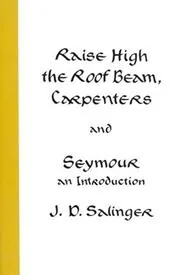
Raise High the Roof Beam, Carpenters and Seymour
by JD Salinger
1955
These two linked novellas circle the absent, magnetic Seymour Glass. Buddy recounts a wedding day that goes badly off course, then tries to explain the brother whose brilliance and pain still shape the whole family.
Recommended by
1 person- Jennifer Lawrence recommended this book
Jennifer Lawrence
"I don't think there's ever been anything like these characters in American literature." - Jennifer Lawrence
Jennifer Lawrence's recommendation of this book
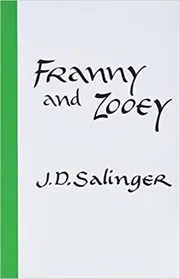
Franny and Zooey
by JD Salinger
1961
In two linked stories, Franny Glass hits a spiritual and emotional wall, and her brother Zooey tries to talk her through it. The book is intimate, funny, prickly, and full of family tension, faith, and hard questions about how to live.
Recommended by
1 person Emma Stone recommended this book
Emma Stone
Emma Stone said this is her favorite book in a HuffPost interview.
Emma Stone's recommendation of this book
Where to start with JD Salinger
If you want the book most people start with: The Catcher in the Rye
If you want a quick taste of his short fiction: For Esmé → Nine Stories
If you want the Glass family books: Nine Stories → Franny and Zooey → Raise High the Roof Beam, Carpenters and Seymour
If you want the full published path: The Catcher in the Rye → Nine Stories → Franny and Zooey → Raise High the Roof Beam, Carpenters and Seymour
Standalone JD Salinger books
Author bio
J.D. Salinger was born Jerome David Salinger in Manhattan on January 1, 1919, and he grew up in New York City. School was not a smooth ride. After time at McBurney School, his parents sent him to Valley Forge Military Academy in Pennsylvania, where he did better and kept leaning toward writing, acting, and school publications.
He wanted to be a writer early, and he was stubborn about it.
He tried a few colleges, including New York University and Ursinus, before a short story class at Columbia gave that ambition a clearer shape. There he studied with Whit Burnett, the editor of Story, who became an important early mentor. Burnett bought one of Salinger's stories, and magazine publication started to feel less like a daydream and more like a workable plan.
Then World War II cut straight through that plan. Salinger was drafted in 1942, served in the Army's Counter Intelligence Corps with the 4th Infantry Division, landed on Utah Beach on D-Day, and fought through some of the hardest campaigns in Europe, including the Battle of the Bulge. He also witnessed the liberation of a Dachau subcamp. The war left deep marks on him, and you can feel that pressure later in his fiction, especially in stories about shaken soldiers, damaged families, and people trying to find their way back to ordinary life.
His breakthrough came with The Catcher in the Rye in 1951. Holden Caulfield's voice sounded startlingly alive to generations of readers, funny, defensive, wounded, and restless all at once. The novel made Salinger famous almost overnight, but fame never sat easily on him. He liked the work much more than the public role that came with it.
That tension, between wanting readers and avoiding the spotlight, shaped the rest of his life.
His other published books are small in number but huge in afterlife. Nine Stories gathers short fiction about lonely children, brittle adults, and moments of sudden recognition, including the much-read For Esmé story and the first Glass family pieces. Franny and Zooey and Raise High the Roof Beam, Carpenters and Seymour go deeper into that remarkable family, brilliant siblings who argue, joke, pray, brood, and try to live decently in a world that often feels false or noisy. Readers who love Salinger usually talk about the talk itself, the way people sound on the page, the comedy inside family quarrels, and the ache under the wit.
Again and again, he returned to a few things: children who see more than adults expect, young people bruised by grief or disappointment, and characters chasing some form of spiritual steadiness. New York matters a lot in his work, so do prep schools, apartments, army memories, and the strange gap between how people present themselves and what they are really feeling. Even when the plots are slight, the emotional weather is not.
In 1953 he moved to Cornish, New Hampshire, where he spent the rest of his life. He married Claire Douglas in 1955 and had two children, Margaret and Matthew. After Raise High the Roof Beam, Carpenters and Seymour in 1963, he published only one more story, in 1965, and then stopped publishing altogether, though people close to him said he kept writing.
He died in Cornish on January 27, 2010. The published body of work is slim, but it still feels unusually close to the nerve, especially when a reader meets Holden or the Glass family at the right moment.






Edited by
Software engineer whose passion for tracking book recommendations from podcasts inspired the creation of MRB.
Lead investor at 3one4 Capital whose startup expertise and love for books helped shape MRB and its growth.
Comments
Did we miss something? Have feedback?
Help us improve this page by sharing your thoughts