
Jason Richter Books in Order
Part ofDale Brown Books in OrderSee the Jason Richter / Act of War series by Dale Brown in order, with brief summaries, series background on Task Force Talon, and reading‑order help for these near‑future anti‑terror thrillers.
Last updated:
As an Amazon Associate, we earn from qualifying purchases (at no extra cost to you).
Jason Richter books in publication order
2 books
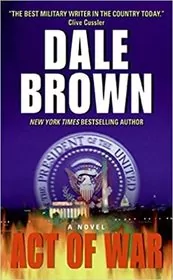
Act of War
by Dale Brown
2005
After a nuclear device devastates a major US energy facility, a shadowy terror group and a powerful corporation emerge as suspects. Major Jason Richter takes command of Task Force Talon, a covert unit with bleeding‑edge weapons, and hunts the conspirators through a maze of politics and deception.
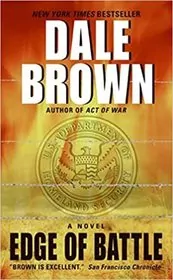
Edge of Battle
by Dale Brown
2006
Violence along the US‑Mexico border spirals as cartels and militants exploit weak points on both sides. Jason Richter’s Task Force Talon is ordered to a new California base, where its advanced sensors, armor, and aircraft must stop a regional breakdown from turning into an international shooting war.
Jason Richter books in chronological order
Series background & context
The Jason Richter books—Act of War and Edge of Battle—spin off from Dale Brown’s main timeline to follow a different kind of unit: Task Force Talon, a small, top‑secret strike force built to fight terrorists and shadowy conspirators in a near‑future energy crisis.
Major Jason Richter is the central figure. A driven officer with a knack for bending rules, he is given command of Task Force Talon as the United States reels from attacks on its oil infrastructure. In Act of War, a nuclear device is detonated at a major energy facility, gasoline prices are spiking, and the public is on edge. Richter’s team blends elite military operators, intelligence specialists, and high‑end technology, including advanced armored vehicles and unmanned systems that blur the line between drone and tank.
Their first mission is as much about figuring out who the enemy really is as it is about shooting back. The unit uncovers a network called the Consortium, a mix of corrupt corporate interests and extremists who are using terror as a tool to reshape global energy markets. Brown uses the setup to explore questions about how far a democracy should go when it creates units that answer only to a small circle of leaders—and what happens if those leaders don’t agree.
Edge of Battle shifts the focus to the US‑Mexico border and the political minefield around immigration, drug trafficking, and national security. Here, cross‑border violence and cartel warfare threaten to spill into open conflict between nations. Task Force Talon is ordered to operate from a new base in southern California, using its experimental gear to monitor and, if necessary, hit targets on both sides of the line. Richter has to walk a tightrope between protecting American lives, respecting fragile diplomatic arrangements, and keeping his own people from being turned into political scapegoats.
Compared with the bomber‑heavy Patrick McLanahan books, the Jason Richter series spends more time on ground combat and combined‑arms tactics. Armored vehicles, special operations teams, and urban engagements share the stage with helicopters and air support. The tone is still very much Dale Brown: lots of detail on equipment and doctrine, a clear sense of how chain‑of‑command works (and how it can be dodged), and villains whose motives are tied to money and power as much as ideology.
For readers who like the Dreamland and Whiplash stories but want something focused tightly on one unit and one commander, the Jason Richter novels provide a compact, two‑book arc. You can read them on their own as near‑future anti‑terror thrillers, or slot them into the broader reading order around the mid‑2000s, when Brown’s universe is wrestling with energy politics, privatized force, and the blurred line between war and law enforcement.



Edited by
Software engineer whose passion for tracking book recommendations from podcasts inspired the creation of MRB.
Lead investor at 3one4 Capital whose startup expertise and love for books helped shape MRB and its growth.
Comments
Did we miss something? Have feedback?
Help us improve this page by sharing your thoughts