
Jack Finney Books in Order
Explore Jack Finney books in order, with short summaries for classics like The Body Snatchers and Time and Again, plus notes on series and where to start.
Last updated:
As an Amazon Associate, we earn from qualifying purchases (at no extra cost to you).
Jack Finney books in publication order
15 books

The Third Level
by Jack Finney
1940
This early story collection shows Finney at his most quietly uncanny, turning everyday places into portals. The title story sends a commuter to 1894 through Grand Central, and the rest mix nostalgia, suspense, and reality slips.
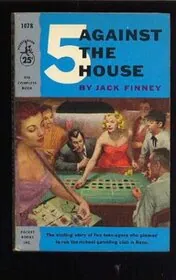
5 Against the House
by Jack Finney
1954
What starts as a smart college prank becomes a real plan to rob a Reno casino. As nerves fray and one friend's war trauma resurfaces, the caper turns into a tight, dangerous story about loyalty and panic.

Invasion of the Body Snatchers / The Body Snatchers
by Jack Finney
1955
Dr. Miles Bennell begins hearing strange claims that friends and relatives are not themselves. Soon a small California town is facing an invasion that is quiet, intimate, and far more frightening than open warfare.
The House of Numbers
by Jack Finney
1957
A convicted killer and his law abiding twin brother hatch a plan to switch places and break out of San Quentin. The setup is pure noir, with prison tension, divided loyalties, and a growing sense that no one gets out clean.
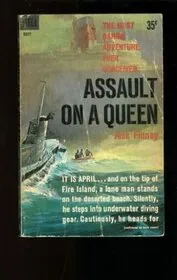
Assault on a Queen
by Jack Finney
1959
A crew of treasure hunters raises a long lost German submarine and dreams up an outrageous heist aboard the Queen Mary. The plan is daring enough, but greed and mistrust may sink them before the job is done.

The Clock of Time
by Jack Finney
1961
A collection of Finney's early fantasy and time bending stories, full of hidden doors, altered lives, and ordinary people facing the impossible. It has the same easy style that later made his time travel novels so memorable.

I Love Galesburg in the Springtime
by Jack Finney
1963
These fantasy and time stories lean into Finney's favorite themes, the pull of the past, the strangeness tucked inside ordinary life, and the feeling that another version of your world may be waiting nearby.
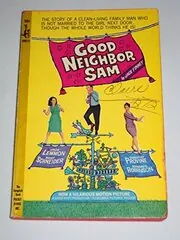
Good Neighbor Sam
by Jack Finney
1964
Advertising man Sam Bissell agrees to pose as his glamorous neighbor's husband so she can protect her inheritance. The lie spills into his job and home life, turning one favor into a full scale comic mess.
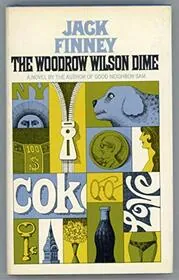
The Woodrow Wilson Dime
by Jack Finney
1968
A bored man finds a strange dime and steps into a parallel life where his marriage, career, and future look completely different. Finney turns the what if of a second chance into a witty, uneasy fantasy.
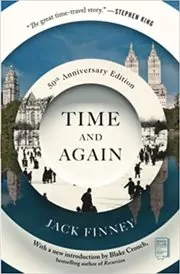
Time and Again
by Jack Finney
1970
Advertising artist Simon Morley joins a secret government experiment and slips from 1970 New York into 1882. While tracing a mystery tied to an old letter, he falls under the spell of the past and risks losing his place in the present.
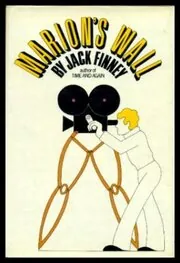
Marion's Wall
by Jack Finney
1973
After a young couple move into an old San Francisco apartment, the ghost of an ambitious silent era actress begins taking over the wife's life. What follows is a funny, eerie struggle over identity, marriage, and second chances.
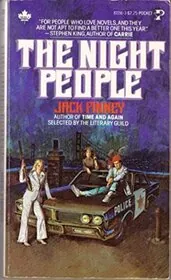
The Night People
by Jack Finney
1977
Two San Francisco couples, bored with respectable daytime lives, start roaming suburbia after dark. Their midnight games grow bolder, funnier, and riskier until harmless escape turns into real trouble.

Forgotten News
by Jack Finney
1983
Finney turns old newspapers into narrative history, retelling a notorious nineteenth century murder case and a set of nearly vanished headlines. It is part true crime, part social history, and all about the odd stories time forgets.

About Time
by Jack Finney
1986
This twelve story collection gathers Finney's time travel tales, from quiet slips into the past to stranger bends in memory and fate. It is the clearest short form showcase of the ideas behind his best known novels.
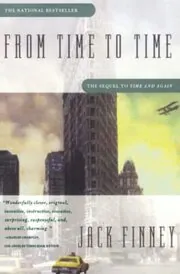
From Time to Time
by Jack Finney
1995
Simon Morley is drawn back into the Project and sent to 1912 New York, where a mission to head off war collides with memory, romance, and history's stubborn resistance.
Where to start with Jack Finney
If you want his best known suspense: Invasion of the Body Snatchers / The Body Snatchers
If you want immersive time travel: Time and Again → From Time to Time
If you want odd, reality bending what ifs: The Woodrow Wilson Dime → Marion's Wall → The Night People
If you want crime and caper novels first: 5 Against the House → The House of Numbers → Assault on a Queen
Jack Finney sub-series and character series
Jack Finney collections, short stories, and related book types
Collections
Standalone Jack Finney books
Author bio
Jack Finney was born in Milwaukee, Wisconsin, on October 2, 1911. He entered the world as John Finney. After his father died when he was three, he was legally renamed Walter Braden Finney in his father's honor, but the name Jack stayed with him for life. He later attended Knox College in Galesburg, Illinois, and graduated in 1934.
In the 1940s he moved to New York City and worked as an advertising copywriter. He was married to Marguerite Guest, and while he was building a family and holding down a full time job, he wrote fiction at night. That mix of office routine and private imagination never really left his work. Again and again, his stories begin in ordinary places, with ordinary people, just before something impossible slips into view.
The day job mattered.
Finney understood deadlines, clean prose, and how to make a scene move. His story "The Widow's Walk" won a magazine contest in 1946, which helped get his fiction career going. Not long after came his first novel, 5 Against the House, a tense caper about college friends and a Reno casino. He had range from the start, and he could move easily from crime to comedy to the uncanny.
Then came The Body Snatchers in 1955, the book that made his name stick. Its setup is still wonderfully simple and creepy: a California doctor realizes that people around him are being copied and replaced. Finney was very good at that particular effect, the calm everyday surface and the deep wrongness underneath it. His comic novel Good Neighbor Sam also became a film, which says a lot about how flexible his storytelling could be.
He had a soft spot for lost time.
That feeling runs through The Third Level, The Woodrow Wilson Dime, and Marion's Wall, books and stories where the past is not dead at all, just very close by. Sometimes he used time travel. Sometimes it was a parallel life, a hidden doorway, or a ghost with unfinished business. What ties those stories together is not machinery or elaborate science. It is mood, curiosity, nostalgia, and the sense that a person might step sideways and find a different version of home.
His best loved novel is probably Time and Again, published in 1970. It follows Simon Morley, an advertising artist recruited into a secret government project that sends him back to New York in 1882. Readers tend to love it for the city itself, the old photos, the period detail, the mystery, and the way the past feels both warmer and stranger than the present. Finney returned to Simon Morley in From Time to Time in 1995, taking him into another slice of New York history.
Finney and his family moved to California in the early 1950s, and he eventually settled in Mill Valley. He was known as a private, even shy man who did not chase publicity, and late accounts of his life describe him happily digging through old magazines, photographs, and other scraps of the past that fed his fiction. In 1987 he received a World Fantasy Award for lifetime achievement. He died in Greenbrae, California, on November 14, 1995, not long after From Time to Time was published.











Edited by
Software engineer whose passion for tracking book recommendations from podcasts inspired the creation of MRB.
Lead investor at 3one4 Capital whose startup expertise and love for books helped shape MRB and its growth.
Comments
Did we miss something? Have feedback?
Help us improve this page by sharing your thoughts