
Irish Century Books in Order
Part ofMorgan Llywelyn Books in OrderSee the Irish Century series by Morgan Llywelyn in order, with short summaries, historical background, and clear advice on where to start.
Last updated:
As an Amazon Associate, we earn from qualifying purchases (at no extra cost to you).
Irish Century books in publication order
5 books
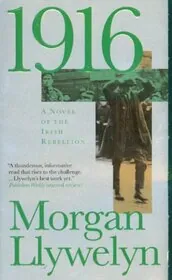
1916
by Morgan Llywelyn
1998
After surviving the Titanic, teenage Ned Halloran returns to Ireland and falls under Patrick Pearse's influence at Saint Enda's. His story leads straight into the Easter Rising and its sacrifices.
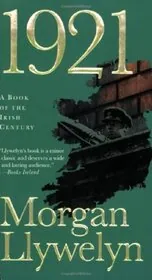
1921
by Morgan Llywelyn
2001
Journalist Henry Mooney tries to report the truth as civil war and partition tear Ireland apart. His love for an Englishwoman makes an already brutal political year even more complicated.
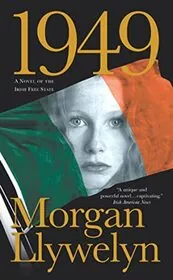
1949
by Morgan Llywelyn
2003
Ursula Halloran comes of age in a young Irish state shaped by civil war, Church control, and looming world conflict. Her fierce independence makes both public history and private life harder.
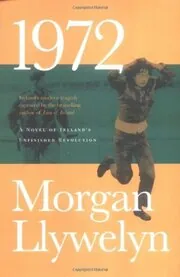
1972
by Morgan Llywelyn
2005
Eighteen-year-old Barry Halloran joins the IRA believing he can finish Ireland's unfinished revolution. What follows is a harsher education in violence, divided loyalties, and the human cost of the Troubles.
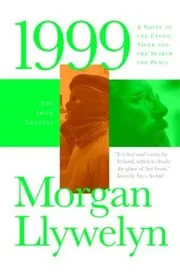
1999
by Morgan Llywelyn
2007
Barry Halloran, now a damaged but determined photojournalist, lives through the long shadow of Bloody Sunday and the Troubles. The novel brings the Irish Century sequence to the threshold of peace.
Irish Century books in chronological order
Series background & context
The Irish Century books are Morgan Llywelyn's long-form attempt to tell the story of modern Ireland through fiction without smoothing away the pain, argument, or contradiction. The series runs from the Easter Rising in 1916 to the peace process at the end of the twentieth century, and it follows not just public events but the private lives caught inside them.
That mix is what gives the books their pull.
Instead of writing history as a parade of dates and speeches, Llywelyn stays with families and connected characters across generations. Ned Halloran carries the story into 1916. Henry Mooney stands near the center of 1921. Ursula Halloran becomes crucial in 1949. Barry Halloran drives much of 1972 and 1999. Because the series keeps moving through one web of lives, political change never feels abstract.
The questions keep changing as the decades change. In the first books, the struggle is about rebellion, independence, treaty, partition, and civil war. Later it becomes a question of what kind of country Ireland is actually building, who gets left out, how women live inside a conservative state, what memory does to the next generation, and what happens when the unfinished business of partition erupts again in the North. By the time Barry's story takes over, the books are deep in the violence and moral confusion of the Troubles.
No one gets an easy ride here.
Llywelyn does not treat patriotism as simple, but she also does not pretend people fight and suffer for nothing. That balance is one of the best things about the series. It is sympathetic to the dream of Irish freedom while still willing to show rivalry, betrayal, grief, dogma, and the cost of hard ideological certainty. Characters fall in love, lose family, change their minds, cling to old beliefs, and sometimes discover that history has made choices for them before they were born.
The scale is broad, but the storytelling stays personal. A workplace, a school, a farm, a city street, a border crossing, a prison cell, a newsroom, a love affair, all of these matter because this is how large history becomes real. Even major figures such as Patrick Pearse, Michael Collins, and Eamon de Valera enter the series through the pressure they place on individual lives.
If you want a neat or neutral account of twentieth-century Ireland, this is not that. Irish Century is emotional, argumentative, and deeply invested in the people living through upheaval. That is exactly why it works. It gives readers a way into the century from the inside, where history is never over and peace is never simple.

Edited by
Software engineer whose passion for tracking book recommendations from podcasts inspired the creation of MRB.
Lead investor at 3one4 Capital whose startup expertise and love for books helped shape MRB and its growth.
Comments
Did we miss something? Have feedback?
Help us improve this page by sharing your thoughts