
Ira Levin Books in Order
Explore Ira Levin books in order, with quick summaries of his novels and plays, Rosemary series notes, and straightforward advice on where to start.
Last updated:
As an Amazon Associate, we earn from qualifying purchases (at no extra cost to you).
Ira Levin books in publication order
15 books
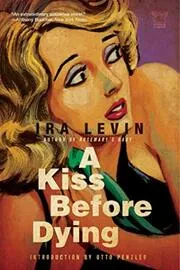
A Kiss Before Dying
by Ira Levin
1953
A charming college man will do almost anything to protect his future, even murder. Levin's debut follows the crime and its fallout with cool precision, shifting perspectives and tightening the screws as suspicion grows.

Interlock
by Ira Levin
1956
In postwar New York, a wealthy Gramercy Park woman sets her sights on her companion's gifted pianist fiance. Levin turns the setup into a tight psychological drama about jealousy, class, and manipulation.

No Time For Sergeants
by Ira Levin
1956
Will Stockdale, a cheerful country recruit, bumbles through military life with literal-minded innocence and wrecking-ball charm. Levin's stage version turns army routine into a warm, fast-moving comedy.

Critic's Choice
by Ira Levin
1959
A respected drama critic faces a comic nightmare when his wife writes a bad play and he has to review it. Levin mines marriage, ego, and show-business politics for sharp laughs.

Rosemary's Baby
by Ira Levin
1967
Rosemary Woodhouse thinks she is starting a new life in a Manhattan apartment building, until her pregnancy brings strange neighbors, medical control, and rising dread. Levin turns everyday married life into one of horror's great slow burns.

Dr. Cook's Garden
by Ira Levin
1968
A young doctor returns to his Vermont hometown and begins to suspect that his admired mentor's ideas about community health hide something darker. Levin uses a small-town setting to ask hard questions about ethics and power.

This Perfect Day
by Ira Levin
1970
In a world ruled by a central computer, monthly treatments keep everyone obedient, calm, and almost identical. When Chip begins to question the system, Levin turns a neat utopia into a tense fight for individuality.
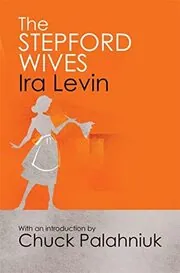
The Stepford Wives
by Ira Levin
1972
Joanna Eberhart moves with her family to Stepford, Connecticut, where the husbands seem pleased and the wives seem unnervingly perfect. Levin builds a lean, chilling story about conformity, control, and the terror hiding inside ordinary suburbia.

Break a Leg
by Ira Levin
1973
After years of being savaged by a poisonous critic, a struggling theater company plots an elaborate revenge using the very tricks of the stage. Levin plays the setup as a brisk farce with plenty of backstage bite.

Veronica's Room
by Ira Levin
1973
Susan agrees to impersonate a dead woman for what seems like a simple act of kindness. Inside a locked, old-fashioned room, identity starts to blur and Levin turns one evening into a nasty psychological trap.
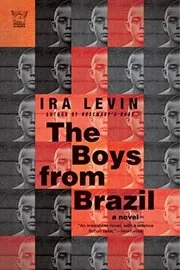
The Boys from Brazil
by Ira Levin
1976
A young investigator uncovers a plot tied to Josef Mengele, Nazi fugitives, and a terrifying experiment aimed at the future. As Nazi hunter Yakov Liebermann picks up the trail, the novel turns historical horror into a relentless thriller.

Deathtrap
by Ira Levin
1978
Blocked playwright Sidney Bruhl receives a brilliant script from a former student and sees a way back to success. Levin packs the play with reversals, bad faith, and wickedly funny suspense.

Cantorial
by Ira Levin
1984
When a couple buys a former Lower East Side synagogue converted into living space, they discover it is haunted by the ghost of its old cantor. Levin mixes humor, music, and the supernatural in a story about faith and identity.
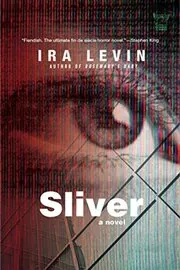
Sliver
by Ira Levin
1991
Kay Norris moves into a sleek Manhattan high-rise and begins to sense that someone inside knows far too much about every tenant. Levin turns voyeurism, technology, and city loneliness into a fast, creepy thriller.
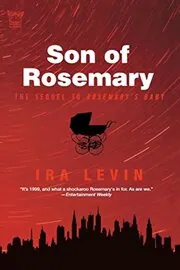
Son of Rosemary
by Ira Levin
1997
Rosemary wakes into 1999 and finds her grown son Andy adored as a spiritual leader around the world. Levin revisits the old nightmare through millennial panic, religious spectacle, and a mother's fear that evil may have returned in a new form.
Where to start with Ira Levin
For classic urban horror: Rosemary's Baby → Son of Rosemary
For sharp social suspense: The Stepford Wives → Sliver
For twisty suspense: A Kiss Before Dying → The Boys from Brazil
For dystopian science fiction: This Perfect Day
For stage suspense: Veronica's Room → Deathtrap
Ira Levin sub-series and character series
Ira Levin collections, short stories, and related book types
Plays
Standalone Ira Levin books
Author bio
Ira Levin was born in the Bronx in 1929 and grew up in Manhattan. New York stayed in his work. Even when he wrote about Satanism, cloned dictators, or a supposedly perfect future, his stories still felt rooted in apartments, offices, theaters, and streets people could picture.
He decided early that he wanted to write. His father hoped he would join the family toy business, but Levin kept pulling toward stories instead. He attended the Horace Mann School, spent two years at Drake University in Iowa, then transferred to New York University, where he earned degrees in English and philosophy in 1950.
Television opened the door.
While he was still at NYU, a CBS writing contest brought him his first professional credit and an agent. He started writing for radio and live television during the medium's early boom. That training mattered. It taught him to move fast, cut hard, and let suspense build one detail at a time.
His first novel, A Kiss Before Dying, arrived when he was in his early twenties and won the Edgar Award for Best First Novel. Soon after, he was drafted into the U.S. Army Signal Corps, where he wrote training films. He kept writing there too, and his work on No Time For Sergeants helped launch his Broadway career.
He never stayed in one lane for long.
Levin moved back and forth between novels and plays for the rest of his career, but the novels are where many readers start. Rosemary's Baby takes a young couple, an old Manhattan building, and a pregnancy, then turns domestic life into mounting dread. The Stepford Wives does something similar with suburbia, making perfect lawns and perfect spouses feel deeply wrong. This Perfect Day pushes into dystopian science fiction, and The Boys from Brazil turns Nazi history and cloning into a fast, unsettling chase.
Readers tend to like Levin for the same reasons across all those books. He writes cleanly. He sets up a problem fast. Then he keeps tightening it without much wasted motion. Again and again he returns to people trapped inside systems that claim to know better, husbands, doctors, towns, computers, experts, institutions. Even Sliver, his late Manhattan thriller, follows that pattern, taking city anonymity and voyeuristic technology and making them feel personal.
He had the same touch onstage. Critic's Choice showed his comic side. Veronica's Room leaned into psychological dread. Deathtrap mixed laughs and suspense so well that it became Broadway's longest-running thriller. It won Levin a second Edgar Award, this time for Best Play, and later the Mystery Writers of America named him a Grand Master. Across both novels and plays, he kept returning to control, conformity, performance, and the pressure people put on each other inside homes and communities.
In later life he remained closely tied to the works that made his name, but he kept writing across forms for decades. He spent much of his life in New York, and he died at his Manhattan home on November 12, 2007, at 78. What he left behind still feels modern because he understood a simple thing: the scariest stories often begin in very familiar rooms.










Edited by
Software engineer whose passion for tracking book recommendations from podcasts inspired the creation of MRB.
Lead investor at 3one4 Capital whose startup expertise and love for books helped shape MRB and its growth.
Comments
Did we miss something? Have feedback?
Help us improve this page by sharing your thoughts