
Henry Porter Books in Order
Explore Henry Porter books in order, with guides, series overviews, and brief summaries to help you choose where to start his espionage and political thrillers.
Last updated:
As an Amazon Associate, we earn from qualifying purchases (at no extra cost to you).
Henry Porter books in publication order
10 books
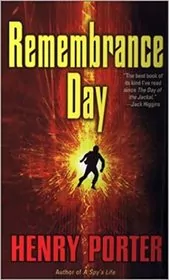
Remembrance Day
by Henry Porter
1999
After surviving a London bus bombing that kills his brother, Irish scientist Constantine Lindow is arrested as the prime suspect. To clear his name, he chases a shadowy bomber from Britain to America, uncovering coded plots and buried family secrets.
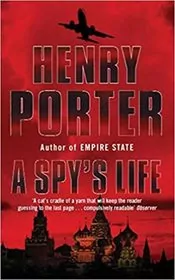
A Spy's Life
by Henry Porter
2001
Former British spy Robert Harland has rebuilt his life at the UN—until his plane crashes into New York’s East River and he alone survives. Hunted and mistrusted, he must dig into Cold War secrets and a brutal Bosnian past to learn why.
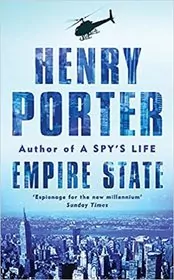
Empire State
by Henry Porter
2003
Days after 9/11, the head of the NSA is assassinated at Heathrow, a London family is slaughtered, and ominous postcards of the Empire State Building arrive in New York. Robert Harland races to connect the killings before a new attack erupts.
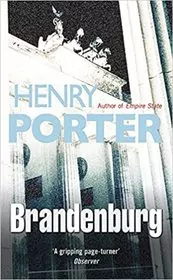
Brandenburg Gate
by Henry Porter
2005
In the last tense weeks before the fall of the Berlin Wall, former Stasi agent Rudi Rosenharte is blackmailed into a perilous mission to meet a lover he knows is dead. With his family hostage, he plays East and West off against each other to survive.
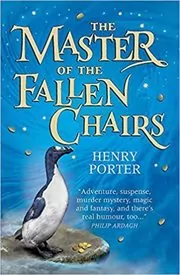
The Master of the Fallen Chairs
by Henry Porter
2008
Thirteen-year-old orphan Kim lives in Skirl, a crumbling mansion where a painting of thirteen chairs tracks his cursed family’s deaths. When a servant girl vanishes and a strange cousin arrives, the house’s shifting rooms and watchful ghosts force Kim to confront the legend.
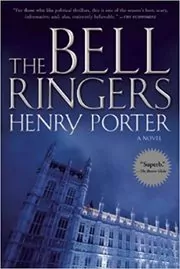
The Bell Ringers
by Henry Porter
2009
After her former lover dies in a bombing, lawyer and ex‑spy Kate Lockhart inherits his remote Welsh cottage—and a set of missing papers people are willing to kill for. Following his clues, she uncovers a chilling surveillance conspiracy inside Britain’s own government.
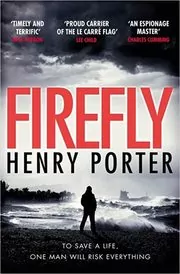
Firefly
by Henry Porter
2018
On the refugee trail from Greece to Germany, a thirteen‑year‑old Syrian boy codenamed Firefly carries priceless intelligence on an ISIS cell. Ex‑MI6 operator Paul Samson must find him first, battling traffickers, terrorists, and chaotic borders in a race across Europe.
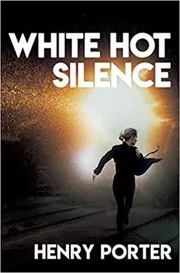
White Hot Silence
by Henry Porter
2019
Greek aid worker Anastasia Hisami is ambushed on an Italian road and wakes in a locked container at sea. With her billionaire husband jailed and enemies circling their hidden fortune, Paul Samson dives into a violent chase through mafias, mercenaries, and offshore money.

The Old Enemy
by Henry Porter
2021
While tailing a young tech analyst, Paul Samson barely survives an assassination attempt that coincides with the murder of veteran spy Robert Harland and the poisoning of billionaire Denis Hisami. Following the threads, Samson and Anastasia confront a buried Cold War enemy reshaping Western politics.

Enigma Girl
by Henry Porter
2025
Burned MI5 operative Slim Parsons is dragged out of hiding to pose as a reporter inside Middle Kingdom, a news site with uncanny access to state secrets. As her past target closes in, Slim uncovers hacked systems, forced labour, and a lethal new spy network.
Where to start with Henry Porter
If you like Cold War and post‑9/11 espionage: A Spy's Life → Empire State → Brandenburg Gate.
If you want contemporary, high‑stakes spy stories: Firefly → White Hot Silence → The Old Enemy.
If you prefer stand‑alone political thrillers: Remembrance Day → The Bell Ringers → Enigma Girl.
If you’re choosing for younger readers (~10–14): The Master of the Fallen Chairs.
Henry Porter sub-series and character series
Standalone Henry Porter books
Author bio
Henry Porter is an English novelist and journalist whose thrillers sit right on the fault lines of recent history. Born in 1953, he’s spent decades writing about spies, politics, and the ways governments watch their citizens.
He grew up in a military family: his father was the fifth generation to serve in the King’s Royal Rifle Corps. Much of his childhood was spent in Germany and moving between army camps, an unsettled early life that left him with a feel for borders, uniforms, and the atmosphere of the Cold War.
After school in rural Worcestershire, then a prep school he has described as miserable, he went on to Wellington College and the University of Manchester. Journalism became his way into the world, first on national newspapers and then as editor of the Atticus column in the Sunday Times, before he helped to launch a short‑lived but ambitious paper, the Sunday Correspondent, in the late 1980s.
From there his career widened out. Porter became a regular columnist for the Observer, writing for many years about civil liberties, surveillance and the health of democracy. At the same time he worked as the British editor of the magazine Vanity Fair for roughly a quarter of a century, commissioning and writing pieces that mixed politics, culture and long‑form reporting. He has also filed commentary and reportage for other major London papers.
That concern with rights and state power spilled over into activism. In 2008 he co‑founded the Convention on Modern Liberty, a large public event that brought lawyers, writers, campaigners and politicians together to talk about the erosion of civil liberties in Britain. Later he helped stage conferences on Brexit and the wider political shocks of the 2010s, and for a period he worked inside the campaign for a public vote on the final Brexit deal.
Alongside all of this, Porter built a substantial body of fiction. His early novels such as Remembrance Day and A Spy's Life introduced readers to a Europe still shaped by the Cold War and its aftermath, sending damaged former spies through London, New York, Prague and the Balkans. With Empire State and Brandenburg Gate he moved closer to the fall of the Berlin Wall and the paranoia of the post‑9/11 years, winning the CWA Ian Fleming Steel Dagger for Brandenburg Gate and earning multiple shortlistings for the same award.
In The Bell Ringers he turned his eye on a near‑future Britain saturated with cameras and databases, imagining how easily those tools could be turned against the public. More recently, the Paul Samson novels—Firefly, White Hot Silence and The Old Enemy—follow an ex‑MI6 officer through the refugee crisis, financial crime and renewed tension with Russia. Firefly won a major adventure‑writing prize, and later books in the sequence were recognised on thriller award lists.
Porter has also written for younger readers. The Master of the Fallen Chairs is a rich, uncanny fantasy set in a vast, shifting country house called Skirl, where an orphaned boy must untangle a family curse. And with Enigma Girl he returned to the spy novel with a new lead character, Slim Parsons, an MI5 agent whose undercover work takes her into the world of investigative journalism and modern codebreakers.
Across all of these stories run some clear threads: a fascination with Europe’s recent past, from divided Berlin to today’s migrant routes; a worry about how much of our lives we hand over to the state and to big technology; and a belief that ordinary people, not just spymasters and ministers, carry the real weight of political decisions. His plots can be complex, but the emotions—fear, loyalty, guilt, love—stay very human.
Porter lives in London with his wife, editor Liz Elliot, and they have two adult daughters. He spends time in Worcestershire, paints and draws, and somehow found himself president of his local village cricket club. On the page, though, he is rarely at rest, returning again and again to moments when history turns and asking what it feels like to stand in the middle of that change.











Edited by
Software engineer whose passion for tracking book recommendations from podcasts inspired the creation of MRB.
Lead investor at 3one4 Capital whose startup expertise and love for books helped shape MRB and its growth.
Comments
Did we miss something? Have feedback?
Help us improve this page by sharing your thoughts