
Helen Humphreys Books in Order
Explore Helen Humphreys books in order, with quick summaries, standout titles, and where to start with her novels, memoirs, and poetry, all in one place.
Last updated:
As an Amazon Associate, we earn from qualifying purchases (at no extra cost to you).
Helen Humphreys books in publication order
22 books

Gods and Other Mortals
by Helen Humphreys
1986
Humphreys's debut poetry collection moves between mythic scale and ordinary experience, holding gods and everyday people in the same frame. The poems are interested in desire, mortality, and the strange weight of being human.

Nuns Looking Anxious, Listening to Radios
by Helen Humphreys
1990
These poems work through memory, fragments, and the odd details that survive from the past. Humphreys writes about what lingers, what bruises, and what returns unexpectedly, with images that feel both sharp and dreamlike.

The Perils of Geography
by Helen Humphreys
1995
A poetry collection about place, distance, and the emotional borders people carry with them. Humphreys uses landscape, travel, and the language of direction to ask how we locate ourselves in the world.
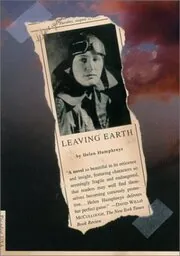
Leaving Earth
by Helen Humphreys
1997
Set in Depression-era Canada, this novel follows daring aviatrix Grace Alcock and twelve-year-old Maddy Stewart, who watches her from the ground with fierce devotion. Flight, longing, and rising menace on the home front drive the story.

Anthem
by Helen Humphreys
1999
In this poetry collection, Humphreys circles language, desire, love, and uncertainty with close, exacting attention. The poems care about what words can reveal, but also about where naming falls short.
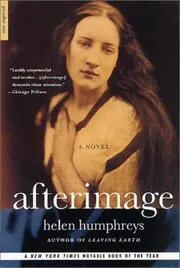
Afterimage
by Helen Humphreys
2000
In 1865 England, Irish maid Annie Phelan enters the household of a photographer modeled on Julia Margaret Cameron and becomes both muse and confidante. Art, desire, and power blur as Annie fights not to disappear inside other people's obsessions.
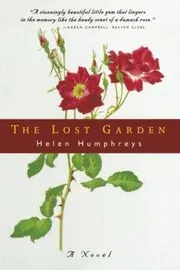
The Lost Garden
by Helen Humphreys
2002
In 1941, horticulturist Gwen Davis leaves bombed London for a Devon estate, where she supervises Land Girls and uncovers a hidden garden. Wartime duty gives way to love, secrecy, and a new sense of self.

Ethel on Fire
by Helen Humphreys
2003
A short early novella that turns ordinary life into something strange, intimate, and unsettling. Even in this compact form, Humphreys is already drawn to loneliness, memory, and the quiet pressure between people.
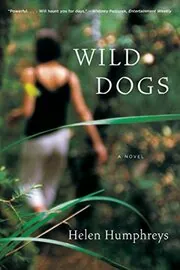
Wild Dogs
by Helen Humphreys
2004
Six people gather each evening at the edge of the woods, hoping their dogs will return after being driven into the wild. As the group forms a fragile community, loss and violence begin to close in.
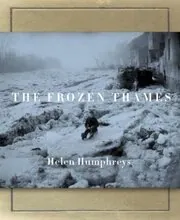
The Frozen Thames
by Helen Humphreys
2007
Forty brief pieces imagine the forty times the Thames froze solid, from medieval escapes to Frost Fairs and plague years. It's history in miniature, stitched together by weather, chance, and human longing.
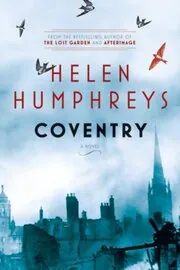
Coventry
by Helen Humphreys
2008
During the German bombing of Coventry in November 1940, widow Harriet works the cathedral fire watch and joins a young man searching the burning city for home. The novel captures one terrible night and the lives it changes.
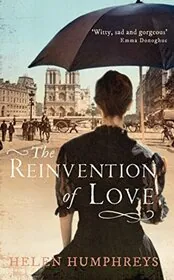
The Reinvention of Love
by Helen Humphreys
2010
Charles Sainte-Beuve enters Victor Hugo's circle and falls for Hugo's wife, Adèle, setting friendship, ambition, and betrayal on a collision course. Set in nineteenth-century Paris and beyond, the novel turns literary history into intimate drama.
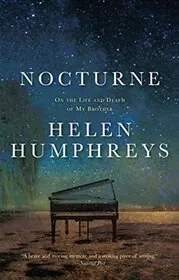
Nocturne
by Helen Humphreys
2013
Humphreys writes to her late brother Martin, a gifted concert pianist, in a spare memoir about illness, memory, and family. The short sections give grief a shape without pretending to tidy it up.
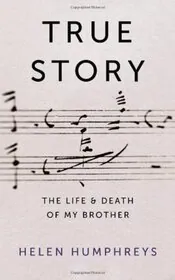
True Story
by Helen Humphreys
2013
Published in some editions under this title, Humphreys's memoir returns to the life and death of her brother Martin. It's an intimate book about mourning, shared history, and the way memory keeps shifting after loss.
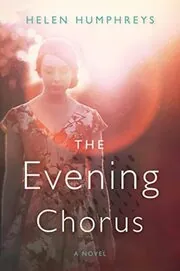
The Evening Chorus
by Helen Humphreys
2015
Shot down on his first mission, James Hunter survives the war in a German POW camp by studying a pair of redstarts. Back in England, his wife Rose and sister Enid are fighting private wars of their own.
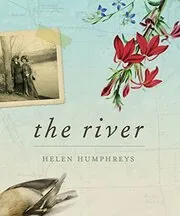
The River
by Helen Humphreys
2015
Humphreys watches the Napanee River across seasons, species, maps, and human traces, trying to see it on its own terms. The result is a lyrical mix of natural history, photographs, memory, and place.
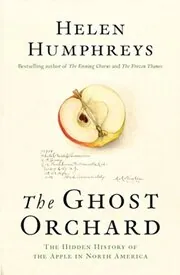
The Ghost Orchard
by Helen Humphreys
2017
Starting with an old apple tree near her home, Humphreys digs into the hidden history of apples in North America. The book follows orchards, settlers, Indigenous histories, lost varieties, and the personal grief that shadows her research.
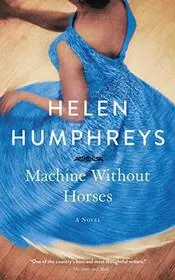
Machine Without Horses
by Helen Humphreys
2018
After reading an obituary, a writer sets out to imagine the private life of famed Scottish salmon-fly dresser Megan Boyd. The book moves between research and invention, asking how much of a life can ever truly be known.
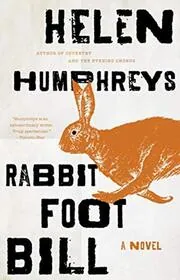
Rabbit Foot Bill
by Helen Humphreys
2020
In 1947 Saskatchewan, lonely boy Leonard Flint befriends the outsider known as Rabbit Foot Bill and then sees him commit a shocking act of violence. Years later, at a mental hospital, Leonard is drawn back into Bill's story.
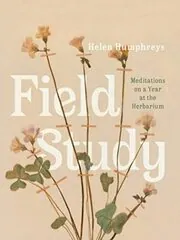
Field Study
by Helen Humphreys
2021
After discovering a local herbarium, Humphreys spends a year following the stories pressed inside dried plants and old labels. The book blends botany, history, memoir, and grief into a quiet study of what survives.
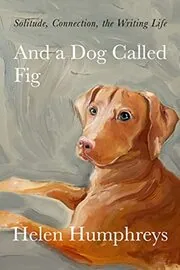
And a Dog Called Fig
by Helen Humphreys
2022
In this memoir, Humphreys writes about the dogs she has loved, especially her new Vizsla puppy Fig, and the way they shape solitude, walking, and work. It is part writing life, part dog book, part meditation on companionship.

Followed by the Lark
by Helen Humphreys
2024
Humphreys imagines Henry David Thoreau as a son, brother, walker, and friend, rather than just a monument. Moving through Concord, Walden, loss, and political awakening, the novel gives his inner life warmth and texture.
Where to start with Helen Humphreys
If you want a strong first novel: Leaving Earth → Afterimage → The Lost Garden
If you like wartime historical fiction: The Lost Garden → Coventry → The Evening Chorus
If you want nature-rich nonfiction: The Frozen Thames → The River → Field Study → The Ghost Orchard
If you want something personal and intimate: Nocturne → And a Dog Called Fig
If you enjoy biographical fiction: Machine Without Horses → Followed by the Lark
Helen Humphreys collections, short stories, and related book types
Short Stories/Novellas
Collections
Non-Fiction
Standalone Helen Humphreys books
Author bio
Helen Humphreys was born in Kingston-on-Thames, England, in 1961 and moved to Canada as a child. She grew up between those two reference points, England by birth and Ontario by upbringing, and that double map still shows in her work. Again and again she returns to English weather, gardens, rivers, war stories, and the feeling of being both close to a place and slightly apart from it. Her parents were both children during the war, and those inherited stories helped feed several of her later novels.
She has said that she started writing young and simply kept going. She read constantly, wrote poems first, and sent them out until they began to find readers. Her first book of poetry appeared when she was in her mid-twenties, and poetry never really left the room, even after she turned to fiction. You can feel that background in the compression of her prose and in the way she notices birds, light, frost, flowers, and silence.
She started as a poet, then widened the frame.
Her breakthrough as a novelist came with Leaving Earth, a historical novel about flight, longing, and life on the ground during the Depression. It won the City of Toronto Book Award and introduced many readers to the calm intensity that would become one of her signatures. A few years later Afterimage, inspired by the work of Julia Margaret Cameron, won the Rogers Writers' Trust Fiction Prize and showed how comfortably Humphreys could move inside the lives of artists, servants, and outsiders. More recently, books like Machine Without Horses and Followed by the Lark have shown the same interest in real lives partly recovered from documents, rumor, and imagination.
A lot of her best-known fiction lives where history meets private feeling. The Lost Garden follows a horticulturist in wartime Devon and remains a favorite for readers who like gardens, loneliness, and unexpected love. Coventry and The Evening Chorus return to the Second World War from different angles, one through a single night of bombing, the other through captivity, marriage, birds, and survival. Her characters are often solitary people, a little off to the side, trying to make sense of duty, desire, grief, or change.
Nature is never just background in her books.
That is especially clear in works like The Frozen Thames, The River, Field Study, and The Ghost Orchard. These books move between history, observation, memory, and the natural world with very little fuss. A river is also a way of thinking. A herbarium becomes a record of vanished hands and vanished habitats. Apples open into stories about settlement, loss, and what gets preserved. She is drawn less to plot mechanics than to the pressure of attention, what happens when someone studies a bird, a current, a pressed flower, or a piece of fruit long enough for history to stir.
Her nonfiction can also be intensely personal. Nocturne, published in some editions as True Story, is a memoir about the life and death of her brother Martin, a concert pianist. Later, And a Dog Called Fig used the dogs in her life as a way into solitude, companionship, walking, and the writing life itself. Even when she is dealing with grief, she tends to write without a lot of grand language. That plainness is part of the power.
Humphreys lives and works in Kingston, Ontario. She has taught, served in writer-in-residence roles, and was Kingston's poet laureate. By now her shelf includes poetry, novels, memoir, and books that sit happily between genres. What ties them together is easy to recognize: close attention, a liking for quiet people and overlooked histories, and a steady belief that landscapes, animals, and small daily rituals can tell us as much about a life as the big dramatic moments.


Edited by
Software engineer whose passion for tracking book recommendations from podcasts inspired the creation of MRB.
Lead investor at 3one4 Capital whose startup expertise and love for books helped shape MRB and its growth.
Comments
Did we miss something? Have feedback?
Help us improve this page by sharing your thoughts