
Hao Jingfang Books in Order
Browse Hao Jingfang books in order, with quick summaries of Vagabonds, Jumpnauts, and Folding Beijing, plus a short bio and simple where-to-start reading tips.
Last updated:
As an Amazon Associate, we earn from qualifying purchases (at no extra cost to you).
Hao Jingfang books in publication order
3 books

Folding Beijing
by Hao Jingfang
2015
In a future Beijing literally split into separate worlds for different classes, waste worker Lao Dao takes an illegal errand to pay for his daughter's kindergarten. The trip shows him how brutally the city is built, and who gets left underneath it.
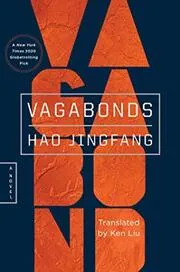
Vagabonds
by Hao Jingfang
2016
After years on Earth as a goodwill delegate, Luoying returns to Mars just as talks between the two worlds begin to fail. Caught between rival cultures and political visions, she has to figure out where, and with whom, she belongs.

Jumpnauts
by Hao Jingfang
2024
When signs suggest an ancient alien presence is returning to Earth, three uneasy allies race to make first contact before rival power blocs turn the moment into war. It mixes cosmic mystery, old history, and political tension.
Where to start with Hao Jingfang
If you want the quickest introduction to her big themes: Folding Beijing → Vagabonds
If you want a longer, more political coming-of-age story: Vagabonds → Jumpnauts
If you want first contact and cosmic mystery first: Jumpnauts → Folding Beijing
Hao Jingfang collections, short stories, and related book types
Short Stories/Novellas
Standalone Hao Jingfang books
Author bio
Hao Jingfang was born in Tianjin, China, in 1984 and grew up in an academic family there. She started writing young, and in 2002, while still in high school, she won first prize in the New Concept Writing Competition, an early sign that words were going to stay with her.
She did not take the obvious literary route. Hao studied physics at Tsinghua University, graduated in 2006, and later returned to earn a doctorate in economics and management in 2013. She has said that looking at inequality in contemporary China pushed her from the language of physics toward economics, and that shift helps explain why her fiction is so interested in systems, class, and the pressure large structures put on everyday lives.
That mix became her lane.
Hao has said translated fiction helped open science fiction up for her, because it showed her new kinds of worlds and new ways to think. She began writing novels around 2006, and she has often written alongside a demanding day job rather than apart from it. For years she worked as a researcher at the China Development Research Foundation, which gave her a close view of policy, numbers, and the distance between neat plans on paper and messy life on the ground.
That background runs straight through Folding Beijing, the story that brought her widest attention in English. It won the 2016 Hugo Award for Best Novelette, making her the first Chinese woman to receive a Hugo, but the striking thing about the piece is how personal it feels. The premise is huge, a city literally folded into separate social worlds, yet the story stays with one worker trying to make a better life for a child.
She likes big ideas, but she rarely leaves people behind.
Her later books show how broad that range can be. Vagabonds follows young Martians returning home after years on Earth and turns interplanetary politics into a coming-of-age story about loyalty, culture, and not quite belonging anywhere. Jumpnauts moves toward first contact, ancient mysteries, and rival global power blocs, but even there Hao is less interested in swagger than in how history, belief, and personal choices shape the future.
Across her work, certain threads keep returning. She likes parallel worlds, not just in the science fiction sense, but in the social sense too: different classes, different ideologies, different groups living side by side and barely seeing one another. She has written that she wants to explore how society shapes people, and that shows in the way her stories test whole systems while keeping an eye on private feelings, families, and moral compromise. Readers often come to her for the thought experiments and stay for the quieter emotional questions underneath.
In recent years, Hao has also spent serious time on education. She founded Tong Xing College, a project focused on children's learning and creativity, and has spoken about giving kids space to try, fail, and think for themselves. Based in Beijing, she has moved between research, education, and fiction without treating those worlds as separate, which may be why her books feel both conceptual and grounded.





Edited by
Software engineer whose passion for tracking book recommendations from podcasts inspired the creation of MRB.
Lead investor at 3one4 Capital whose startup expertise and love for books helped shape MRB and its growth.
Comments
Did we miss something? Have feedback?
Help us improve this page by sharing your thoughts