
Hank Messick Books in Order
Browse Hank Messick books in order, with quick summaries, background on his reporting and crime writing, and clear advice on where to start.
Last updated:
As an Amazon Associate, we earn from qualifying purchases (at no extra cost to you).
Hank Messick books in publication order
14 books
Syndicate Wife
by Hank Messick
1968
Centered on Ann Drahmann Coppola, this book uses one woman's life to open a larger view of mob power in Newport and the Cincinnati area. Messick mixes biography, local history, and crime reporting to show how ordinary lives get pulled in.
The Syndicate Abroad
by Hank Messick
1969
Messick follows organized crime beyond U.S. borders, especially as syndicate interests shifted into the Bahamas after the Cuban Revolution. It is part financial trail, part political expose, and part underworld travelogue.
Lansky
by Hank Messick
1971
Messick's best-known book follows Meyer Lansky from street gangs to casinos, unions, and syndicate power. It is a fast, skeptical portrait of a man long seen as one of the key organizers of American organized crime.
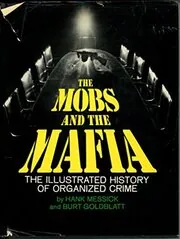
The Mobs and the Mafia
by Hank Messick
1972
An illustrated overview of organized crime, from bootlegging and rackets to labor influence and political corruption. Messick maps the mob's rise, its methods, and the strange mix of fear and fascination surrounding it.
The Beauties and the Beasts
by Hank Messick
1973
Messick explores the long, uneasy overlap between organized crime and American show business. He follows money, favors, and hidden influence to show how glamour and underworld power often fed each other.
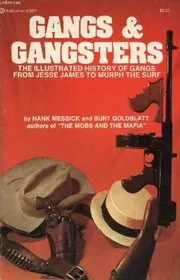
Gangs and Gangsters. The Illustrated History of Gangs from Jesse James to Murph the Surf
by Hank Messick
1974
A brisk, illustrated survey of outlaw gangs and famous criminals, moving from Jesse James to Murph the Surf. Messick links colorful individual stories to a broader history of violence, robbery, and American underworld mythmaking.
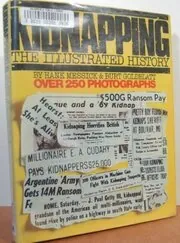
Kidnapping
by Hank Messick
1974
This illustrated history revisits notorious abductions from the early twentieth century into the 1970s, including the Lindbergh case and Patty Hearst. Messick treats kidnapping as both public spectacle and brutally personal crime.
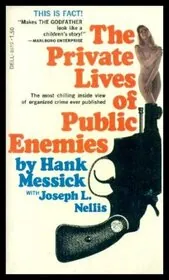
The Private Lives of Public Enemies
by Hank Messick
1974
Messick looks past gangster glamour to the habits, appetites, and business instincts of mob figures. The result is an inside look at organized crime as a way of life, not just a string of headlines.
King's Mountain
by Hank Messick
1976
Messick turns to Revolutionary War history, telling the story of the Blue Ridge fighters who marched to King's Mountain in 1780. The book builds toward the battle that helped shift momentum in the South.
The Only Game in Town
by Hank Messick
1976
This illustrated history tracks gambling from private wagers to racetracks, casinos, and other big-money enterprises. Messick shows why the pastime never stays just a game once politics, vice, and organized crime move in.
The Politics of Prosecution
by Hank Messick
1978
A close look at the Otto Kerner case, this book follows prosecutor Jim Thompson, racetrack power, and the Nixon-era politics surrounding the trial. Messick is interested in how ambition, money, and justice collide.
Of Grass and Snow
by Hank Messick
1979
Messick traces the postwar drug trade as marijuana, cocaine, and heroin reshape organized crime. He follows smugglers, shifting routes, and law enforcement efforts to show how a new criminal elite took hold.
Desert Sanctuary
by Hank Messick
1987
A change of pace from Messick's crime books, this essay collection follows him as he builds a life in a remote valley near the Arizona-New Mexico border. It is part nature writing, part frontier reflection, and full of hard practical detail.
Razzle Dazzle
by Hank Messick
1995
Messick revisits Newport, Kentucky, where gambling, prostitution, and mob power shaped civic life for decades. Part reportage, part personal history, it follows the push to break the syndicate's grip and expose how the whole system worked.
Where to start with Hank Messick
If you want his best-known mob biography: Lansky → The Syndicate Abroad → Razzle Dazzle
If you want Newport and Northern Kentucky corruption: Syndicate Wife → Razzle Dazzle
If you prefer big-picture crime history: The Mobs and the Mafia → Gangs and Gangsters. The Illustrated History of Gangs from Jesse James to Murph the Surf → The Only Game in Town
If you want politics, courts, and the drug trade: The Politics of Prosecution → Of Grass and Snow
Hank Messick collections, short stories, and related book types
Non-Fiction




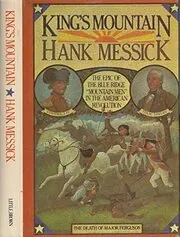
by Hank Messick
1976The epic of the Blue Ridge "mountain men" in the American Revolution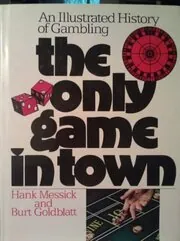

by Hank Messick
1978Jim Thompson, Marje Everett, Richard Nixon & the Trial of Otto Kerner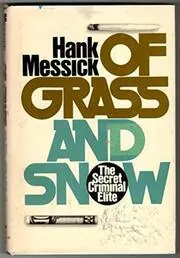

Author bio
Hank Messick was born Henry Hicks Messick in Happy Valley, North Carolina, in 1922. He grew up in the Carolina mountains, and that plainspoken, back-roads feel stayed with him even when his subject became casinos, corrupt sheriffs, and national crime syndicates.
He studied at the University of North Carolina and the University of Iowa, then briefly taught English at what is now Colorado State University.
Teaching did not hold him for long.
Newsrooms did. Messick started out on North Carolina papers, including the Waynesville Mountaineer, where an early story about bootleggers operating near a school got him roughed up by a crooked local cop. It was a rough introduction, but it also showed the kind of reporting he was built for.
He later worked for the Louisville Courier-Journal, the Miami Herald, and the Miami Beach Sun. In Louisville he dug into illegal gambling in Newport, Kentucky, and in Miami he investigated police corruption. A loan-shark expose in the 1950s brought him national television attention, and in the 1960s he twice received Ford Foundation support to travel and report on organized crime.
Books grew naturally out of that work.
After a brief and rocky stop at the Boston Traveler, where his reporting ran too close to one of the paper's powerful interests, he turned to writing full time. His first book, The Silent Syndicate, appeared in 1967 and started a long run of nonfiction about crime, politics, and the people who profit when the law looks away.
His best-known book is Lansky, a biography of Meyer Lansky that helped make Messick one of the better-known American writers on organized crime. Readers who like his work usually come for the density of reporting, the regional detail, and the sense that vice is never just about gangsters. In Messick's telling, it is also about judges, racetrack owners, police chiefs, fixers, and whole cities learning to live with dirty money.
That same approach runs through Syndicate Wife, which uses Ann Drahmann Coppola's life to open up Newport's mob world, and Razzle Dazzle, his late, personal account of the fight over vice in Northern Kentucky. In books like The Mobs and the Mafia, The Only Game in Town, and Of Grass and Snow, he widened the frame to cover organized crime, gambling, and the drug trade. He was especially interested in places outside the usual New York and Chicago story line. Kentucky, Florida, the Bahamas, Hollywood, and even the desert all show up in his map of American corruption.
He also took one notable detour with King's Mountain, a history of the Revolutionary War battle that shows how closely he still felt tied to Southern history. Late in life he was hit hard by Sjogren's syndrome and eventually lost his sight. Even then, he kept working, dictating Razzle Dazzle from memory.
Messick died in Cocoa, Florida, in 1999 and was survived by his wife, Faye, and three children. His books are very much of their era, but they still move with the energy of a reporter who preferred trouble, if it meant getting a little closer to the truth.





%2C%20Book%206.jpg)
%2C%20Book%2011.jpg)

%2C%20Book%2012.jpg)
%2C%20Book%208.jpg)
Edited by
Software engineer whose passion for tracking book recommendations from podcasts inspired the creation of MRB.
Lead investor at 3one4 Capital whose startup expertise and love for books helped shape MRB and its growth.
Comments
Did we miss something? Have feedback?
Help us improve this page by sharing your thoughts