
Gyo Books in Order
Part ofJunji Ito Books in OrderThe Gyo series by Junji Ito depicts a grotesque invasion where marine life, powered by mechanical legs and a "death stench," terrorizes the land.
Last updated:
As an Amazon Associate, we earn from qualifying purchases (at no extra cost to you).
Gyo books in publication order
2 books
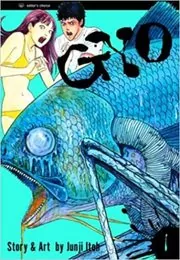
Gyo, Vol. 1
by Junji Ito, Yuji Oniki & Alvin Lu
2002
A foul "death stench" ruins a couple's vacation in Okinawa, followed by fish that walk on mechanical legs. Tadashi and Kaori find themselves trapped as the sea life invades the land, bringing a biological horror that threatens all of humanity.
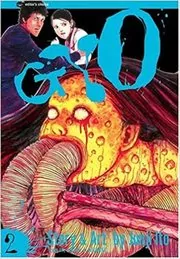
Gyo, Vol. 2
by Junji Ito, Yuji Oniki & Alvin Lu
2004
The mechanical invasion spreads to Tokyo, and the gas that powers the walking machines begins to infect humans. Tadashi searches for Kaori in a city overrun by decay and metal, discovering the dark history behind the death stench.
Gyo books in chronological order
Series background & context
Tadashi and his girlfriend Kaori head to Okinawa expecting a peaceful scuba diving vacation. They want blue water and fresh sea air. Instead, they are greeted by a rancid, inescapable odor that seems to hang heavy over the island. It smells like rotting flesh, but worse—it smells like the "death stench." Then the source reveals itself. It isn’t a ghost or a human killer, but a fish scuttling across the land on sharp, spindly metal legs.
It sounds like a joke at first. A walking fish is an absurd concept that could easily be comedy. However, Junji Ito illustrates these creatures with such clinical, gritty precision that the laughter dies instantly. The legs are frantic and sharp, piercing whatever gets in their way.
Soon, the isolation of the island provides no safety. The phenomenon spreads to the mainland, hitting Tokyo with catastrophic force. The ocean effectively empties itself onto the streets. It isn't just small fish anymore; great white sharks smash through doorways and bloated whales crush traffic, all propelled by the mysterious, gas-powered walkers. The invasion is loud, chaotic, and overwhelming.
The horror isn't limited to the creatures’ teeth.
The gas that powers these walking machines is infectious. As the "death stench" pervades the city, humans begin to succumb to the toxin. They bloat, distort, and eventually become candidates for the machines themselves. This transition from a creature feature to a pandemic nightmare showcases Ito’s talent for body horror. The artwork highlights the gross physical reality of the situation—the sweat, the grime, and the swelling flesh. Kaori, already sensitive to the smell, finds herself particularly vulnerable, grounding the large-scale disaster in a personal, tragic struggle.
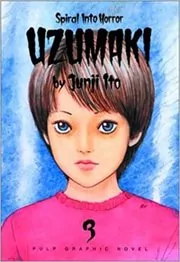
Readers familiar with the slow, atmospheric spiral into madness found in Uzumaki will find a different beast here. Gyo is fast-paced and aggressive. It blends the tropes of a disaster movie with surreal, biological nightmare fuel.
Beneath the sensory assault, the story touches on lingering anxieties regarding war guilt. The walking machines are revealed to be remnants of failed World War II experiments, biological weapons that were lost at sea but never destroyed. It implies that the sins of the past have a way of resurfacing, literally walking out of the depths to haunt the present. It is a messy, loud, and distinct entry in Ito’s bibliography that refuses to let you look away.











Edited by
Software engineer whose passion for tracking book recommendations from podcasts inspired the creation of MRB.
Lead investor at 3one4 Capital whose startup expertise and love for books helped shape MRB and its growth.
Comments
Did we miss something? Have feedback?
Help us improve this page by sharing your thoughts