
Freidrich Nietzsche Books in Order
Browse Friedrich Nietzsche books in order, with concise summaries, context for major works, and a clear guide to where to start reading his philosophy.
Last updated:
As an Amazon Associate, we earn from qualifying purchases (at no extra cost to you).
Freidrich Nietzsche books in publication order
25 books
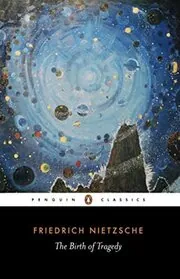
The Birth of Tragedy
by Freidrich Nietzsche
1871
Nietzsche's first book argues that Greek tragedy grew from a tense union of Apollonian order and Dionysian frenzy. It is part study of ancient drama, part manifesto about art, suffering, and the spiritual health of a culture.
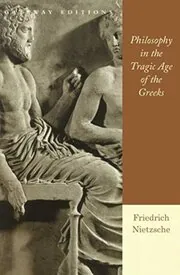
Early Greek Philosophy & Other Essays
by Freidrich Nietzsche
1872
This collection turns to the pre-Socratics and to early essays on Greek culture, art, music, and language. It offers a window into Nietzsche's formative interests and the classical world that shaped his first phase as a thinker.
On the Future of our Educational Institutions
by Freidrich Nietzsche
1873
Drawn from a series of lectures, this early work attacks shallow, utilitarian schooling and asks what real cultural education should do. It is Nietzsche thinking aloud about learning, taste, discipline, and the making of serious readers.
Thoughts Out of Season
by Freidrich Nietzsche
1874
These early essays challenge the culture of Nietzsche's day through portraits of David Strauss, history, Schopenhauer, and Wagner. They show him moving from classical scholarship toward the broader cultural criticism that would define his later work.
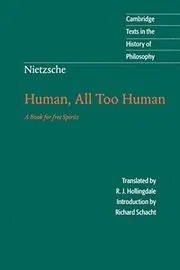
Human, All Too Human
by Freidrich Nietzsche
1875
Written in brief aphorisms, this book marks Nietzsche's turn away from romanticism and toward a cooler, analytical style. He probes morality, religion, art, and psychology, asking how much of human belief is habit, need, or illusion.
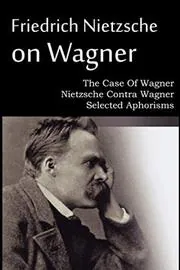
The Case of Wagner-Nietzsche, Contra Wagner, Selected Aphorisms
by Freidrich Nietzsche
1876
This collection circles around Nietzsche's break with Richard Wagner and his wider quarrel with decadence in modern culture. Alongside the music criticism, the aphorisms test ideas about art, health, style, and spiritual exhaustion.

Untimely Meditations
by Freidrich Nietzsche
1876
In four early essays, Nietzsche writes against the grain of his age, questioning fashionable culture, historical obsession, and easy hero worship. The book introduces themes that later grow into his critiques of morality, education, and modern life.

Daybreak
by Freidrich Nietzsche
1881
This book begins Nietzsche's sustained assault on moral prejudices. In hundreds of aphorisms, he examines motives, conscience, pity, and custom, showing how everyday morality may rest on fear, habit, and misunderstanding.
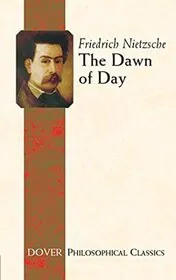
The Dawn of Day
by Freidrich Nietzsche
1881
Here Nietzsche turns a cold eye on moral prejudice, habit, and conscience. The book is less thunderous than his later works, but it quietly lays the groundwork for deeper critiques of morality, religion, and self-deception.

The Gay Science
by Freidrich Nietzsche
1882
Playful on the surface and unsettling underneath, this book ranges across art, knowledge, love, suffering, and belief. It contains the madman passage on God's death and some of Nietzsche's boldest calls to embrace life without guarantees.
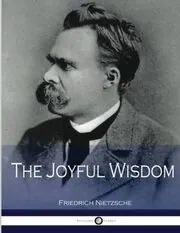
The Joyful Wisdom
by Freidrich Nietzsche
1882
This lively aphoristic work blends wit, skepticism, and sudden seriousness as Nietzsche tests old beliefs against a freer way of living. It includes his famous reflections on the death of God and the challenge of affirming life.
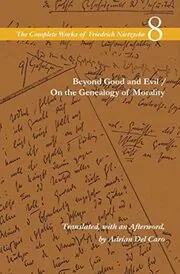
Beyond Good and Evil
by Freidrich Nietzsche
1883
In brisk aphorisms, Nietzsche questions inherited morality, philosophical certainty, and the motives behind truth-seeking itself. The book pushes beyond simple oppositions and asks what kinds of values and ways of life actually strengthen people.
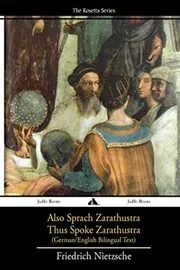
Thus Spoke Zarathustra
by Freidrich Nietzsche
1883
A wandering prophet descends from the mountains to challenge pity, conformity, and old values. Told in parables and speeches, this is Nietzsche's most poetic book and the home of ideas like the overman and eternal recurrence.
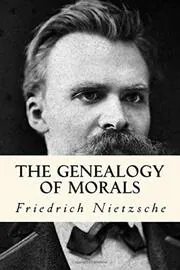
The Genealogy of Morals
by Freidrich Nietzsche
1884
In three linked essays, Nietzsche asks where guilt, bad conscience, and moral ideals come from. It is one of his clearest books, tracing morality as a human history shaped by struggle, resentment, and power.
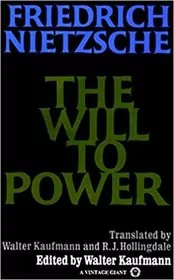
The Will to Power
by Freidrich Nietzsche
1885
A posthumous selection from Nietzsche's notebooks, this volume gathers fragments on nihilism, values, power, and interpretation. It is best read as working material rather than a finished book, but it shows his ideas in motion.
Recommended by
1 person Jordan Peterson recommended this book
Jordan Peterson
Recommended on Jordan Peterson's website.
Jordan Peterson's recommendation of this book
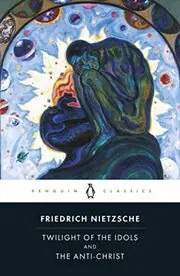
The Twilight of the Idols and the Anti-Christ
by Freidrich Nietzsche
1886
This late collection pairs two of Nietzsche's fiercest attacks on complacent philosophy and Christianity. Short, punchy, and provocative, it distills many of his mature themes into some of his most direct and readable pages.
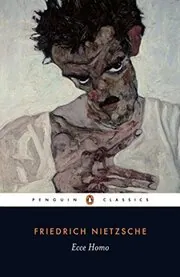
Ecce Homo
by Freidrich Nietzsche
1888
Nietzsche's strange, sharp late self-portrait looks back over his books and explains how he understood his own project. Part autobiography and part intellectual reckoning, it turns style, health, morality, and destiny into a personal argument.

The Antichrist
by Freidrich Nietzsche
1895
One of Nietzsche's most ferocious late books, this polemic attacks Christianity as life-denying and morally corrosive. It is concise, abrasive, and central to understanding how far his critique of religion finally went.

The Portable Nietzsche
by Freidrich Nietzsche
1977
This broad anthology gathers major works and key excerpts into one convenient volume. It is one of the easiest ways to sample Nietzsche across periods, moving from early fragments to Zarathustra and the forceful late books.

The Birth of Tragedy and Other Writings
by Freidrich Nietzsche
1999
Alongside the main essay, this volume gathers early writings that show Nietzsche working out his views on Greek culture, art, history, and education. It offers a fuller picture of the first stage of his intellectual life.

The Anti-Christ, Ecce Homo, Twilight of the Idols
by Freidrich Nietzsche
2001
This late-career collection brings together three of Nietzsche's sharpest and most revealing works. Read together, they show his attack on Christianity, his summary of earlier books, and his fast, hammer-like critique of philosophy and culture.

Writings from the Early Notebooks
by Freidrich Nietzsche
2003
These notebook selections trace Nietzsche before his mature fame, from philology and Schopenhauer to early thoughts on Greek culture and art. They are fragmentary, but they show a young thinker building the concerns that later define him.

Writings from the Late Notebooks
by Freidrich Nietzsche
2003
Drawn from the years just before his collapse, these notebook pieces show Nietzsche testing ideas on value, nihilism, power, and interpretation. They are unfinished by nature, but they reveal the pressure and reach of his late thinking.
Index to Nietzsche
by Freidrich Nietzsche
2008
A reference companion rather than a philosophical work, this volume helps readers track names, themes, and foreign quotations across Nietzsche's writings. It is useful when you want to locate passages or follow recurring ideas through the books.

God Is Dead. God Remains Dead. And We Have Killed Him.
by Freidrich Nietzsche
2021
This short selection centers on Nietzsche's famous declaration about the death of God and the crisis that follows. It is less a victory cry than a challenge, asking what values can survive once old certainties collapse.
Where to start with Freidrich Nietzsche
If you want the best overview first: The Portable Nietzsche → The Gay Science → Beyond Good and Evil
If you want the famous poetic book: Thus Spoke Zarathustra → Beyond Good and Evil
If you want the clearest path into his moral critique: Daybreak → The Genealogy of Morals → The Twilight of the Idols and the Anti-Christ
If you want to follow his development from the beginning: The Birth of Tragedy → Human, All Too Human → The Gay Science
Standalone Freidrich Nietzsche books
Author bio
Friedrich Nietzsche was born in 1844 in Röcken, a small village in Prussian Saxony, and grew up mostly in nearby Naumburg. His father, a Lutheran pastor, died when Nietzsche was still a small child, and the family soon became a household centered on his mother, sister, grandmother, and aunts. That early mix of loss, religion, discipline, and close family life stayed in the background of his writing.
At Schulpforta, the demanding boarding school he attended as a teenager, he received a rigorous classical education and developed a lasting love of Greek literature, music, and language. He began university studies at Bonn, then moved to Leipzig, where two things mattered a great deal: his discovery of Arthur Schopenhauer's philosophy and his growing connection to Richard Wagner. He also wrote music of his own, and for a time he looked as much like an artist in training as a future philosopher.
Nietzsche's academic rise was quick. In 1869, at just twenty-four, he became a professor of classical philology at the University of Basel. Not long after, he served as a medical orderly during the Franco-Prussian War, an experience that further damaged his already fragile health. His first book, The Birth of Tragedy, showed that he was never going to stay quietly inside the borders of ordinary scholarship. It treated Greek tragedy as a meeting of Apollonian form and Dionysian energy, and it announced many of the interests that would keep returning for the rest of his life.
He kept moving.
Forced to leave Basel in 1879 because of migraines, eye trouble, and recurring illness, Nietzsche spent much of the 1880s living as an independent writer in Switzerland, Italy, and France, while also returning at times to Naumburg. Those wandering years were also his most productive. In Human, All Too Human, Daybreak, and The Gay Science, he turned toward aphorism, psychology, and suspicion, asking where moral habits come from and what remains when inherited beliefs stop feeling secure. Then came Thus Spoke Zarathustra, Beyond Good and Evil, and The Genealogy of Morals, books that readers still come to for their attacks on moral certainty and their challenge to create values rather than simply inherit them.
He was never an easy writer, but he was often a vivid one. He liked aphorisms, parables, jokes, reversals, and sudden changes in tone. He can sound like a poet, a psychologist, and a heckler in the same page. Readers return to him not just for famous phrases, but for the feeling that he is testing everything in real time: religion, pity, guilt, art, resentment, courage, health, and the problem of how to live honestly after old certainties begin to fail.
He was writing at full speed.
In 1888 he produced a remarkable late run that included Twilight of the Idols, The Antichrist, and Ecce Homo. These books are shorter, sharper, and in some ways more exposed than the earlier work. They show a thinker looking back over his own books, settling scores with Christianity and modern culture, and pushing his style into something leaner, more aggressive, and often very funny.
In January 1889, while in Turin, Nietzsche suffered the mental collapse from which he never recovered. He spent time in a clinic, then lived under family care in Naumburg and later Weimar until his death in 1900. His sister played a large role in shaping his posthumous image, sometimes in misleading ways, which is one reason readers still pay close attention to editions and translations, especially for The Will to Power, a compilation drawn from notebooks rather than a finished book he prepared himself.







Edited by
Software engineer whose passion for tracking book recommendations from podcasts inspired the creation of MRB.
Lead investor at 3one4 Capital whose startup expertise and love for books helped shape MRB and its growth.
Comments
Did we miss something? Have feedback?
Help us improve this page by sharing your thoughts