
Franz Kafka Books in Order
Find Franz Kafka books in order, with short summaries and guides to the author's series that help you choose where to start and what to read next.
Last updated:
As an Amazon Associate, we earn from qualifying purchases (at no extra cost to you).
Franz Kafka books in publication order
10 books
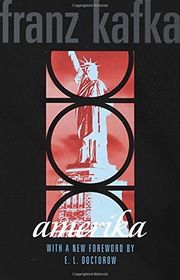
Amerika
by Franz Kafka
1927
Sent to America by his parents after a sexual misadventure, young Karl Rossmann tries to find a place in an unfamiliar society. A succession of bewildering reversals and encounters turns the promise of opportunity into an unpredictable struggle for belonging.
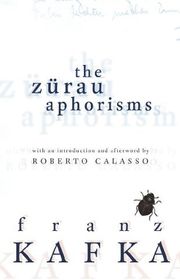
The Zürau Aphorisms
by Franz Kafka
1931
Written during a stay with his sister after the onset of tuberculosis, Kafka's philosophical fragments examine guilt, family, marriage, and human existence. These compact reflections offer another perspective on the questions that animate his fiction and personal writings.
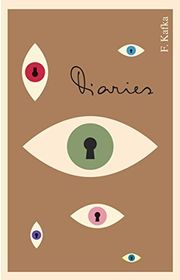
Diaries, 1910-1923
by Franz Kafka
1949
Kafka's diaries record dreams, daily life in Prague, family tensions, romantic uncertainty, and a persistent sense of estrangement. Covering the years before his death, these entries offer an intimate view of the experiences and anxieties surrounding his literary work.
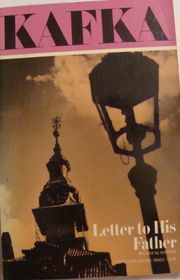
Letter to His Father
by Franz Kafka
1952
Kafka addresses his father in an extended attempt to explain the fear, resentment, and misunderstandings shaping their relationship. Written as a possible opening toward reconciliation, the letter exposes a painfully divided account of family authority and personal inadequacy.
Letters to Milena
by Franz Kafka
1952
Beginning as correspondence with his Czech translator, Kafka's letters to Milena Jesenská develop into an intense and troubled intimacy. They reveal his vulnerability, anxieties, and attachment to a woman who understood both his writing and his complicated emotional life.
The Complete Stories
by Franz Kafka
1976
Gathering Kafka's published stories alongside posthumous pieces and fragments, this collection presents the range of his short fiction. Its unsettling transformations, impossible demands, and elusive authorities explore alienation and vulnerability through narratives that combine precision, absurdity, and dread.
He
by Franz Kafka
2020
Joshua Cohen selects Kafka's brief fiction and nonfiction without separating stories from letters, diary entries, and workplace writing. Animals, food, belief, and everyday routines become occasions for the exacting logic and disorienting uncertainty characteristic of Kafka's imagination.
Parables and Paradoxes
by Franz Kafka
Nahum N. Glatzer gathers short Kafka texts in German and English, including parables and paradoxical pieces. The selection reimagines religious and mythological motifs through Kafka's humor and unsettling imagination, inviting questions about meaning and interpretation.
Recommended by
1 person Ricardo Semler recommended this book
Ricardo Semler
"Wonderful." - Ricardo Semler
The Lost Writings
by Franz Kafka
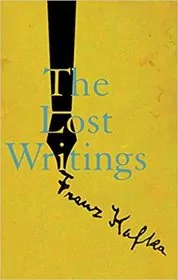
Reiner Stach selects seventy-four brief Kafka pieces, translated by Michael Hofmann, from the author's posthumous writings and fragments. The collection includes unfinished beginnings and miniature stories that reveal his handling of improbable situations within ordinary life.
Recommended by
1 person David Heinemeier Hansson recommended this book
David Heinemeier Hansson
"You're not here for a complete story, a narrative, but to bathe yourself in [the author]'s mind." - DHH
The Metamorphosis
by Franz Kafka
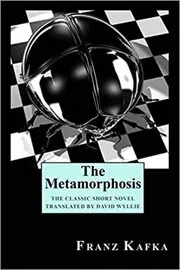
Gregor Samsa awakens transformed into a huge insect, making his familiar home suddenly strange and hostile. Kafka's novella explores his alienation as his family confronts a change that disrupts their relationships and expectations of him.
Recommended by
3 people David Lynch recommended this book
David Lynch
One of David Lynch's 3 answers to "what is the book (or books) you’ve given most as a gift?"
 PewDiePie recommended this book
PewDiePie
"A very sad story." - PewDiePie
 Lex Fridman recommended this book
Lex Fridman
Lex Fridman mentioned this book on Instagram.
Where to start with Franz Kafka
Start with the short fiction: The Metamorphosis → The Complete Stories
For a longer fictional journey: Amerika
For brief, puzzling pieces: Parables and Paradoxes → The Zürau Aphorisms → The Lost Writings
For a personal account of family conflict: Letter to His Father
For letters and notebooks: Letters to Milena → Diaries, 1910-1923
Standalone Franz Kafka books
Author bio
Franz Kafka wrote fiction in which an extraordinary event is often treated as a practical problem. A man wakes in a changed body, a newcomer tries to find a place in an unfamiliar country, or a brief exchange becomes a puzzle that will not settle into a clear lesson. His stories can be disturbing and funny at the same time, with an ordinary sentence carrying the reader into a situation whose rules remain uncertain.
Kafka was born in Prague on July 3, 1883.
The son of Hermann Kafka and Julie Löwy, he grew up in a Jewish family and wrote in German. He earned a doctorate in law in Prague and worked in insurance. Those facts place his writing beside a professional life of offices, procedures and obligations, although the fiction cannot be reduced to a disguised account of his employment. The strangeness comes partly from how recognizable the demands on his characters remain, even when their circumstances are impossible.
The Metamorphosis is a direct starting point. Gregor Samsa wakes transformed into a huge insect, but the story’s pressure also comes from work, dependence and the family’s expectations of him. The transformation is stated rather than gradually explained. Readers are left with the consequences: how to communicate, how to occupy the home, and what happens to relationships when someone can no longer perform the role others rely on.
Amerika offers a different kind of displacement. Karl Rossmann is sent to America after a family scandal and must make his way through an unfamiliar social world. The novel moves outward through encounters and changes of circumstance, giving readers a longer journey than the concentrated domestic crisis of The Metamorphosis. For those who prefer shorter pieces, The Complete Stories provides a broader selection, while Parables and Paradoxes turns toward brief forms whose apparent simplicity invites rereading.
His private writing opens another route into the work.
Letter to His Father was written to Hermann in November 1919 and never reached him. Its sustained account of a difficult relationship lets readers encounter Kafka addressing the problem of authority in a personal form. Letters to Milena and Diaries, 1910-1923 offer other kinds of intimacy, with letters and notebooks providing a different rhythm from a completed story. They are useful companions to the fiction rather than prerequisites for beginning it.
Kafka died of tuberculosis near Vienna on June 3, 1924. Much of the writing available afterward survived because his close friend Max Brod disregarded his request to destroy manuscripts. That history helps explain the mixture of finished stories, notebooks and fragments in his published work. The Lost Writings, selected by Reiner Stach and translated by Michael Hofmann, gathers miniature pieces and unfinished beginnings. Readers need not solve the biographical history before approaching them: begin with a story, attend to what its characters assume is normal, and notice how quickly that certainty becomes difficult to keep.


Edited by
Software engineer whose passion for tracking book recommendations from podcasts inspired the creation of MRB.
Lead investor at 3one4 Capital whose startup expertise and love for books helped shape MRB and its growth.
Comments
Spotted a missing book, a wrong order or a mistake? Tell us and we'll fix this page.
We're a reading guide, not the author or publisher, so we can't send books or pass on messages.