
Ford Madox Ford Books in Order
Explore Ford Madox Ford books in publication order, with short summaries and series lists to help you compare titles and choose your next book to read.
Last updated: 58 new books added
As an Amazon Associate, we earn from qualifying purchases (at no extra cost to you).
Ford Madox Ford books in publication order
62 books

The Brown Owl
by Ford Madox Ford
1891
Before his death, King Intafernes asks Princess Ismara to cherish a mysterious owl. As she inherits his kingdom, the bird becomes an unexpected companion while she faces court intrigue and the challenges of ruling a magical realm.

The Feather
by Ford Madox Ford
1892
Carried away by an eagle, Princess Ernalie discovers that one of its feathers can make her invisible. Her love for a displaced prince sends her on a journey to the moon, where saving him brings unexpected obstacles to returning home.
The Shifting of the Fire
by Joseph Conrad
1892
An early novel by Ford Madox Ford, sometimes associated with Conrad, it follows a young man entangled in love, marriage, and social ambition in late nineteenth century England. Shifting loyalties and private resentments test his sense of honour as passion clashes with convention.

The Questions at the Well
by Ford Madox Ford
1893
Published under the name Fenil Haig, this early poetry collection pairs four longer poems with fifteen shorter lyrics. Dedicated to Elsie Martindale, it introduces Ford’s experiments with verse written for musical expression.

The Queen Who Flew
by Ford Madox Ford
1894
An innocent queen spends her time conversing with an old bat, whose secret gives her the power of flight. Their unlikely friendship opens a fairy-tale adventure in which a familiar royal world takes on a new and extraordinary dimension.
Romance
by Joseph Conrad
1900
Written with Ford Madox Ford, this swashbuckling adventure follows young John Kemp from provincial England to the Caribbean, where smuggling, pirates, and political plots sweep him into danger. Amid treachery and revolution he must decide what courage and love really mean.

The Inheritors
by Joseph Conrad
1901
Co-written with Ford Madox Ford, this speculative tale introduces mysterious Fourth Dimensionists who infiltrate Britain's ruling class. A struggling writer is seduced by their cool efficiency and watches political and personal loyalties corrode under the pressure of ambition.

Rossetti
by Ford Madox Ford
1902
Ford Madox Ford examines Dante Gabriel Rossetti’s paintings and poetry through a critical essay informed by personal connections to the artist’s circle. The study considers Rossetti’s work across both forms and his place within the Pre-Raphaelite movement.

The Face of the Night
by Ford Madox Ford
1904
Ford brings together pastoral poems, songs, and a verse drama in this second sequence of Poems for Pictures. Shifting forms explore nature and human feeling, placing lyrical voices alongside scenes shaped by visual imagination and dramatic encounter.

Hans Holbein the Younger
by Ford Madox Ford
1905
Ford studies Hans Holbein the Younger’s life and work, contrasting his worldly realism with Dürer’s spiritual vision. Portraits, religious paintings, and decorative designs reveal an artist whose attention to individual character helped mark a changing outlook in European art.

The Benefactor
by Ford Madox Ford
1905
A wealthy patron supports young artists while navigating the ambitions and expectations of a closely connected social circle. His generosity complicates friendships and intimate attachments, raising questions about the point at which help becomes influence or a claim on another person.

The Soul of London
by Ford Madox Ford
1905
Ford captures London at the beginning of the twentieth century through its daily rhythms, social contrasts and changing neighborhoods. His observations connect the city’s wealth and poverty with the experiences of people living through rapid urban transformation.

Christina's Fairy Book
by Ford Madox Ford
1906

The Heart of the Country
by Ford Madox Ford
1906
Ford explores the English countryside through its fields, cottages, workers, and accumulated memories. These essays consider how rural places shape identity and imagination, balancing an attachment to familiar landscapes with attention to the changes taking place around them.

An English Girl
by Ford Madox Ford
1907
An Englishwoman’s attachment to the heir of an American oil fortune carries her into a world shaped by money and reputation. Family pressures and transatlantic social differences test the relationship, exposing tensions between private affection and public expectations.

From Inland and Other Poems
by Ford Madox Ford
1907
Twenty poems combine earlier work with new pieces, moving among music, legend, and images drawn from painting. The collection includes a portrait inspired by a cemetery scene, connecting living beauty with reflections on death and remembrance.

Privy Seal
by Ford Madox Ford
1907
At Henry VIII’s court, Katharine Howard’s Catholic convictions bring her into conflict with Thomas Cromwell. As her growing influence threatens the Lord Privy Seal, religious loyalties and personal ambitions turn courtship into a dangerous contest for political power.
The Pre-Raphaelite Brotherhood
by Ford Madox Ford
1907
Ford examines the Pre-Raphaelite movement and challenges aspects of William Holman Hunt’s account of its history. Drawing on his connection to painter Ford Madox Brown, he considers his grandfather’s place among the artists and their shared ideas.
The Spirit of the People
by Ford Madox Ford
1907
Ford examines the English mentality through reflections on history, religion, conduct, and national identity. Moving between outside perceptions and inherited habits, he considers how a people’s past shapes the assumptions and everyday behavior of the society around him.
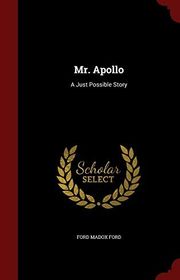
Mr. Apollo
by Ford Madox Ford
1908
The Greek god Apollo returns to Earth in human form to study mortal life. His arrival brings the divine into an ordinary human setting, inviting questions about how people understand themselves when confronted with a visitor from beyond their world.
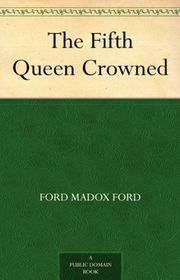
The Fifth Queen Crowned
by Ford Madox Ford
1908
Married to Henry VIII, Katharine Howard tries to pursue her ideals amid the Tudor court’s shifting alliances. Rival factions and the king’s unpredictable favor place her position in jeopardy, testing whether integrity can survive a world ruled by fear and intrigue.

The Half Moon
by Ford Madox Ford
1909
In Elizabethan port towns and aboard Henry Hudson’s Half Moon, intertwined journeys connect religious tension, commercial ambition, and personal loyalties. Edward Colman and those around him confront love and betrayal as voyages promise freedom while carrying their own dangers.
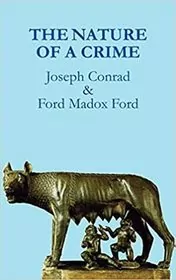
The Nature of a Crime
by Joseph Conrad
1909
Written with Ford Madox Ford, this introspective novella takes the form of letters from a lawyer who has secretly gambled away a friend's trust fund. Awaiting exposure and planning suicide, he dissects guilt, honour, and desire in a cool, analytical voice.
A Call
by Ford Madox Ford
1910
Robert Grimshaw loves two women whose circumstances leave him caught between desire and restraint. One marries his closest friend, while Katya refuses marriage, creating an intimate conflict in which loyalty and personal longing prove difficult to reconcile.

The Portrait
by Ford Madox Ford
1910
The unveiling of a long-awaited portrait unsettles a gathering of aristocrats, critics, and rivals. Amid drawing-room gossip and shifting loyalties, the picture becomes a focus for social ambition, personal vanity, and the risks of an exposed reputation.
Ancient Lights and Certain New Reflections
by Ford Madox Ford
1911
Written for his young children, this memoir presents Ford’s recollections of his earlier life. Personal memories and reflections offer a view of the experiences behind his literary career, told by the novelist himself rather than a later biographer.

Ladies Whose Bright Eyes
by Ford Madox Ford
1911
A modern man finds himself in the Middle Ages, where he hopes to turn his knowledge into power. As those ambitions falter, romance and the demands of medieval life draw him toward becoming a knight.
The Critical Attitude
by Ford Madox Ford
1911
Ford considers the place of criticism and the arts in public life through eight essays. Discussions of contemporary English literature, inexpensive novels, literary reputations, women in fiction, and modern poetry reveal the standards behind his judgments as a writer.
The Simple Life Limited
by Ford Madox Ford
1911
A rural community devoted to simple living becomes the target of Ford’s satire. Published as Daniel Chaucer, the novel examines idealists and eccentrics pursuing a utopian way of life inspired by William Morris.
The New Humpty-Dumpty
by Ford Madox Ford
1912
Adventurer Sergius Macdonald pursues money and influence for a counter-revolution intended to restore a monarchy. Across European drawing rooms and financial circles, personal ambitions and shifting alliances expose the connections between power, wealth, and public performance.
The Panel
by Ford Madox Ford
1912

Henry James
by Ford Madox Ford
1913
Ford examines Henry James’s fiction through its subjects, characters’ temperaments and narrative methods. The study considers how these elements work together, offering a fellow novelist’s assessment of the choices that distinguish James’s approach to writing.
The Young Lovell
by Ford Madox Ford
1913
In the troubled borderlands of medieval England, a young heir struggles with love, family inheritance, and competing loyalties. Feuds and personal passions draw him into conflicts where the obligations of honor can collide with ambition and desire.

Thus to Revisit
by Ford Madox Ford
1921
Ford combines recollections of literary life with criticism of twentieth-century English writing. These reminiscences offer a participant’s perspective on authors and their work, bringing personal encounters and judgments together in an account of his literary world.
The Marsden Case
by Ford Madox Ford
1923
A young man’s claim to an earldom becomes a source of intense psychological pressure. As his sister and friends try to establish his legitimacy, their interventions unsettle the very person they intend to help.

Some Do Not...
by Ford Madox Ford
1924
Christopher Tietjens, a brilliant mathematician bound by traditional principles, struggles with his wife Sylvia's infidelity and his growing attachment to suffragette Valentine Wannop. Their tangled relationships unfold as England moves into the First World War.
No More Parades
by Ford Madox Ford
1925
Returning to the Western Front in 1917, Christopher Tietjens faces confused orders, inadequate supplies, and relentless casualties. His wife Sylvia's betrayal compounds the pressures of military service, bringing private turmoil into the chaos of war.

A Man Could Stand Up
by Ford Madox Ford
1926
Armistice Day brings Valentine Wannop and Christopher Tietjens toward an uncertain reunion. Moving between London's celebrations and Tietjens's experiences under bombardment, the novel explores the gulf between surviving the fighting and finding a future afterward.

A Mirror to France
by Ford Madox Ford
1926
Ford offers an affectionate, impressionistic portrait of France, reflecting on its culture and place in European civilization. Personal observations and shifting perspectives shape a discussion of the country’s character rather than a conventional travel itinerary.
New York Essays
by Ford Madox Ford
1927
Essays written for New York newspapers and magazines between October 1926 and March 1927 gather Ford Madox Ford’s reflections from his time in the city. The collection brings together pieces originally addressed to American periodical readers.

New York Is Not America
by Ford Madox Ford
1927
Ford Madox Ford examines early twentieth-century American identity through impressions of New York and its relationship to the wider country. His observations explore urban modernity, cultural contradictions, and the tensions between the nation’s self-image and a visitor’s experience.

A Little Less Than Gods
by Ford Madox Ford
1928
As Napoleon returns from exile on Elba, idealistic George Feilding becomes caught in the upheavals of the Hundred Days. Romance and political intrigue test personal loyalties against national duty during a period of shifting alliances and uncertain heroism.
The Last Post
by Ford Madox Ford
1928
On a summer day after the war, Christopher Tietjens and Valentine Wannop share a Sussex cottage with his brother and sister-in-law. Conflicting perspectives expose family tensions and the difficulty of building a life in a changed England.

No Enemy
by Ford Madox Ford
1929
Having survived the First World War, the poet Gringoire must reckon with its lasting effects. Through this fictional counterpart, Ford explores damaged memory, fear, and bereavement, turning from the fighting itself to the difficult work of recovery.

The English Novel
by Ford Madox Ford
1929
Ford traces the development of the novel through the books and writers that shaped his own thinking. His survey challenges nineteenth-century conventions and champions Flaubert and Conrad, inviting readers to reconsider familiar works through a practicing novelist’s eyes.

Return to Yesterday
by Ford Madox Ford
1931
Ford recalls the years from 1894 to the outbreak of the First World War, tracing his emergence as a writer and editor. Literary friendships, London life, and political encounters mingle in a memoir shaped by personal impressions.

When the Wicked Man
by Ford Madox Ford
1931
It Was the Nightingale
by Ford Madox Ford
1933
Returning from the First World War, Ford tries to recover his life as a writer. His memories of literary London, Paris and New York mingle encounters with fellow authors with the losses and betrayals behind his renewed creative work.

The Rash Act
by Ford Madox Ford
1933
During the Great Depression, Henry Martin attempts to end his life and instead finds an opportunity to become someone else. Assuming the identity of Hugh Monckton offers escape from his former circumstances, while raising difficult questions about who he really is.

Henry for Hugh
by Ford Madox Ford
1934
Provence
by Ford Madox Ford
1935
Ford blends memoir, travel writing, and regional history in an account of southern France. Food, landscapes, writers, and local traditions become part of his reflection on civilization, shadowed by the growing threat of violence in Europe.

Great Trade Route
by Ford Madox Ford
1937
Ford Madox Ford gathers essays that use travel as a starting point for reflections on France and its place in his imagination. Illustrated by Janice Biala, the collection links journeys with personal observation and affection for the country.
Portraits From Life
by Ford Madox Ford
1937
Ford remembers writers including Henry James, Joseph Conrad, Thomas Hardy, Stephen Crane, and H. G. Wells. Personal encounters combine with literary criticism, offering an impressionistic view of the people and artistic personalities behind some of his era’s influential books.
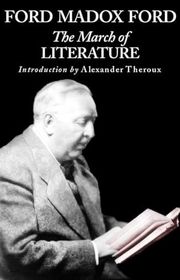
The March of Literature
by Ford Madox Ford
1938
Ford surveys world literature from ancient Egypt and China to the writers of his own time. Addressing general readers, he explores what makes books valuable and considers the publishers and booksellers who help bring literature into the world.
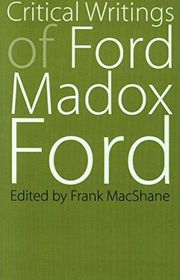
Critical Writings of Ford Madox Ford
by Ford Madox Ford
1964
This collection brings together Ford’s essays and letters about the novel, impressionism and free verse. His discussions of Conrad, Wells, James, Read and Hemingway reveal a novelist and editor thinking through the literary practices of his time.
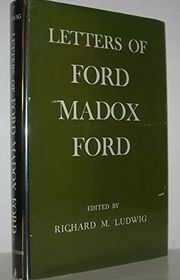
Letters of Ford Madox Ford
by Ford Madox Ford
1965
Letters selected and edited by Richard M. Ludwig document Ford’s literary activities and personal connections. Much of the correspondence appeared in print for the first time here, offering a direct view of his involvement in the writing of his period.

A History of Our Own Times
by Ford Madox Ford
Conceived after Parade's End, Ford's historical study places that novel within the events leading toward the First World War. Originally planned as a larger work, it considers the wider history surrounding his fictional world.

Collected Poems
by Ford Madox Ford
Ford gathers poems from several earlier volumes, combining lyrics, dramatic pieces, and experiments in form. The collection traces his changing approach to mood, memory, and poetic language, accompanied by reflections on the uncertain relationship between inspiration and publication.
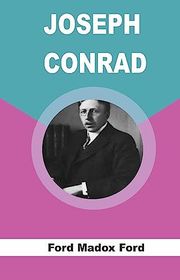
Joseph Conrad
by Ford Madox Ford
Ford draws on his friendship and collaborations with Joseph Conrad to create an unconventional literary portrait. Memories, judgments, and impressions explore Conrad’s personality and creative life, presenting a fellow novelist’s account rather than a strictly chronological biography.

Mr. Fleight
by Ford Madox Ford
A wealthy barrister’s pursuit of political power exposes the entanglement of money, status, and public reputation. Ford’s satire follows Fleight’s social ascent through a world in which scandal can threaten an apparently unstoppable career.
This Monstrous Regiment of Women
by Ford Madox Ford
Writing as Ford Madox Hueffer, Ford enters the debate over women’s political rights in this suffragette pamphlet. Published by the Women’s Freedom League, it records his support for the movement for women’s enfranchisement.

Zeppelin Nights
by Ford Madox Ford
In wartime London, friends gather to distract themselves from the threat of Zeppelin raids. Their artist companion Serapion Hunter reads historical tales, creating a sequence of stories framed by the anxieties of the First World War.
Ford Madox Ford sub-series and character series
Parade's End books in order
Explore this seriesThe Fifth Queen books in order
Explore this seriesStandalone Ford Madox Ford books













Edited by
Software engineer whose passion for tracking book recommendations from podcasts inspired the creation of MRB.
Lead investor at 3one4 Capital whose startup expertise and love for books helped shape MRB and its growth.
Comments
Spotted a missing book, a wrong order or a mistake? Tell us and we'll fix this page.
We're a reading guide, not the author or publisher, so we can't send books or pass on messages.