
Flaxborough Chronicles Books in Order
Part ofColin Watson Books in OrderSee the Flaxborough Chronicles by Colin Watson in order, with short summaries, recurring characters, series background, and advice on where to start.
Last updated:
As an Amazon Associate, we earn from qualifying purchases (at no extra cost to you).
Flaxborough Chronicles books in publication order
12 books
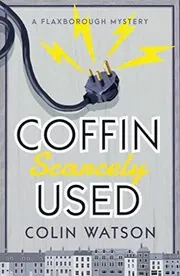
Coffin, Scarcely Used
by Colin Watson
1958
What looks like an odd electrocution after a respectable funeral draws Purbright into the private dealings of Flaxborough's leading citizens. The case opens out into secret connections, civic hypocrisy, and a town that is much less tidy than it seems.
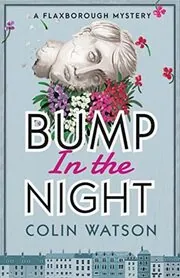
Bump in the Night
by Colin Watson
1960
A run of late-night explosions starts as a nuisance in Chalmsbury and grows far more serious when someone dies. Called in from Flaxborough, Purbright picks through civic politics, bullying, and hidden motives in a town already on edge.
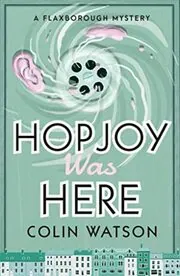
Hopjoy Was Here
by Colin Watson
1962
A quiet house in Beatrice Avenue yields one of Watson's strangest openings, a missing pair of men and a bathtub with an acid problem. Purbright and Love follow the trail into gossip, deception, and a touch of spy-story absurdity.
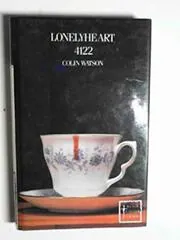
Lonelyheart 4122
by Colin Watson
1967
Two middle-aged women disappear, and the trail leads straight to Handclasp House, a lonely-hearts bureau with more than matchmaking on its mind. Purbright and Love probe the scheme while Lucilla Teatime makes herself both useful and hard to ignore.
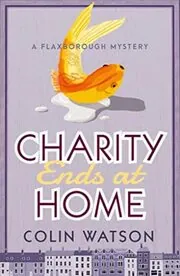
Charity Ends at Home
by Colin Watson
1968
After several prominent men receive letters from a woman who says murder may be her reward for loyalty, a tireless charity worker turns up dead in her pond. Purbright, Lucilla Teatime, and an unreliable private eye untangle the performance from the truth.
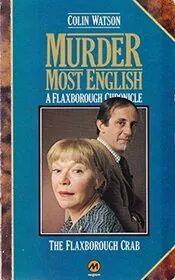
The Flaxborough Crab
by Colin Watson
1969
When an elderly prowler starts harassing women around Flaxborough, the whole business seems ridiculous at first. Purbright soon finds something darker underneath, as recurring bad behavior, local gossip, and a secretive doctor point toward real danger.
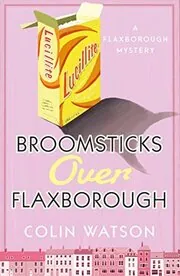
Broomsticks Over Flaxborough
by Colin Watson
1972
A folklore society revel, a missing young woman, and talk of black magic give Flaxborough a very strange week. Purbright has to sort superstition from calculation as publicity stunts, desecrations, and genuine danger begin to overlap.
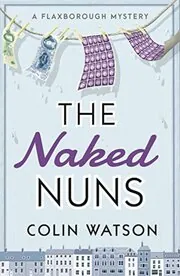
The Naked Nuns
by Colin Watson
1975
A bitter feud between two powerful Flaxborough businessmen escalates from vandalism and humiliation to murder. Purbright and Love dig through clubland snobbery, murky loyalties, and hints of outside criminal influence to see who is really pulling strings.
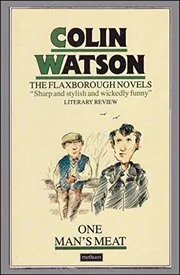
One Man's Meat
by Colin Watson
1977
Charming fixer Mortimer Rothermere is hired to shield a pet food company near Flaxborough from scandal, but the job turns lethal. Dog food, blackmail, and corporate nastiness make this one of the series' more unusual and darkly funny cases.

Blue Murder
by Colin Watson
1979
Rumors of a scandalous film draw hard-driving reporters to Flaxborough and throw the town into panic. Before a public showdown can happen, Purbright is dealing with a death, wounded pride, and people desperate to keep their names out of print.
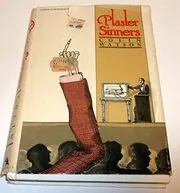
Plaster Sinners
by Colin Watson
1980
A battered plaster cottage at an antiques auction sells for an absurd price, then triggers theft, old secrets, and murder. Purbright and Sergeant Love trace the trinket back through a decaying family history to find out why it matters so much.
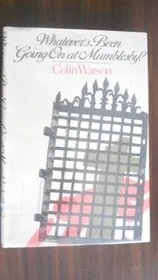
Whatever's Been Going On at Mumblesby?
by Colin Watson
1982
When a solicitor in Flaxborough's posh neighboring village dies, Purbright starts asking awkward questions about his remarkable art collection and the people around him. Blackmail, a doubtful suicide, and plenty of local snobbery turn the case into a sly final mystery.
Flaxborough Chronicles books in chronological order
Series background & context
The Flaxborough Chronicles are classic small-town detective novels, but they are not soft-focus village puzzles. Colin Watson sets them in and around the fictional Lincolnshire town of Flaxborough, a place of civic pride, gossip, small businesses, old money, new money, and plenty of people trying to look more respectable than they are. Each book begins with some local upset, a suspicious death, a disappearance, a feud, or a public embarrassment, then follows the trouble down into the greed and foolishness underneath.
At the center is Detective Inspector Walter Purbright. He is not a flamboyant sleuth or a hard-bitten cop. He is patient, polite, observant, and quietly stubborn. Much of the pleasure comes from watching him ask simple questions until a whole social tangle starts to loosen. Sergeant Love is often beside him, and from the middle books onward Miss Lucilla Teatime becomes one of the series' great wild cards, part opportunist, part helper, and never dull for a second.
The books move through a wonderfully specific local world. Watson uses charity drives, marriage bureaus, businessmen's rivalries, auction rooms, folklore societies, and neighborhood scandal as his raw material. The crimes themselves can be eccentric, sometimes absurd at first glance, but the motive is usually practical: money, status, resentment, lust, or self-protection. That tension between an odd setup and a very human motive is one of the series' signatures.
Flaxborough itself is half the mystery.
This is also a series about surfaces. People in these novels care deeply about tone, class, decorum, and not being embarrassed in front of the wrong neighbors. Purbright's job is often less about chasing a villain across rooftops and more about seeing past bluff, pomp, and genteel language. The tone is often called cozy, and there is certainly wit and comfort in the familiar setting, but Watson is sharper than that label suggests. He likes eccentrics, but he is equally interested in hypocrisy.
There is no single giant cliffhanger linking all twelve books. What carries across the series is the town itself, the returning police team, and the sense that any small local fuss may open onto something much nastier. That makes the books easy to sample, but reading in order lets you watch the world thicken, especially once Lucilla Teatime settles into Flaxborough and becomes one of Purbright's strangest semi-allies. The later novels widen the canvas to nearby places and bigger scandals while keeping the same dry, intimate scale.
Four of the novels were adapted for BBC television as Murder Most English, which fits the mood rather well. These stories are very English, very amused by local pretension, and very alert to how crime can hide behind respectable curtains. If you want mysteries with strong atmosphere, recurring characters, and satire that never gets in the way of the plot, the Flaxborough books are a very good place to linger.



Edited by
Software engineer whose passion for tracking book recommendations from podcasts inspired the creation of MRB.
Lead investor at 3one4 Capital whose startup expertise and love for books helped shape MRB and its growth.
Comments
Did we miss something? Have feedback?
Help us improve this page by sharing your thoughts