
Fiona Erskine Books in Order
Browse Fiona Erskine books in order, with quick summaries, series background, and clear tips on where to start with Jaq Silver and her other novels.
Last updated:
As an Amazon Associate, we earn from qualifying purchases (at no extra cost to you).
Fiona Erskine books in publication order
4 books
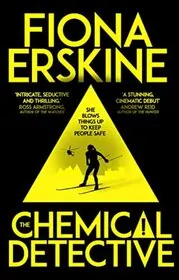
The Chemical Detective
by Fiona Erskine
2019
While working on avalanche control in Slovenia, explosives expert Dr Jaq Silver spots a problem with a shipment and ends up framed for murder. To clear her name, she must untangle a chemical conspiracy stretching from the Alps to Chernobyl.
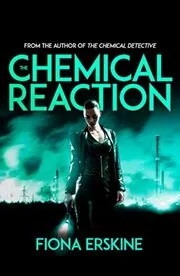
The Chemical Reaction
by Fiona Erskine
2020
Deep in debt, Jaq Silver takes a risky job in China and finds herself chasing a vanished factory and a missing former student. The trail leads through coded messages, rare earth mines, art theft, and more corporate corruption.
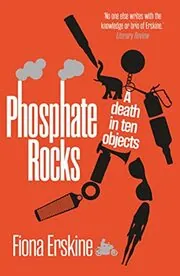
Phosphate Rocks
by Fiona Erskine
2021
When demolition crews uncover a long-dead body in the ruins of a Leith fertiliser factory, DI Rose Irvine turns to retired foreman John Gibson for answers. The mystery unfolds through ten strange objects, old industrial secrets, and the stubborn memory of the place itself.
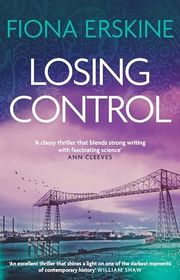
Losing Control
by Fiona Erskine
2024
A body washes up at Hartlepool Historic Quay, and the case looks neatly solved almost at once. DI Julie Cadell is not convinced, and her doubts pull her toward the south bank of the Tees and a darker truth.
Where to start with Fiona Erskine
If you want globe-trotting engineering thrillers: The Chemical Detective → The Chemical Reaction
If you want a Scottish industrial mystery: Phosphate Rocks
If you want a police procedural set in Teesside: Losing Control
Fiona Erskine sub-series and character series
Jacqueline Silver Adventures books in order
Explore this seriesJacqueline Silver Adventures books in chronological order
Standalone Fiona Erskine books
Author bio
Fiona Erskine was born in Edinburgh and grew up there, though part of her childhood also took her to Houston when her father had a sabbatical in Texas. She later went south to study chemical engineering at Cambridge. Scotland never really leaves her work, but her fiction is restless, and so was the career that came before the books.
Before she published a novel, she spent decades working in chemical engineering and process safety. Her career has taken her through fertiliser, metals recycling, medicines, polymers, electricity, demolition, and major construction work. It also sent her around the world, to plants, ports, factories, and boardrooms in places most thrillers barely glance at.
She has also written from the sharp end of being a woman in a very male workplace. Erskine has spoken about being the only woman in meetings, on cargo ships, and in night-time factories. That experience feeds straight into her fiction. Her books notice the everyday slights and power games of working life, but they also respect the people who keep difficult industries running.
That world gave her fiction its backbone.
Erskine has said she did not set out to become a writer. Writing began as a way to make sense of a bad stretch at work, and a skiing accident later gave her the forced pause that helped her start a first novel properly. While her husband and sons went off to ski, she stayed put, listened to the conversations around her, and began writing in earnest.
The first manuscript stayed in a drawer, but she kept at it. She learned the craft, rewrote hard, and signed with an agent in 2017. The Chemical Detective followed in 2019, and she has continued publishing while keeping up a demanding engineering career.
She wrote the heroine she wanted to read.
That idea runs right through The Chemical Detective and The Chemical Reaction. Jaq Silver is a chemical engineer and explosives expert, not a private eye, and that gives the books their spark. Erskine has said she got tired of waiting for female action heroes who were smart, capable, decent, and hard to intimidate, so she made one herself. The result is a set of fast international thrillers built out of real technical knowledge, corporate bad behaviour, and the stubborn belief that one person can still push back.
Her books keep returning to a few big interests. How do systems fail? Who gets blamed when they do? What happens when money, status, or secrecy matter more than safety? She is especially drawn to white-collar crime, industrial disasters, and environmental justice, but she writes about them through story first. Phosphate Rocks turns a body found in the ruins of a Leith fertiliser factory into a mystery about memory, labour, and old industrial lives. Losing Control shifts into police procedural territory on Teesside, while keeping the same interest in industry, harm, and accountability.
Readers who stick with Erskine tend to come back for the same reasons: unusual settings, hard-won expertise, brisk plots, and women who know what they are doing. Her work has also picked up steady recognition. The Chemical Detective was shortlisted for a major debut crime award, The Chemical Reaction was shortlisted for the Staunch Prize, and Phosphate Rocks was picked out as one of the year’s notable crime novels by a review magazine.
She now combines fiction with academic work as Professor of Process Safety at the University of Sheffield. She has long been based in northern England, especially Teesside, and she has written warmly about travel, music, and outdoor swimming. It fits the books. They are curious, practical, and never far from deep water.






Edited by
Software engineer whose passion for tracking book recommendations from podcasts inspired the creation of MRB.
Lead investor at 3one4 Capital whose startup expertise and love for books helped shape MRB and its growth.
Comments
Did we miss something? Have feedback?
Help us improve this page by sharing your thoughts