
Fault Lines (Thomas Locke) Books in Order
Part ofThomas Locke Books in OrderFind the Fault Lines series by Thomas Locke in order, with short summaries, series background, and a clear guide to the best place to start.
Last updated:
As an Amazon Associate, we earn from qualifying purchases (at no extra cost to you).
Fault Lines (Thomas Locke) books in publication order
4 books
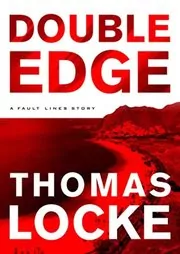
Double Edge
by Thomas Locke
2015
This short prequel introduces Charlie Hazard and the dangerous world around Gabriella Speciale's research. A strange assignment, hidden motives, and the first hints of a larger conspiracy make it a tense doorway into the series.
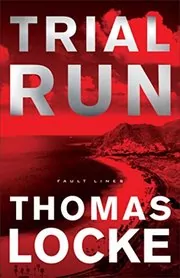
Trial Run
by Thomas Locke
2015
Reese Clawson's work in global data analysis moves into experimental intelligence gathering, then her test subjects begin slipping into coma-like states. As reality and perception twist, a scattered team must find answers before time runs out.
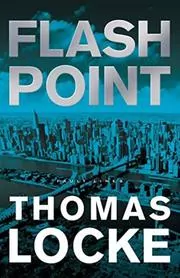
Flash Point
by Thomas Locke
2016
Lena Fennan follows a mysterious opportunity into experiments that bend time and perception, while Reese Clawson hunts those who destroyed her life. Their collision turns the series into a race where revenge and reality itself are both unstable.
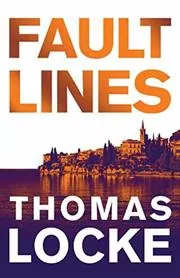
Fault Lines
by Thomas Locke
2017
Combat veteran Charlie Hazard is hired to protect Gabriella Speciale and her team, whose work is pushing past normal limits of consciousness. What begins as security work turns into an international struggle over knowledge powerful people will kill to control.
Fault Lines (Thomas Locke) books in chronological order
Series background & context
This is the Thomas Locke series for readers who like their thrillers full of laboratories, secret sponsors, and ideas that sound just believable enough to keep you up at night. The central question is simple to state and messy to live with. What happens if human consciousness can be pushed beyond the limits of the body, and powerful people decide they want that ability for themselves?
The answer gets dangerous very quickly.
A big part of the series revolves around Charlie Hazard, a battle-scarred security man who gets pulled into the orbit of Gabriella Speciale and the scientists around her. In Double Edge and Fault Lines, you see the shape of the problem up close. Gabriella and her allies are not just doing unusual research. They are stumbling toward a breakthrough that could change surveillance, warfare, and the way people understand time and perception. That means the people funding, chasing, or trying to crush the work are not small-time villains. The enemies here are organized, well connected, and used to winning.
Trial Run is where the series really shows its hand. Reese Clawson, whose work in large-scale data analysis already lives close to the edge, gets swept into experiments that leave test subjects in coma-like states. Around her gathers a scattered, uneasy team, including a scientist, a thrill seeker with altered brain chemistry, and a gifted math mind who can break open systems other people take for granted. The book moves like a techno-thriller, but it keeps slipping into stranger territory, where dreams, future glimpses, and out-of-body experience might be part of the same emerging science.
Then Flash Point pushes the consequences harder. Lena Fennan enters the story from the world of finance and risk, while Reese carries the heat of old grudges and unfinished damage. By this point the series is moving across countries and across states of consciousness at the same time. Florida, Switzerland, Italy, research enclaves, shadow networks, and private agendas all start to knot together. The more the characters learn, the less they can pretend this is only about an experiment.
What makes the series work is that it does not treat the big concept as a toy. Locke keeps asking who pays for innovation, who gets used by it, and what kind of person you become if you can step outside the normal borders of time and space. There is plenty of action, but there is also paranoia, moral pressure, and the sense that knowledge itself can be weaponized.
If you are deciding where to start, this is one of those series where chronology and publication order do not line up neatly. But whichever doorway you choose, expect a fast, cerebral suspense story with a spiritual and ethical undertow running beneath the science.







Edited by
Software engineer whose passion for tracking book recommendations from podcasts inspired the creation of MRB.
Lead investor at 3one4 Capital whose startup expertise and love for books helped shape MRB and its growth.
Comments
Did we miss something? Have feedback?
Help us improve this page by sharing your thoughts