
Father Brown Books in Order
Part ofGilbert Keith Chesterton Books in OrderSee the Father Brown books in order by Gilbert Keith Chesterton, with short summaries, reading order, series background, and tips on where to start.
Last updated:
As an Amazon Associate, we earn from qualifying purchases (at no extra cost to you).
Father Brown books in publication order
5 books
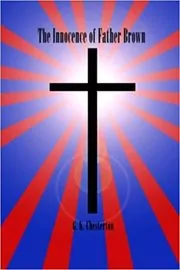
The Innocence of Father Brown
by Gilbert Keith Chesterton
1911
The first Father Brown collection introduces Chesterton's unlikely detective, a mild priest with a sharp eye for guilt and motive. Across twelve cases, stolen jewels, impossible crimes, and human vanity all meet the same quiet intelligence.
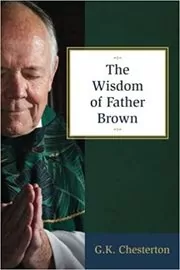
The Wisdom of Father Brown
by Gilbert Keith Chesterton
1914
In this second collection, Father Brown faces stranger puzzles, darker motives, and returning enemies. The stories deepen his method, showing how sympathy, theology, and common sense can cut through disguises better than brute logic.
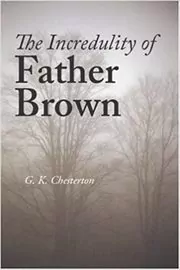
The Incredulity of Father Brown
by Gilbert Keith Chesterton
1923
These later mysteries often begin with ghosts, curses, and miracles, only for Father Brown to uncover the human truth beneath them. The result is a brisk set of cases that are eerie, witty, and sharply rational.
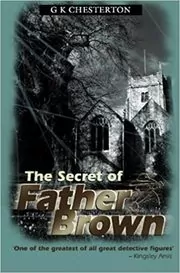
The Secret of Father Brown
by Gilbert Keith Chesterton
1927
This collection frames several mysteries around one larger question: how does Father Brown do it? As the cases unfold, Chesterton reveals more of the priest's method, which depends less on clues than on understanding temptation.
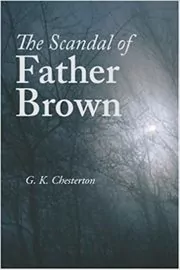
The Scandal of Father Brown
by Gilbert Keith Chesterton
1935
The final Father Brown collection has a slightly later, darker feel, with crimes tied to politics, pride, and modern anxieties. Brown remains calm at the center, quietly spotting the moral flaw that breaks each case open.
Father Brown books in chronological order
Series background & context
Father Brown is one of the great detective series built on underestimation. At first glance Brown is just a shabby Catholic priest with an umbrella and a mild way of speaking. In practice he is the sharpest mind in the room, not because he notices ash on a cuff or footprints in mud, but because he understands vanity, fear, guilt, and self-deception.
Chesterton loosely based him on Father John O'Connor, a parish priest from Bradford, and that connection matters. Brown does not behave like a policeman or a private eye. He moves through the stories as a confessor, observer, and moral realist. The five main collections, from The Innocence of Father Brown in 1911 to The Scandal of Father Brown in 1935, build a detective world where spiritual insight is often the missing piece of the puzzle.
He solves crimes by imagining how a sinner might think.
The setting shifts more than many readers expect. Early stories keep close to England, with village churches, London restaurants, clubs, gardens, and country houses all turning into crime scenes. Later books send Brown farther afield and bring in stranger sects, political anxieties, old grudges, missing jewels, locked spaces, false miracles, and supposedly supernatural events. A recurring pleasure of the series is that the scale can change from a suburban scandal to an international thief in a page or two.
Another thread running through the books is Flambeau, the grand criminal who becomes one of Brown's most memorable allies. Their relationship gives the series some of its warmth. Chesterton likes redemption as much as detection, so a solved case is often also a moment when someone is offered a way back from pride or despair. That does not make the stories preachy. It makes them distinctive.
The tone is a blend of cozy surface and sharp undercurrents. Brown can be funny, absent-minded, and almost invisible in a crowd, but the crimes around him are often rooted in deep motives: envy, ambition, lust, religious fraud, class vanity, or the simple wish to look innocent. Some stories flirt with ghosts, curses, or prophetic signs, yet Brown almost always insists on a rational explanation. He is not the enemy of mystery. He is the enemy of confusion.
That is why the series still reads so well.
If you come to Father Brown expecting a pure clue game, you will find that. If you come for character, atmosphere, and the odd pleasure of watching a quiet priest outthink louder men, you will find even more. A television adaptation that began in 2013 kept the character alive for new audiences, but the books remain the real thing: brief, clever mysteries that care as much about the human heart as the crime itself.





Edited by
Software engineer whose passion for tracking book recommendations from podcasts inspired the creation of MRB.
Lead investor at 3one4 Capital whose startup expertise and love for books helped shape MRB and its growth.
Comments
Did we miss something? Have feedback?
Help us improve this page by sharing your thoughts