
Esme Weijun Wang Books in Order
Explore Esme Weijun Wang's books in order, with concise summaries, reading guidance, and background on the fiction and essays that shape her work.
Last updated:
As an Amazon Associate, we earn from qualifying purchases (at no extra cost to you).
Esme Weijun Wang books in publication order
2 books
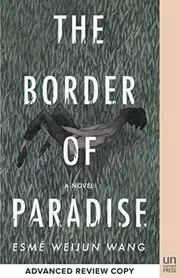
The Border of Paradise
by Esme Weijun Wang
2016
Set between postwar Brooklyn, Taiwan, and an isolated Northern California valley, this multigenerational novel follows the troubled Nowak family. As David's mental health worsens, Daisy and their children confront a home shaped by secrecy, isolation, and inherited harm.
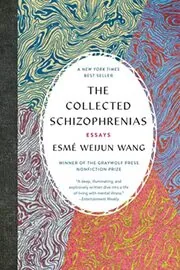
The Collected Schizophrenias
by Esme Weijun Wang
2019
In these essays, Wang combines her experience of schizoaffective disorder with research into diagnosis, stigma, psychiatric care, and chronic illness. She asks what it means to live inside conditions that medicine and culture often flatten into a single frightening label.
Where to start with Esme Weijun Wang
For personal essays about mental health and illness: The Collected Schizophrenias.
For a dark, multigenerational family novel: The Border of Paradise.
To read both sides of Wang's work: The Border of Paradise → The Collected Schizophrenias.
Esme Weijun Wang collections, short stories, and related book types
Non-Fiction Books
Standalone Esme Weijun Wang books
Author bio
Esmé Weijun Wang was born in the Midwest to Taiwanese parents and lives in San Francisco. She writes fiction and nonfiction that return to difficult questions about illness, family, culture, and the stories people tell about themselves and one another.
Writing began as an early refuge for Wang, a way to make sense of thought and experience on the page. She studied at Stanford University and later earned an MFA from the University of Michigan, where she trained as a fiction writer and began work that would feed into her first novel.
Her path did not stay neatly inside the plan.
Wang's debut, The Border of Paradise, arrived in 2016. It is a dark, multigenerational family story that moves from postwar Brooklyn to Taiwan and rural Northern California. At its center are David Nowak, his wife Daisy, and their children, whose isolated home becomes a place of secrecy, fear, and lasting damage.
The novel lets several family members tell parts of the story. That shifting structure matters, because no one character has the whole picture. Readers who like unsettling family dramas, tangled loyalties, and settings that feel both ordinary and cut off from the world will find plenty to sit with.
Mental illness is part of Wang's work, but she resists easy explanations. Her fiction looks closely at psychosis, stigma, control, and the ways a household can change around a person's suffering. It also pays attention to migration, class, gender, and the gap between what a family shows outsiders and what happens behind closed doors.
After experiencing a severe episode of psychosis in 2013, Wang began writing an essay to work through it. She had not planned to become a nonfiction writer, but that piece led to more essays. Over time, those essays became The Collected Schizophrenias.
Published in 2019, The Collected Schizophrenias combines personal experience with research and cultural criticism. Wang writes about receiving a diagnosis of schizoaffective disorder, navigating psychiatric care, trying to appear "high-functioning," and living with chronic illness. The book is direct about uncertainty, including the limits of medical labels and the harm caused when people are reduced to them.
She writes from lived experience without pretending that one account can speak for everybody.
Wang received the Graywolf Nonfiction Prize for The Collected Schizophrenias, the Whiting Award in 2018, and a place on Granta's 2017 list of Best Young American Novelists. Her work has also grown from the practical question of how to keep creating with limitations. She founded The Unexpected Shape Writing Academy, where she works with writers who are building a creative practice around illness, disability, and other constraints.
Across her two books, Wang makes room for contradiction. Her characters and narrators can be frightened, funny, angry, observant, and unsure at the same time. That clear-eyed approach is a big part of what draws readers to her work.





Edited by
Software engineer whose passion for tracking book recommendations from podcasts inspired the creation of MRB.
Lead investor at 3one4 Capital whose startup expertise and love for books helped shape MRB and its growth.
Comments
Did we miss something? Have feedback?
Help us improve this page by sharing your thoughts