
England's Medieval Queens Books in Order
Part ofAlison Weir Books in OrderFind England’s Medieval Queens by Alison Weir in order, with overviews of each volume, series background on Norman and Plantagenet consorts and ideas on where to start.
Last updated:
As an Amazon Associate, we earn from qualifying purchases (at no extra cost to you).
England's Medieval Queens books in publication order
4 books
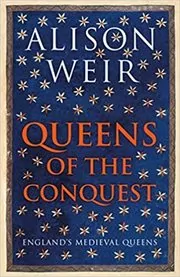
Queens of the Conquest
by Alison Weir
2017
The opening volume of England’s Medieval Queens series, this non‑fiction book introduces the Norman queens from Matilda of Flanders to Empress Maud, revealing how they shared royal authority, fought for their children’s rights and shaped the new kingdom after 1066.
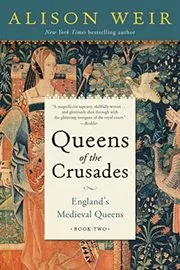
Queens of the Crusades
by Alison Weir
2021
Volume two in England’s Medieval Queens series moves into the age of crusade and courtly love, profiling Eleanor of Aquitaine and four later Plantagenet queens and showing how they navigated war, piety, family conflict and power struggles with kings and church.

Queens of the Age of Chivalry
by Alison Weir
2022
The third England’s Medieval Queens volume covers five fourteenth‑century consorts, from Marguerite of France to Isabella of Valois, against a backdrop of chivalric culture, plague, rebellion and the early stages of the Hundred Years’ War.

Queens at War
by Alison Weir
2025
In the final England’s Medieval Queens book, Weir recounts the lives of fifteenth‑century queens such as Katherine of Valois, Margaret of Anjou, Elizabeth Woodville and Anne Neville, showing how they were drawn into the brutal conflicts of the Hundred Years’ War and the Wars of the Roses.
England's Medieval Queens books in chronological order
Series background & context
England’s Medieval Queens is a four‑book project that pulls queens consort out of the footnotes and puts them back on the main stage. Instead of treating these women as decorative figures beside their husbands, Alison Weir follows them as political partners, regents, patrons and sometimes rebels.
The first volume, Queens of the Conquest, covers the Norman queens from Matilda of Flanders, wife of William the Conqueror, to Empress Maud, who fought for her own claim to the throne. The second, Queens of the Crusades, moves into the early Plantagenet period and profiles Eleanor of Aquitaine and her successors, women whose lives touched the crusades, the murder of Thomas Becket, Magna Carta and the planting of English power across France.
In Queens of the Age of Chivalry Weir turns to fourteenth‑century consorts such as Marguerite of France, Isabella of France, Philippa of Hainault, Anne of Bohemia and Isabella of Valois. The final volume, Queens at War, brings the story into the fifteenth century with Joan of Navarre, Katherine of Valois, Margaret of Anjou, Elizabeth Woodville and Anne Neville, queens whose lives were entangled with the Hundred Years’ War and the Wars of the Roses.
Rather than offering isolated biographies, each book reads like a chain of linked lives. You see how queens learned from their predecessors, inherited allies and enemies, and navigated expectations that they be at once obedient wives, fruitful mothers and shrewd guardians of their children’s interests. Letters, financial accounts, chronicles and occasional personal glimpses are woven into a single flowing narrative.
The tone is straightforward and narrative‑driven. Battles, treaties and church politics are explained clearly, but Weir always circles back to the practical realities for the women involved: where they lived, how they travelled, what risks they ran in childbirth, and how far they could push against their husbands’ wishes.
You can dip into a single volume to match a favourite period, or read all four in order from the Norman Conquest to the edge of the Tudor age. Taken together, they offer a long view of how queenship itself evolved before Henry VII and Elizabeth of York founded the new dynasty.












Edited by
Software engineer whose passion for tracking book recommendations from podcasts inspired the creation of MRB.
Lead investor at 3one4 Capital whose startup expertise and love for books helped shape MRB and its growth.
Comments
Did we miss something? Have feedback?
Help us improve this page by sharing your thoughts