
Empire Trilogy Books in Order
Part ofJ.G. Farrell Books in OrderExplore the Empire Trilogy books by J.G. Farrell in order, with short summaries and a series reading list to help you choose where to start reading.
Last updated:
As an Amazon Associate, we earn from qualifying purchases (at no extra cost to you).
Empire Trilogy books in publication order
3 books

Troubles
by J.G. Farrell
1970
Returning from the Great War, Major Brendan Archer visits a decaying Irish hotel to clarify his uncertain engagement. As eccentric residents cling to fading routines, political unrest and the collapse of imperial confidence advance beyond the hotel’s crumbling walls.
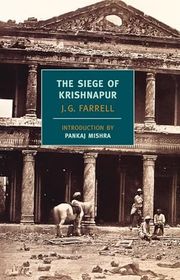
The Siege of Krishnapur
by J.G. Farrell
1973
In India during the rebellion of 1857, an isolated British community trusts in its military strength and cultural superiority. Siege strips away those certainties as its members struggle to preserve their lives, privileges and understanding of their empire.
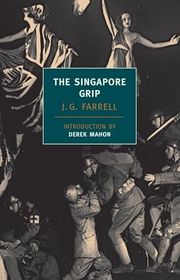
The Singapore Grip
by J.G. Farrell
1978
A wealthy British businessman in prewar Singapore manages labor unrest, family ambitions and profitable trade while assuming his position is secure. War approaches a society divided by race and class, threatening the commercial empire he expects to endure.
Series background & context
The Empire Trilogy consists of three separate historical novels about British imperial rule: Troubles, The Siege of Krishnapur and The Singapore Grip. They share a concern with the limits of authority and the gap between a community's view of itself and the circumstances surrounding it. The settings and central characters change, so the connection is thematic rather than a continuing family saga or a single detective's career.
Each book places a confident social order under pressure.
Troubles begins in Ireland in 1919. Major Brendan Archer arrives at the Majestic Hotel in Kilnalough to visit Angela Spencer, a woman he may be engaged to marry. Her Anglo-Irish family owns the hotel, but the building and its fortunes are deteriorating. Daily life among the remaining guests continues through distractions, rumors and increasingly difficult housekeeping, while political violence grows outside. The Majestic makes a social world visible through its rooms, routines and failures of maintenance, giving the novel its mixture of melancholy and absurdity.
The Siege of Krishnapur turns to an isolated British outpost during the Indian rebellion of 1857. The residents initially trust their weapons and their understanding of themselves as bearers of a superior culture. An actual siege makes those beliefs compete with the demands of staying alive. The historical crisis is also a test of ideas: what value do possessions, manners and intellectual certainties retain when the conditions supporting them begin to disappear? The comedy remains tied to the characters' attempts to preserve their old measures of worth.
In The Singapore Grip, the focus shifts to a commercial society before and during the Second World War. Walter Blackett heads a powerful British firm and expects business skill to help him control both trade and family arrangements. Rubber profits, labor unrest and his daughter's romantic choices occupy the same field of attention. The approach of war challenges the security on which those calculations depend, placing private ambitions within a conflict far beyond the firm's management.
The tone combines social comedy with the possibility of catastrophe.
Farrell lets habits and arguments continue even when a larger order is becoming unstable. People can be ridiculous, frightened and vulnerable in the same scene, and sympathy for an individual does not require accepting the imperial system that supports them. Read Troubles, The Siege of Krishnapur and The Singapore Grip in publication order to follow the development of that approach across three different places. Because their stories are separate, readers can also begin with the setting that interests them most. Together, the books ask what people notice, excuse or refuse to understand when the structures that give them comfort and status come under threat.




Edited by
Software engineer whose passion for tracking book recommendations from podcasts inspired the creation of MRB.
Lead investor at 3one4 Capital whose startup expertise and love for books helped shape MRB and its growth.
Comments
Spotted a missing book, a wrong order or a mistake? Tell us and we'll fix this page.
We're a reading guide, not the author or publisher, so we can't send books or pass on messages.