
Empire (John Brunner) Books in Order
Part ofJohn Brunner Books in OrderSee the Empire books by John Brunner in order, with summaries, series background, and a quick guide to this crumbling-galaxy adventure sequence.
Last updated:
As an Amazon Associate, we earn from qualifying purchases (at no extra cost to you).
Empire (John Brunner) books in publication order
3 books
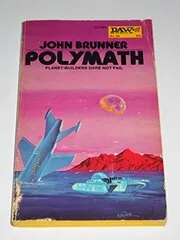
Castaway's World / Polymath
by John Brunner
1963
After a planetary disaster scatters humanity, colonists on a difficult world have to rebuild from almost nothing. Brunner mixes survival adventure with questions about how cultures change under pressure.

The Space-Time Juggler
by John Brunner
1963
On the worn edges of a fading interstellar empire, a wanderer gets caught in frontier power struggles and the long aftermath of imperial decline. It is early Brunner, but already textured.
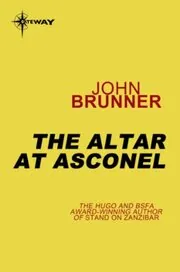
The Altar at Asconel
by John Brunner
1965
In a decaying interstellar empire, a once-flourishing world slips under the grip of a sinister cult. Brunner mixes adventure with the larger sense of civilization falling backward.
Empire (John Brunner) books in chronological order
Series background & context
Brunner's Empire books belong to his early space-opera period, but they already show interests that would stay with him for years. These are not stories about a galaxy at its confident peak. They are stories about what comes after. The empire is old, frayed, and uneven. Some worlds still hold onto advanced tools and old hierarchies. Others have slipped toward isolation, superstition, or outright barbarism.
That worn-down setting is the real hook.
Instead of one neat quest or one fixed hero, the sequence works by moving around the edges of a human interstellar civilization that no longer fully understands itself. Old machines still function. Ancient routes still matter. Titles, loyalties, and feuds survive long after the larger order that gave them meaning has begun to fail. Brunner gets a lot of mileage out of that contrast between technical power and cultural drift.
The Space-Time Juggler gives you the adventurous side of the sequence, frontier movement, odd talents, and the sense that people are living among leftovers from a much larger past. The Altar at Asconel pushes harder on decay. A once-civilized world falls under the grip of a sinister cult, and the fight is not just against one enemy but against the broader slide into fear and irrational rule.
Castaway's World / Polymath fits the same larger mood from another angle. Human beings are scattered, cut off, and forced to adapt to conditions they did not choose. That survival pressure is central to the series as a whole. People are always trying to rebuild, reinterpret, or simply endure what history has handed them. Even when the plots are brisk and adventurous, the background says something rougher about civilization: it is easier to lose than to make.
These are old-school adventures, yes, but they are not shiny.
Expect planets with strong local identities, political arrangements that feel half feudal and half futuristic, and characters who often have to improvise because the official structures around them are weak, corrupt, or distant. Brunner liked the idea of rim worlds and backwaters not just as scenery, but as places where human beings reveal what they really are when the center stops holding.
If you are wondering what kind of science fiction this is, think twilight empire rather than triumphant federation. The pleasures are in the movement, the settings, the strange remnants of lost power, and the recurring sense that history has already happened before the story even starts. That gives these books a texture that is a little rougher, a little sadder, and often more interesting than straightforward conquest fiction.















Edited by
Software engineer whose passion for tracking book recommendations from podcasts inspired the creation of MRB.
Lead investor at 3one4 Capital whose startup expertise and love for books helped shape MRB and its growth.
Comments
Did we miss something? Have feedback?
Help us improve this page by sharing your thoughts