
Elizabeth Kolbert Books in Order
Browse Elizabeth Kolbert books in order, with concise summaries, where to start advice, and a clear guide to her climate and environmental nonfiction.
Last updated:
As an Amazon Associate, we earn from qualifying purchases (at no extra cost to you).
Elizabeth Kolbert books in publication order
5 books
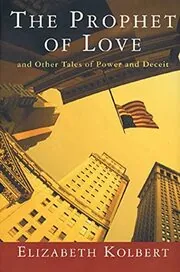
The Prophet of Love
by Elizabeth Kolbert
2004
This collection of political and civic profiles explores the people, institutions, and strange power games that shaped New York City around the turn of the century. Kolbert brings a reporter's eye for ambition, bureaucracy, and public spectacle.
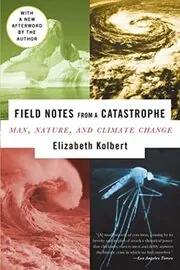
Field Notes from a Catastrophe
by Elizabeth Kolbert
2006
Expanding on her reporting about global warming, Kolbert visits scientists and fragile landscapes to show how climate change is already reshaping the planet. It works as both an accessible primer and a grounded travelogue from the front lines.
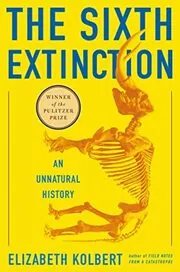
The Sixth Extinction
by Elizabeth Kolbert
2014
Kolbert travels with researchers to reefs, rain forests, and fossil sites to argue that humans are driving a new mass extinction. The book blends natural history, field reporting, and urgent questions about what disappears with each lost species.
Recommended by
2 people Barack Obama recommended this book
Barack Obama
Barack Obama's "2016 Summer Reading List."
Barack Obama's recommendation of this book  Bill Gates recommended this book
Bill Gates
"Makes a compelling case that all this [human] activity is leading to the sixth mass extinction in the Earth’s history." - Bill Gates
Bill Gates's recommendation of this book
Under a White Sky
by Elizabeth Kolbert
2021
Kolbert follows scientists and engineers trying to repair environmental damage with even more intervention, from desert fish rescues to carbon turned into stone. It is a sharp, uneasy look at what managing nature may now require.
Recommended by
2 people- Bill Gates recommended this book
Bill Gates
"About a number of the ways that people are intervening with nature, including gene drive and geoengineering." - Bill Gates
Bill Gates's recommendation of this book  Ezra Klein recommended this book
Ezra Klein
"An incredible book." - Ezra Klein
Ezra Klein's recommendation of this book

Life on a Little-Known Planet
by Elizabeth Kolbert
2025
Gathering many of Kolbert's key essays, this collection moves across melting ice, threatened species, strange technologies, and the people trying to understand a changing planet. It offers a broad, readable map of the concerns that run through her work.
Where to start with Elizabeth Kolbert
If you want her core climate book: Field Notes from a Catastrophe → Under a White Sky
If you want the big biodiversity argument: The Sixth Extinction → Life on a Little-Known Planet
If you want a broad sampler of her reporting: Life on a Little-Known Planet → The Sixth Extinction
If you're curious about her earlier political journalism: The Prophet of Love
Elizabeth Kolbert collections, short stories, and related book types
Non-Fiction
Standalone Elizabeth Kolbert books
Author bio
Elizabeth Kolbert was born in New York City in 1961 and spent part of her childhood in the Bronx before growing up in Larchmont, New York. She studied literature at Yale, then went to Hamburg on a Fulbright scholarship after graduation. Long before she became known for writing about climate and extinction, she was learning how to follow complicated stories and make them readable.
Before joining The New Yorker in 1999, Kolbert worked at The New York Times for more than fifteen years. She covered politics and the media, wrote the Metro Matters column, served as the paper's Albany bureau chief, and contributed to the magazine. That newsroom training shows in her books, which are careful, skeptical, and very alert to how institutions respond to big problems.
The move to The New Yorker changed the course of her writing life.
Her three-part series The Climate of Man won a National Magazine Award and became Field Notes from a Catastrophe. That book helped bring climate science to a broad audience without turning it into slogans. Readers often like the way Kolbert moves between scientists, landscapes, and political reality, showing not just what researchers know, but how hard it can be to act on that knowledge.
She has a gift for making giant subjects feel close at hand.
In The Sixth Extinction, she follows researchers to reefs, forests, museums, and fossil sites to ask what it means if human beings are driving a mass die-off. The book won the Pulitzer Prize for general nonfiction in 2015 and remains the title many readers start with. People come to it for the science, but stay for the way Kolbert builds a larger argument out of vivid field reporting and small, unsettling details.
Under a White Sky asks an even messier question. If people have changed the planet so deeply that there is no easy way back, what happens when the proposed fix is more human intervention? Kolbert meets biologists trying to save a fish in a tiny Mojave pool, researchers breeding hardier coral, and engineers turning carbon into stone. The mood is curious, wary, and sometimes darkly funny.
Her earlier book The Prophet of Love shows another side of her work. It gathers reported pieces about New York City politics and public life, and it makes clear that her interest in power, systems, and unintended consequences did not begin with the environment. Life on a Little-Known Planet returns to the essay form and gathers many of the concerns that have run through her career.
Across her books, certain themes keep coming back: how much power human beings now have, how partial our control really is, and how strange the natural world looks once you pay attention. She writes a lot about scientists, but not as distant experts. In her work they are field workers, guides, arguers, and worried witnesses. The result is nonfiction that feels grounded, curious, and a little uneasy in the best way.
Kolbert has won two National Magazine Awards, and she has also received honors including a Guggenheim Fellowship, a Heinz Award, and the Blake-Dodd Prize. She lives in Williamstown, Massachusetts, with her husband and children, and she has long been connected to Williams College. Her books do not promise easy comfort. What they offer instead is clarity, curiosity, and the sense that looking straight at a hard subject still matters.








Edited by
Software engineer whose passion for tracking book recommendations from podcasts inspired the creation of MRB.
Lead investor at 3one4 Capital whose startup expertise and love for books helped shape MRB and its growth.
Comments
Did we miss something? Have feedback?
Help us improve this page by sharing your thoughts