
Elizabeth Daly Books in Order
Explore Elizabeth Daly books in order, with short summaries, Henry Gamadge series background, reading guidance, and simple advice on where to start.
Last updated:
As an Amazon Associate, we earn from qualifying purchases (at no extra cost to you).
Elizabeth Daly books in publication order
16 books
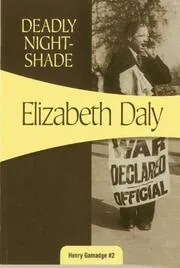
Deadly Nightshade
by Elizabeth Daly
1940
After several children are poisoned in a Maine community, Henry Gamadge suspects the deaths were no accident. As rumors spread and a state trooper dies, he has to find the human hand behind a crime that looks like nature.

Unexpected Night
by Elizabeth Daly
1940
Vacationing in coastal Maine, Henry Gamadge is drawn into the death of a young heir whose fatal fall looks too neat to be natural. A looming inheritance and a troupe of actors turn the case into a knot of performance and murder.
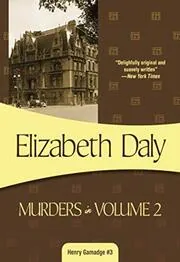
Murders in Volume 2
by Elizabeth Daly
1941
A young woman and a missing Byron volume vanish a century apart, then seem to return together to the Vauregard house unchanged. Henry Gamadge steps into a world of spiritualist talk, family nerves, and one of Daly's strangest puzzles.
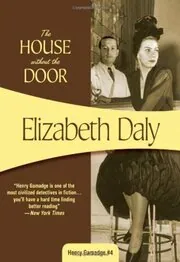
The House Without the Door
by Elizabeth Daly
1942
Acquitted of killing her husband, Mrs. Gregson is still trapped by public suspicion and menacing messages from someone who may know the truth. Henry Gamadge takes the case quietly and finds a killer who can strike without seeming to enter at all.
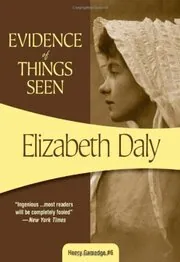
Evidence of Things Seen
by Elizabeth Daly
1943
Clara Gamadge rents a Berkshires cottage with a local ghost story attached, then witnesses a murder that seems to confirm it. Henry Gamadge has to separate fear and superstition from the very real malice at work nearby.
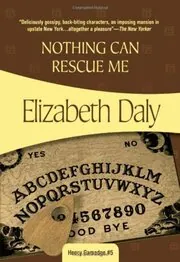
Nothing Can Rescue Me
by Elizabeth Daly
1943
Called to an upstate mansion, Henry Gamadge finds threatening messages appearing in a terrible novel manuscript and a household primed for trouble. What starts as a spiteful prank turns into murder during a snowbound weekend.
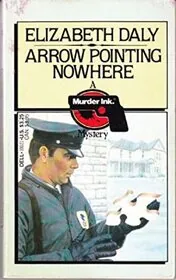
Arrow Pointing Nowhere
by Elizabeth Daly
1944
Cryptic letters summon Henry Gamadge to the Fenway mansion, but the man who asked for help is dead before he arrives. A final clue, an arrow pointing nowhere, leads him into a claustrophobic household of heirs and secrets.
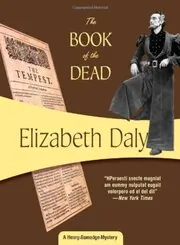
The Book of the Dead
by Elizabeth Daly
1944
A battered copy of The Tempest reaches Henry Gamadge after the death of a lonely, reclusive man. The book opens a trail of hidden connections, old deceptions, and murder that stretches far beyond one quiet death.
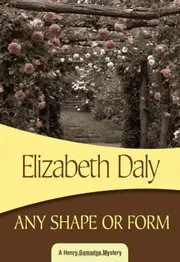
Any Shape or Form
by Elizabeth Daly
1945
At a country-house gathering, an abrasive guest is shot dead and nearly everyone present had reason to want her gone. With little physical evidence, Henry Gamadge has to read the room as carefully as the crime scene.
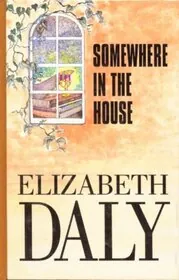
Somewhere in the House
by Elizabeth Daly
1946
The Clayborn family opens a room sealed for decades, expecting heirlooms and finding a fresh corpse instead. Henry Gamadge must work out how the killer used an old mansion and long-buried family grudges to stage the crime.
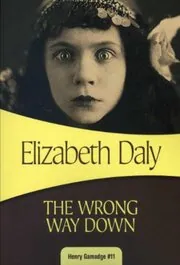
The Wrong Way Down
by Elizabeth Daly
1946
A mysterious inscription appears on an old etching at Ashbury mansion, and the trick seems almost supernatural. Henry Gamadge follows the clue into a tangle of fraud, family strain, and murder.
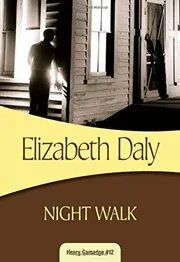
Night Walk
by Elizabeth Daly
1947
Murder disturbs the sleepy village of Frazer's Mills, and Henry Gamadge arrives to help clear a friend under suspicion. Too many people were out walking that night, and their overlapping stories hide the truth.
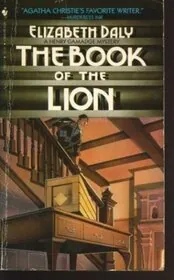
The Book of the Lion
by Elizabeth Daly
1948
A supposed lost Chaucer manuscript brings Henry Gamadge into a case where scholarship, money, and murder collide. To learn whether the find is genuine, he has to untangle forgery, blackmail, and dangerous ambition.
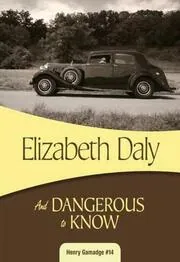
And Dangerous to Know
by Elizabeth Daly
1949
When a quiet woman vanishes from the tightly run Dunbar household, Henry Gamadge doubts the family's easy explanations. As he looks closer, a pattern of secrecy and convenient accidents points toward something much darker.
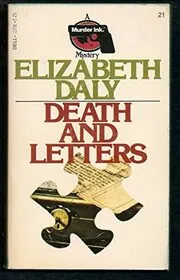
Death and Letters
by Elizabeth Daly
1950
A crossword puzzle draws Henry Gamadge to a secluded Hudson River estate, where a widow claims she is being held prisoner after her husband's suspicious death. Old letters and family control hide a scandal someone will kill to protect.
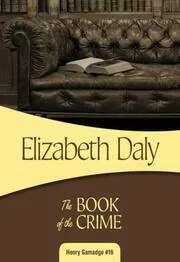
The Book of the Crime
by Elizabeth Daly
1951
A frightened young bride flees her wealthy new family and asks Henry Gamadge for help after she suspects someone tried to kill her. The key to her fear, and the motive for murder, lies in a book she was reading.
Where to start with Elizabeth Daly
If you want the very first case: Unexpected Night → Deadly Nightshade → Murders in Volume 2
If you want eerie house mysteries: The House Without the Door → Evidence of Things Seen → Somewhere in the House
If you want literary clues and old papers: The Book of the Dead → The Book of the Lion → Death and Letters
If you want a strong later sample: Any Shape or Form → Night Walk → The Book of the Crime
Elizabeth Daly sub-series and character series
Author bio
Elizabeth Daly was born in New York City in 1878 and grew up in a family that sat close to both the law and the stage. Her father was a New York judge, and her uncle Augustin Daly was a well-known playwright and producer, so books, conversation, and performance were all part of the air around her.
She studied at Bryn Mawr College, took a master's degree at Columbia, and later worked in a few different corners of the literary world. She taught and tutored French and English, spent two years as a reader at Bryn Mawr, and was active in amateur theater. Before the novels, she also published light prose and verse in magazines. That mix helps explain why her mysteries feel both literary and practical, fond of old papers and old houses, but always shaped by timing, entrances, and the way people behave in a room.
She came to crime fiction late.
Daly was already sixty-two when her first novel, Unexpected Night, appeared in 1940. It introduced Henry Gamadge, the quiet, well-bred amateur sleuth who would carry her through sixteen mysteries. From 1940 to 1953 she published those Gamadge books at a steady clip, along with one non-mystery novel, The Street Has Changed, a theatrical family saga that drew on a world she knew well.
Henry Gamadge is a good clue to Daly herself. He is a New Yorker with expert knowledge of rare books, manuscripts, handwriting, maps, and the odd human motive buried inside polite talk. He is not a hard-boiled detective and not a showy genius. He listens, notices, and keeps his head, which is a big part of why Daly's books still work for readers who want classic puzzles without a lot of swagger.
Her best-known titles show how much variety she could get out of that setup. Murders in Volume 2 plays with Byron, vanished identities, and a wealthy household full of nerves and secrets. The Book of the Dead turns a copy of The Tempest into the start of a murder case. Evidence of Things Seen gives Clara Gamadge a central role in a spooky Berkshires mystery, while Death and Letters builds one of Daly's smartest plots around a crossword puzzle and a trapped widow. Readers who enjoy literary clues, old family money, strange houses, and endings that make them rethink everything usually settle in quickly with her.
Books matter in these novels.
Sometimes they are clues, sometimes bait, sometimes the whole reason trouble starts. Daly liked New York brownstones, country estates, summer places, sealed rooms, threatening letters, and households with too many secrets and too much money. She also liked brushing past the supernatural without fully stepping into it. Ghostly figures, spiritualist talk, and eerie coincidences show up more than once, but the engine is usually human greed, vanity, fear, or old resentment.
Recognition came, even if it came without a modern publicity machine. Mystery Writers of America gave her a Special Edgar in 1961, and other crime writers kept her name in circulation. Daly died in 1967, but the Henry Gamadge books continue to be reissued and rediscovered.
That late start may be one of the nicest things about her story. Daly did not rush into print, and she did not build a career by chasing fashion. She arrived with her own pace, her own interests, and a detective who solved crimes by being civilized, curious, and very hard to fool.




Edited by
Software engineer whose passion for tracking book recommendations from podcasts inspired the creation of MRB.
Lead investor at 3one4 Capital whose startup expertise and love for books helped shape MRB and its growth.
Comments
Did we miss something? Have feedback?
Help us improve this page by sharing your thoughts