
EL Doctorow Books in Order
Browse E.L. Doctorow books in order, with quick summaries, standout reads, and where to start if you want his best historical and literary fiction.
Last updated: 2 new books added
As an Amazon Associate, we earn from qualifying purchases (at no extra cost to you).
EL Doctorow books in publication order
22 books
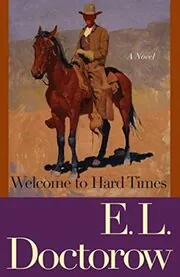
Welcome to Hard Times
by EL Doctorow
1960
In a blasted Dakota town, Will Blue tries to rebuild after a ruthless outlaw destroys nearly everything. This harsh early western is less about frontier heroics than fear, cowardice, and the cost of waiting for violence to return.
Big As Life
by EL Doctorow
1966
Doctorow's rare science fiction novel begins when two giant human figures appear in New York Harbor. The spectacle throws the city into panic and fascination, turning a wild premise into a sharp look at crisis and mass behavior.
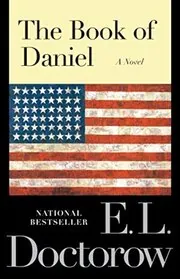
The Book of Daniel
by EL Doctorow
1971
Daniel Isaacson, son of an executed couple modeled on the Rosenbergs, tries to piece together his family's story. The result is a fierce political novel about memory, radicalism, and the damage history does inside a home.
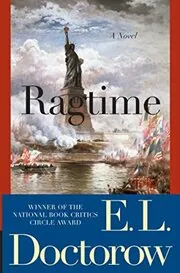
Ragtime
by EL Doctorow
1975
Set in the early twentieth century, this novel weaves together an upper-class family, an immigrant artist, and pianist Coalhouse Walker Jr. Real historical figures drift through the story, but the beating heart is injustice, reinvention, and American change.
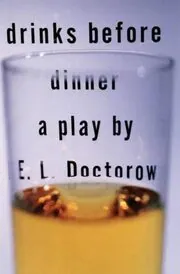
Drinks Before Dinner
by EL Doctorow
1979
Doctorow's only play turns a comfortable dinner party into a tense, talk-heavy confrontation. A discontented guest hijacks the evening, forcing a room of privileged New Yorkers to face the fears and emptiness beneath their routine.
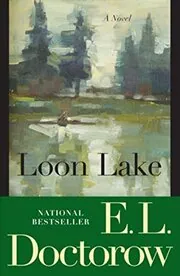
Loon Lake
by EL Doctorow
1980
During the Depression, young drifter Joe wanders into the Adirondack estate of industrialist F.W. Bennett. The novel blends class tension, desire, and experiment in a story about power, reinvention, and the American dream.
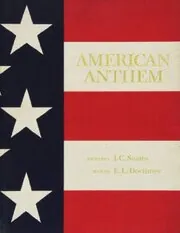
American Anthem
by EL Doctorow
1982
With photographs by J.C. Suares and words by Doctorow, this is a visual portrait of the United States across seasons, places, and ordinary lives. It is less a narrative than a meditation on the country's scale and energy.
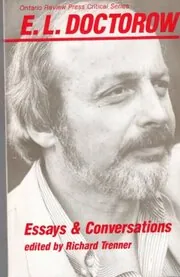
Essays and Conversations
by EL Doctorow
1983
This volume gathers interviews and critical essays centered on Doctorow's work, themes, and methods. It is useful for readers who want context on his fiction, his politics, and the way he handles history on the page.
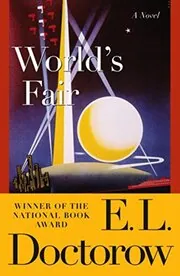
World's Fair
by EL Doctorow
1985
Told through the eyes of young Edgar Altschuler, this semi-autobiographical novel recreates Bronx childhood in the late 1930s. Small family moments build toward the 1939 World's Fair, and a future that feels both bright and uneasy.
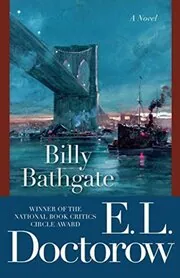
Billy Bathgate
by EL Doctorow
1989
A smart Bronx teenager slips into the orbit of gangster Dutch Schultz and becomes his errand boy, mascot, and witness. Billy's rise through the mob is exciting, but it also becomes a hard lesson about glamour, violence, and survival.
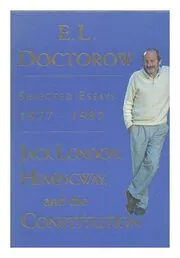
Jack London, Hemingway, and the Constitution
by EL Doctorow
1993
Doctorow gathers essays on writers, politics, and national life, moving from literary criticism to blunt public argument. It is a good place to hear him think on the page about art, power, and America.
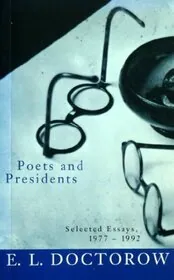
Poets and Presidents
by EL Doctorow
1994
This essay collection brings together Doctorow's pieces on literature, politics, and American public life. It shows how he thought about writers, power, and the ways fiction and history shape each other.
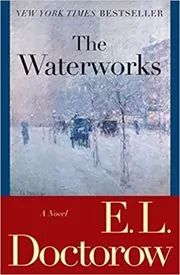
The Waterworks
by EL Doctorow
1994
In 1871 New York, freelance writer Martin Pemberton glimpses his supposedly dead father alive in a passing coach. His search opens into a grim mystery of money, power, and grotesque experiments meant to outwit death.
Recommended by
1 person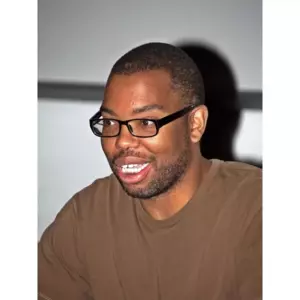 Ta-Nehisi Coates recommended this book
Ta-Nehisi Coates
"What a strange and beautiful book. The story of a postbellum American newspaper editor investigating the undead." - Ta-Nehisi Coates
Ta-Nehisi Coates's recommendation of this book
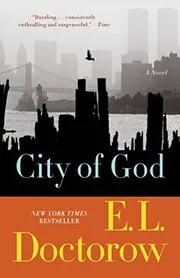
City of God
by EL Doctorow
2000
A stolen cross, a writer named Everett, and a crisis of faith set off this restless, searching novel. Doctorow mixes story, memory, and history as he asks what belief can mean after the violence of the twentieth century.
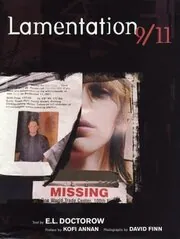
Lamentation
by EL Doctorow
2002
Written in response to September 11, this book pairs Doctorow's text with photographs of missing-person posters in New York. It is a quiet, grieving reflection on the city, the dead, and the bonds that hold people together.
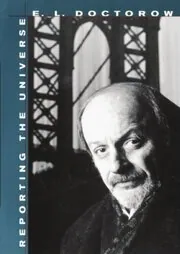
Reporting the Universe
by EL Doctorow
2003
Part memoir, part criticism, part civic argument, this short essay collection ranges from Doctorow's early life to post-9/11 America. It is a compact guide to the questions about art, history, and belief behind his fiction.
Sweet Land Stories
by EL Doctorow
2004
Five stories explore lives shaped by crime, troubled relationships, and unstable dreams of belonging. From a religious commune to a kidnapping and a White House investigation, ordinary Americans confront the gap between their country’s promises and its realities.
The March
by EL Doctorow
2005
Doctorow follows Sherman's march through Georgia and the Carolinas through soldiers, freed people, doctors, and civilians caught in its path. It is a sweeping Civil War novel about ruin, motion, and lives remade by war.
Creationists
by EL Doctorow
2006
In these essays, Doctorow thinks about how creation works, in fiction, science, politics, and public life. He writes about writers, artists, and ideas with the same curiosity and argument that runs through his novels.
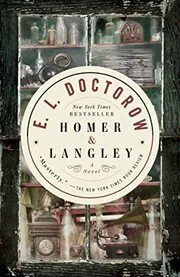
Homer and Langley
by EL Doctorow
2009
Loosely based on the Collyer brothers, this novel follows two wealthy Manhattan recluses as they retreat from the world and fill their house with relics. Their isolation becomes a strange, sad portrait of American life passing outside the door.
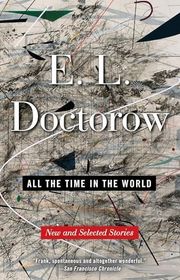
All the Time in the World
by EL Doctorow
2011
Outsiders and ordinary people find themselves unsettled by encounters that challenge the lives they know. Combining six previously uncollected stories with earlier fiction, Doctorow follows characters whose choices expose surprising possibilities beneath the routines of modern America.
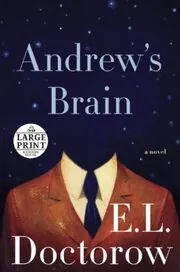
Andrew's Brain
by EL Doctorow
2014
A cognitive scientist talks his way through love, loss, guilt, and the disasters he believes he helped cause. The novel is funny, jagged, and unsettling as Andrew tries to explain a mind he cannot quite master.
Where to start with EL Doctorow
If you want the classic entry point: Ragtime → Billy Bathgate → The March
If you want a more personal New York novel: World's Fair → Loon Lake
If you want his darkest political fiction: The Book of Daniel → City of God
If you want later, stranger Doctorow: Homer and Langley → Andrew's Brain
Standalone EL Doctorow books
Author bio
E.L. Doctorow was born in the Bronx on January 6, 1931, and grew up on Eastburn Avenue in a Jewish family with deep ties to music. His father ran a music shop, his mother played piano, and he was named Edgar after Edgar Allan Poe. New York was his first subject long before he turned it into fiction.
At the Bronx High School of Science, he was the kid edging toward the literary magazine while everyone else seemed better at math.
He went on to Kenyon College, where he studied philosophy, worked in theater, and learned under the poet John Crowe Ransom. After graduating in 1952, he spent a year at Columbia University, then served in the U.S. Army in West Germany. Those years gave him discipline, but they also confirmed what he wanted most. He wanted to write.
The practical route into writing was not glamorous. Doctorow worked as a reservations clerk, then as a reader for Columbia Pictures and CBS, writing summaries of books and scripts. He later said that slogging through bad westerns helped spark Welcome to Hard Times, his first novel, a dark revision of frontier myth. From the start, he was less interested in costume drama than in the machinery of power, fear, and belief.
He knew books from both sides of the desk.
Doctorow became an editor at New American Library and later editor in chief at Dial Press, where he worked with writers including James Baldwin and Norman Mailer. That editorial life mattered. It gave him a sharp sense of structure, pacing, and how a book sounds when it is really moving. In 1969 he left publishing to devote more time to fiction, and soon The Book of Daniel announced the form many readers now connect with him, history bent through private lives.
Then came Ragtime, the book that made his range impossible to miss. It mixed invented families with real figures like Harry Houdini and Emma Goldman, and somehow made the country feel both crowded and intimate. Later books kept shifting shape: World's Fair turned back toward Bronx boyhood, Billy Bathgate used the gangster novel to tell a coming-of-age story, and The Waterworks brought a gothic chill to nineteenth-century New York.
He never stayed in one lane.
He was often called a historical novelist, but that label only gets you partway there. He borrowed from the western, the gangster story, the detective tale, memoir, collage, and even science fiction in Big As Life. What held it all together was his interest in how Americans invent themselves, and how the official version of events never tells the whole truth. That same restlessness runs through later books like City of God, The March, Homer and Langley, and Andrew's Brain.
What readers often love in Doctorow is the pull between the public and the personal. His books care about American history, but they are never just civics lessons in costume. They are full of strivers, drifters, radicals, hustlers, children, and people caught in forces much larger than themselves. Even when the setting changes, from Civil War roads to a hoarded Manhattan brownstone, he keeps asking the same hard question: what does history feel like when it lands on one life?
He taught at places like Sarah Lawrence, Princeton, and New York University, where he became the Glucksman Professor of English and American Letters. The awards piled up in plain sight: a National Book Award, three National Book Critics Circle Awards, two PEN/Faulkner Awards, the National Humanities Medal, and later career honors from the National Book Foundation and the Library of Congress. In his later years he was still teaching, lecturing, and publishing essays as well as fiction. Doctorow died in New York City on July 21, 2015, but his books still feel alive, curious, and a little unruly.




Edited by
Software engineer whose passion for tracking book recommendations from podcasts inspired the creation of MRB.
Lead investor at 3one4 Capital whose startup expertise and love for books helped shape MRB and its growth.
Comments
Did we miss something? Have feedback?
Help us improve this page by sharing your thoughts