
Edwina Currie Books in Order
Explore Edwina Currie books in order, with quick summaries, series notes, and where to start, from Westminster novels to memoir, essays, and diaries.
Last updated:
As an Amazon Associate, we earn from qualifying purchases (at no extra cost to you).
Edwina Currie books in publication order
12 books
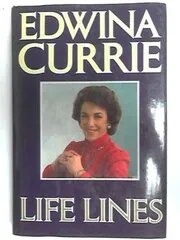
Life Lines
by Edwina Currie
1989
Currie looks back on her years as a health minister, blending policy battles with day-to-day Whitehall reality. The book tracks public health campaigns, internal politics, and the strain of trying to change a huge system from inside.
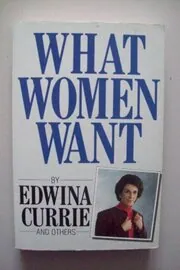
What Women Want
by Edwina Currie
1990
This collection of essays brings together different voices to examine women's changing roles, pressures, and choices. It mixes opinion and practical thinking, making it a snapshot of how public debate around women was shifting.
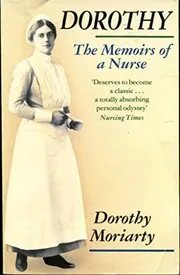
Dorothy
by Edwina Currie
1991
A memoir of nurse Dorothy Moriarty's long working life, introduced by Edwina Currie. Through training, ward life, and decades of change, it records how nursing, hospitals, and everyday medicine evolved across the twentieth century.
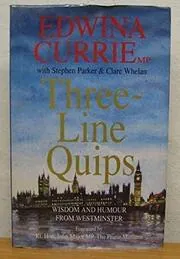
Three Line Quips
by Edwina Currie
1992
A brisk collection of jokes, one-liners, and anecdotes from Westminster, this book catches British politics at its funniest and silliest. It is a light insider sampler of parliamentary wit, verbal sparring, and back-corridor humour.
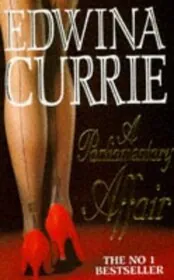
A Parliamentary Affair
by Edwina Currie
1994
Newly elected MP Elaine Stalker enters Westminster ready to prove herself and quickly meets a wall of condescension. Her connection with whip Roger Dickson opens doors, but it also entangles politics, desire, and career risk.
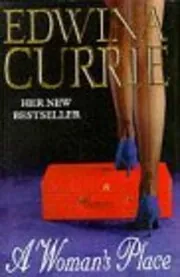
A Woman's Place
by Edwina Currie
1996
Elaine Stalker is no longer new to Westminster, but power brings fresh traps. As sexism, party tension, and her connection to leader Roger Dickson grow harder to ignore, public ambition and private desire begin to clash.
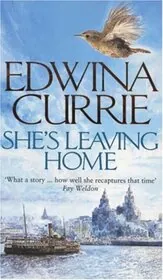
She's Leaving Home
by Edwina Currie
1997
In 1963 Liverpool, clever teenager Helen Majinsky dreams of college, escape, and a bigger life beyond home. Family expectations, first love, and the pull of the Beatles era make growing up both thrilling and risky.
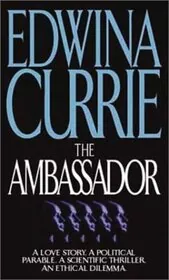
The Ambassador
by Edwina Currie
1999
In a future where cloning shapes politics, medicine, and class, US ambassador Bill Strether arrives in London expecting progress and finds something far more troubling. It mixes political thriller energy with uneasy questions about science and human value.
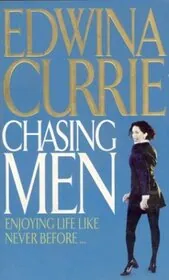
Chasing Men
by Edwina Currie
2001
Hetty Clarkson's settled life collapses when she finds her husband with another woman. Newly single and badly shaken, she has to work out who she is, and what she wants, in a dating world full of surprises.
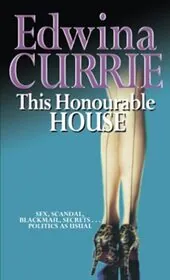
This Honourable House
by Edwina Currie
2001
After an election brings in a new government, ministers, advisers, and lovers are squeezed by scandal, rivalry, and media pressure. Currie turns Westminster into a busy, uneasy world where ambition and private weakness keep colliding.
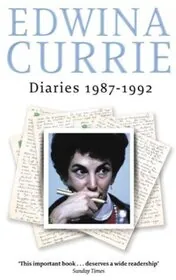
Diaries, 1987-1992
by Edwina Currie
2002
These diaries cover Currie's years at the top of Thatcher-era politics, from health battles to the fallout from the egg scare. Candid and observant, they also became famous for revealing her affair with John Major.
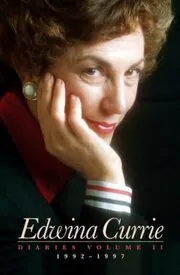
Diaries, 1992-1997
by Edwina Currie
2012
Currie's second diary volume follows her through John Major's later years, the run-up to Labour's 1997 win, and her shift into broadcasting and authorship. It mixes Westminster gossip, sharp portraits, and a close-up view of public life.
Where to start with Edwina Currie
For Westminster insider drama: A Parliamentary Affair → A Woman's Place → This Honourable House
For a Liverpool coming-of-age story: She's Leaving Home
For speculative politics and science: The Ambassador
For modern relationship comedy-drama: Chasing Men
For candid political memoir: Life Lines → Diaries, 1987-1992 → Diaries, 1992-1997
Edwina Currie sub-series and character series
Edwina Currie collections, short stories, and related book types
Non-Fiction
Standalone Edwina Currie books
Author bio
Edwina Currie was born Edwina Cohen in Liverpool in 1946 and grew up in a Jewish family in the south of the city. She went to Liverpool Institute High School for Girls, and the city stayed with her. The quick wit, argument, ambition, and strong family feeling of Liverpool would later feed directly into her fiction, especially She's Leaving Home.
She was restless early.
She won a scholarship to Oxford, starting in chemistry before switching to philosophy, politics and economics. After Oxford she took a master's degree in economic history at the London School of Economics. Those years gave her two habits that never really left: a taste for policy and debate, and a close interest in how large institutions shape everyday life.
Then politics took over.
Currie spent more than a decade in Birmingham local politics before entering Parliament as Conservative MP for South Derbyshire in 1983. She later became a junior health minister in Margaret Thatcher's government, where she was associated with campaigns on heart disease, cancer screening, vaccination, and healthier living. In 1988 she resigned during the salmonella in eggs controversy, a public blow that might have finished somebody else's career.
Writing stuck.
She had always written her own speeches, and after leaving government she began writing fiction and non-fiction more seriously. During the Christmas recess she wrote short stories as a way of steadying herself, then published Life Lines, her account of health and politics. A few years later A Parliamentary Affair took the Westminster world she knew from the inside and turned it into a bestseller. Its follow-up, A Woman's Place, kept exploring ambition, deal-making, sexual politics, and the practical mess of being a woman in a place still built around men.
Readers who come to Currie for the politics usually stay for the people. Her books are full of pressure, vanity, flirtation, resentment, and sudden reversals. This Honourable House digs into spin, scandal, and fragile loyalties inside government, while The Ambassador moves into speculative fiction, using cloning and medical ethics to ask who gets protected, who gets used, and what progress really costs.
She also writes well about escape.
That is what gives She's Leaving Home much of its pull. The novel steps away from Westminster and back into 1960s Liverpool, following a bright Jewish schoolgirl reaching for education, freedom, and a future larger than the one laid out for her. Chasing Men, by contrast, turns to divorce, middle age, and modern singledom, showing Currie's liking for social comedy as well as political drama.
Her non-fiction has the same blunt, fast-moving quality. What Women Want gathers essays on women's changing roles, Three Line Quips collects wit from Westminster, and Diaries, 1987-1992 and Diaries, 1992-1997 bring readers into the rawer side of public life, where policy, ego, gossip, and private hurt all crowd the same page. From the late 1990s onward she also kept a public profile on radio and television, which suits the same direct, quick style found in her prose. Whatever readers make of her politics, her books tend to offer the same things: insider detail, brisk storytelling, and no interest in pretending that public life is tidy.




Edited by
Software engineer whose passion for tracking book recommendations from podcasts inspired the creation of MRB.
Lead investor at 3one4 Capital whose startup expertise and love for books helped shape MRB and its growth.
Comments
Did we miss something? Have feedback?
Help us improve this page by sharing your thoughts