
Edith Eger Books in Order
Explore Edith Eger's books in order, with short summaries, background on her life and work, and simple help choosing the right place to start.
Last updated:
As an Amazon Associate, we earn from qualifying purchases (at no extra cost to you).
Edith Eger books in publication order
3 books
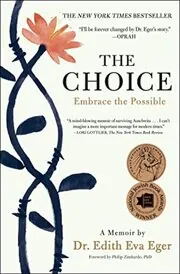
The Choice
by Edith Eger
2017
At sixteen, Edith Eger is sent to Auschwitz, survives the camps, and spends decades learning how to live with grief, guilt, and memory. Part memoir and part reflection, it follows her journey from wartime horror to hard-won inner freedom.
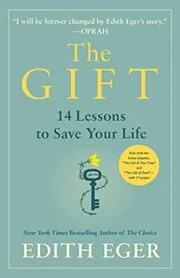
The Gift
by Edith Eger
2020
Drawing on her work as a psychologist and her own history, Eger offers twelve lessons for breaking out of fear, guilt, shame, and other mental traps. It mixes patient stories, personal memories, and practical ways to move toward freedom.
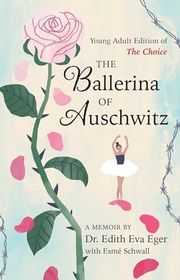
The Ballerina of Auschwitz
by Edith Eger
2024
This young adult adaptation of Eger's story follows Edie from her life as a dancer in Hungary to Auschwitz and the difficult years after liberation. It brings the history close through a teenage voice, first love, sisterhood, and the long work of healing.
Where to start with Edith Eger
If you want her core memoir first: The Choice → The Gift
If you want practical healing tools: The Gift → The Choice
If you want a younger reader entry point: The Ballerina of Auschwitz → The Choice
Edith Eger collections, short stories, and related book types
Non-Fiction
Author bio
Edith Eger was born Edith Eva Elefant on September 29, 1927, in Košice, then part of Czechoslovakia, now in Slovakia. She grew up in a Jewish family with two older sisters, Klara and Magda, and often felt like the awkward youngest one in a house full of talent. Dance and gymnastics gave her confidence early on, and for a while she dreamed of the Olympics, until anti-Jewish laws closed in and she was told there would be no place for her on the Hungarian team because she was Jewish.
In 1944, when she was sixteen, Edith and her family were deported to Auschwitz. Her parents were killed there, while Edith and Magda survived Auschwitz, other camps, and a death march. In May 1945, she was found barely alive in Austria, pulled from a pile of bodies by an American soldier.
She survived, but survival was only the beginning.
After the war she returned to Czechoslovakia, met Béla Eger in a rehabilitation hospital, married him in 1946, and soon became a mother. In 1949, after Communist authorities seized the family business and arrested her husband, the young family fled to the United States. They first settled in Baltimore and later moved to El Paso, where Edith worked, raised three children, and tried very hard not to speak about what had happened.
For years, silence was her way of coping. Then a classmate handed her Viktor Frankl's Man's Search for Meaning, and that book helped crack something open. Edith went back to school, earned a psychology degree in 1969 and a PhD in 1978, and built a career helping people work through trauma, grief, fear, and shame. She later worked at William Beaumont Army Medical Center, served on the faculty at UC San Diego, and kept a clinical practice in La Jolla, California. In 1980, a return trip to Auschwitz helped shape the way she spoke about healing, not as forgetting, but as facing the past without letting it own you.
Her writing career arrived late.
She published The Choice after her ninetieth birthday, and that timing matters. The book is memoir, but it is also about what came after: survivor's guilt, panic, denial, marriage, motherhood, and the long process of becoming free in your own mind. Readers often connect with it because it is plainspoken and deeply practical. It moves between wartime Hungary, the camps, and the therapist's office, and it became a bestseller and a National Jewish Book Award winner.
Then came The Gift, which turns many of her core ideas into twelve workable lessons about the mental prisons people build around fear, guilt, anger, avoidance, and shame. The Ballerina of Auschwitz brings her story to younger readers, keeping the teenage Edie at the center and making room for first love, sisterhood, terror, and hope. Across all three books, she keeps returning to the same big question: how do you stop letting the past run your life?
Edith Eger kept seeing patients and speaking publicly well into her nineties, and she died in 2026 at the age of ninety-eight. Her books still feel personal. Less like instruction, more like a conversation with someone who has seen the worst in people and still believes we can choose what happens next.











Edited by
Software engineer whose passion for tracking book recommendations from podcasts inspired the creation of MRB.
Lead investor at 3one4 Capital whose startup expertise and love for books helped shape MRB and its growth.
Comments
Did we miss something? Have feedback?
Help us improve this page by sharing your thoughts