
Edgar Allan Poe Mystery Books in Order
Part ofHarold Schechter Books in OrderThis page shows the Edgar Allan Poe Mystery series by Harold Schechter in order, with summaries, reading order, series background, and where to start.
Last updated:
As an Amazon Associate, we earn from qualifying purchases (at no extra cost to you).
Edgar Allan Poe Mystery books in publication order
4 books
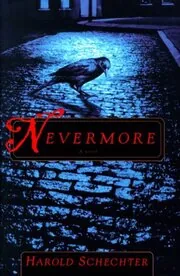
Nevermore
by Harold Schechter
1999
A young Edgar Allan Poe is pulled into a bloody murder investigation in 1830s Baltimore. As the clues grow stranger, Schechter turns literary atmosphere and urban history into a fast-moving historical whodunit.
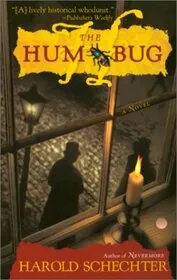
The Hum Bug
by Harold Schechter
2001
Poe takes up a murder case in mid-nineteenth-century New York and finds himself working alongside, and against, P. T. Barnum. The mystery blends theatrical showmanship, literary mood, and a killer hiding in plain sight.
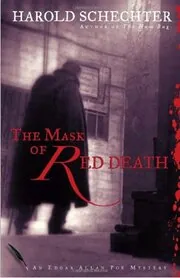
The Mask of Red Death
by Harold Schechter
2004
In sweltering 1845 New York, Poe investigates killings so savage that the city starts hunting the wrong monster. Schechter mixes gothic dread, urban panic, and historical mystery as suspicion circles Chief Wolf Bear.
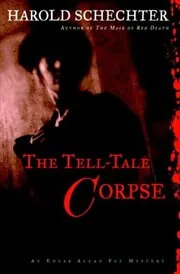
The Tell-Tale Corpse
by Harold Schechter
2006
Edgar Allan Poe heads to Boston on an urgent errand and stumbles into a chain of brutal murders. With P. T. Barnum and a young Louisa May Alcott in the mix, Schechter builds a lively historical mystery around hidden connections and dark disguises.
Edgar Allan Poe Mystery books in chronological order
Series background & context
The Edgar Allan Poe Mystery books take a simple but clever idea and do more with it than you might expect. Schechter imagines Edgar Allan Poe not just as a writer of dread and obsession, but as the sort of man who might step into a murder case and refuse to let it go. The series begins with Nevermore and continues through The Hum Bug, The Mask of Red Death, and The Tell-Tale Corpse.
What makes the series work is that Poe never feels like a costume. Schechter writes him as young, ambitious, touchy, sharp-eyed, and often pulled between literary dreams and the ugly business of real life. The same imagination that will later feed his poems and tales also makes him a useful investigator. He notices odd details, understands warped minds, and is drawn to horror even when he wishes he were not.
The settings do a lot of the heavy lifting too. Nevermore moves through 1830s Baltimore. Later books head into New York and Boston, where newspapers, theaters, boarding houses, museums, and crowded streets give the mysteries a lively, uneasy backdrop. These are cities full of performance, gossip, noise, and ambition. That suits Poe perfectly, because the books live in the space where gothic mood meets detective story.
Poe is rarely alone for long. Historical figures keep stepping into the frame, not as cute cameos, but as part of the world he has to navigate. In The Hum Bug, P. T. Barnum seeks Poe's help after a savage murder. In The Mask of Red Death, public suspicion falls on Chief Wolf Bear, one of the attractions at Barnum's American Museum. In The Tell-Tale Corpse, Poe is drawn into a Boston investigation that also brings in a young Louisa May Alcott.
They're dark, but they also have a sly sense of fun.
What carries across the books is not one giant master plot, but a reliable mix of atmosphere, reasoning, and literary play. The murders are public, grisly, and often loaded with social panic. The solutions matter, but so does watching Poe think his way through a case, spar with larger-than-life personalities, and test his mind against someone equally intense on the other side. Schechter also keeps one foot in Poe's private life, including literary ambition, money worries, and the strain that danger puts on home life.
If you like polished cozy mysteries, these books are rougher and moodier than that. If you like historical crime with gaslight streets, period detail, nervous wit, and a famous writer used in smart rather than gimmicky ways, this series has a lot to offer. It is a good fit for readers who want a whodunit, but also want the nineteenth century to feel alive, messy, and a little haunted.











Edited by
Software engineer whose passion for tracking book recommendations from podcasts inspired the creation of MRB.
Lead investor at 3one4 Capital whose startup expertise and love for books helped shape MRB and its growth.
Comments
Did we miss something? Have feedback?
Help us improve this page by sharing your thoughts