
Dorothy L Sayers Books in Order
The complete bibliography of Dorothy L. Sayers, including the Lord Peter Wimsey mysteries, the Harriet Vane romances, and her acclaimed plays and essays.
Last updated: 2 new books added
As an Amazon Associate, we earn from qualifying purchases (at no extra cost to you).
Dorothy L Sayers books in publication order
43 books
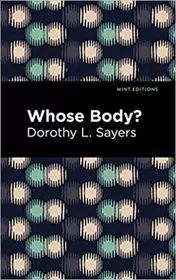
Whose Body?
by Dorothy L. Sayers
1923
A mild-mannered architect finds a naked body in his bathtub, wearing nothing but a pair of pince-nez. Meanwhile, a famous financier has vanished. Lord Peter Wimsey takes on his first major case to discover if—and how—these two bizarre puzzles are connected.
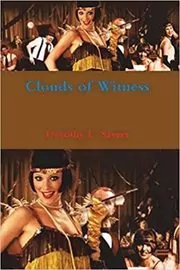
Clouds of Witness
by Dorothy L. Sayers
1926
Peter’s brother, the Duke of Denver, is accused of shooting his sister’s fiancé at a family shooting lodge. With the Duke refusing to defend himself, Peter must navigate a web of family secrets and travel as far as New York to clear his brother's name before the trial in the House of Lords.
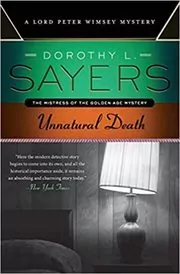
Unnatural Death
by Dorothy L. Sayers
1927
A wealthy elderly woman dies with no apparent cause, but a young doctor suspects foul play. Lord Peter Wimsey investigates a murder that seems to have left no trace, uncovering a clever and technically brilliant method of killing that defies standard detection.
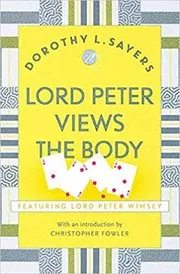
Lord Peter Views the Body
by Dorothy L. Sayers
1928
A collection of twelve short stories featuring Lord Peter Wimsey. From a man with copper fingers to a headless body and a diamond puzzle, these tales showcase Wimsey's ingenuity in solving varied and bizarre crimes.
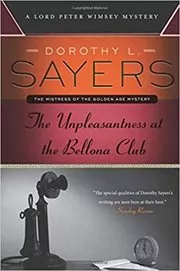
The Unpleasantness at the Bellona Club
by Dorothy L. Sayers
1928
On Armistice Day, ninety-year-old General Fentiman is found dead in his armchair at the Bellona Club. But when it turns out his wealthy sister died the same morning, the exact time of the General's death becomes a matter of a massive inheritance—and murder.
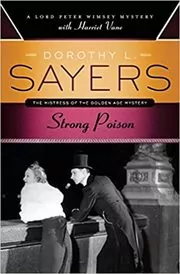
Strong Poison
by Dorothy L. Sayers
1930
Mystery writer Harriet Vane is on trial for the murder of her former lover, who died of arsenic poisoning. Convinced of her innocence, Lord Peter Wimsey races against time to find the real killer and save the woman he has instantly fallen in love with.
The Documents In The Case
by Dorothy L. Sayers
1930
A stand-alone epistolary novel where a man dies after eating mushrooms. While the verdict is accidental death, the victim's son suspects his stepmother. The mystery hinges on the scientific difference between natural and synthetic poisons.
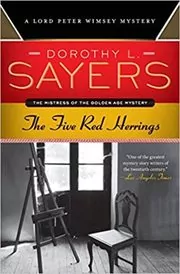
Five Red Herrings
by Dorothy L. Sayers
1931
In a Scottish artists' colony, a quarrelsome painter is found dead. It looks like an accident, but Wimsey suspects murder. With six suspects who all hated the victim, Peter must untangle complex train timetables and artistic forgeries to identify the one guilty party.
Have His Carcase
by Dorothy L. Sayers
1932
On a walking holiday, Harriet Vane discovers a body on a lonely rock on the beach. By the time she brings help, the tide has washed the corpse away. She teams up with Lord Peter Wimsey to solve the mystery using the few clues she managed to photograph.
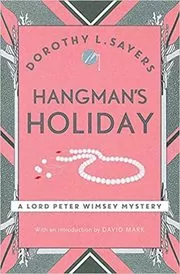
Hangman's Holiday
by Dorothy L. Sayers
1933
A collection of short mystery stories featuring Lord Peter Wimsey and the wine salesman sleuth Montague Egg. The tales range from a poisoning in a pantry to a clever cipher, showcasing Sayers' mastery of the short puzzle format.
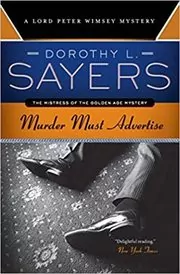
Murder Must Advertise
by Dorothy L. Sayers
1933
When a copywriter dies in a suspicious accident, Lord Peter Wimsey goes undercover at Pym’s Publicity agency as "Death Bredon." Between writing ad copy for Whifflets cigarettes, he uncovers a drug-smuggling ring hidden behind the glossy facade of the advertising world.
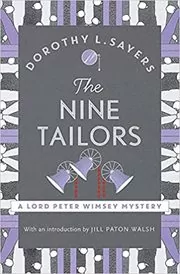
The Nine Tailors
by Dorothy L. Sayers
1934
Stranded in the fenland village of Fenchurch St. Paul on New Year's Eve, Peter helps ring a nine-hour peal of church bells. When a body is later found in a grave, he must unravel a mystery rooted in a twenty-year-old theft and the deadly power of the bells themselves.
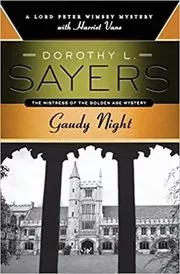
Gaudy Night
by Dorothy L. Sayers
1935
Harriet Vane returns to her Oxford college for a reunion, only to find the academic peace shattered by a poison-pen campaign and vandalism. As the threats escalate, Harriet must confront her own past and ask Lord Peter Wimsey for help in a case that threatens the college's reputation.
Recommended by
1 person Donald Knuth recommended this book
Donald Knuth
"Captures Oxford high-table small-talk wonderfully." - Donald Knuth
Donald Knuth's recommendation of this book
More Anatomy of Murder
by Dorothy L. Sayers
1936
An anthology of true crime essays written by members of the Detection Club, including Sayers. The authors analyze real-life murder cases, applying their knowledge of criminal methods and psychology to historical crimes.
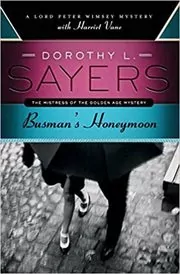
Busman's Honeymoon
by Dorothy L. Sayers
1937
Peter and Harriet's quiet honeymoon at a country farmhouse is interrupted when the previous owner is found dead in the cellar. Balancing new marriage dynamics with a murder investigation, the couple must work together to solve the crime without letting it destroy their happiness.
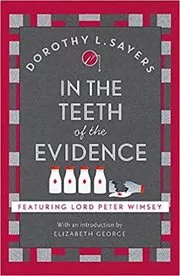
In the Teeth of the Evidence
by Dorothy L. Sayers
1939
A collection of seventeen stories, including two Wimsey adventures and several featuring Montague Egg. The title story involves a dentist, a car fire, and a question of identity that only dental records—and Peter Wimsey—can resolve.

The Wimsey Papers
by Dorothy L. Sayers
1939
A series of fictional letters and articles originally published in *The Spectator* during WWII. Written in the voices of the Wimsey family members, they offer a witty and poignant commentary on life on the British home front.
The Mind of the Maker
by Dorothy L. Sayers
1941
A theological work examining the creative process. Sayers draws an analogy between the human creator (the artist) and the Divine Creator (the Trinity), exploring how Idea, Energy, and Power function in both writing and theology.
The Man Born to Be King
by Dorothy L. Sayers
1943
A cycle of twelve radio plays depicting the life of Jesus. Originally broadcast on the BBC, these plays were revolutionary for their use of contemporary, naturalistic language to make the Gospel story immediate and accessible to modern audiences.
Unpopular Opinions
by Dorothy L. Sayers
1946
A collection of essays addressing theological, political, and critical topics. It includes Sayers' famous insights on feminism, the role of work, and her sharp, clear-headed analysis of Christian doctrine in the modern world.
Creed or Chaos?
by Dorothy L. Sayers
1947
Seven essays arguing that Christian dogma is not a set of boring rules but a dramatic and essential explanation of the universe. Sayers contends that society's confusion stems from a failure to understand these core theological truths.

The Lost Tools of Learning
by Dorothy L. Sayers
1947
A highly influential essay on education. Sayers advocates for a return to the medieval 'Trivium' (grammar, logic, and rhetoric), arguing that teaching children *how* to think is more important than teaching them *what* to think.
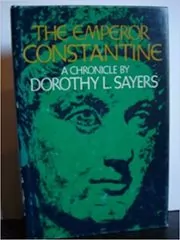
The Emperor Constantine
by Dorothy L. Sayers
1951
A chronicle play detailing the life of Constantine the Great and the Council of Nicaea. Sayers dramatizes the complex theological and political struggles that shaped the early Christian church and the Nicene Creed.
Further Papers on Dante
by Dorothy L. Sayers
1957
A collection of scholarly essays focusing on Dante Alighieri. Following her translation of the *Divine Comedy*, Sayers explores Dante’s theological and poetic themes, offering accessible yet profound literary criticism.
A Treasury of Sayers Stories
by Dorothy L. Sayers
1958
A curated selection of Sayers’ best short fiction, featuring mysteries solved by Lord Peter Wimsey and Montague Egg, alongside other tales that highlight her wit and narrative skill.
Are Women Human?
by Dorothy L. Sayers
1959
Two trenchant essays on the role of women in society. Sayers argues that women should be treated first and foremost as individual human beings with their own work and character, rather than merely as a collective gender.
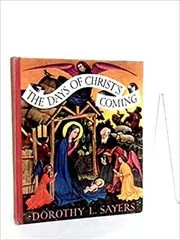
The Days of Christ's Coming
by Dorothy L. Sayers
1960
A short, illustrated book retelling the Nativity story. Sayers uses simple, reverent language to describe the events surrounding the birth of Jesus, originally written as a greeting card design.
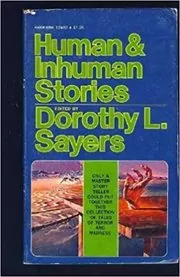
Human And Inhuman Stories
by Dorothy L. Sayers
1963
A collection of short stories that blends mystery with the macabre. This volume gathers some of Sayers' more chilling and psychological tales, moving beyond simple detection into the darker corners of human behavior.
A Matter of Eternity
by Dorothy L. Sayers
1973
This themed selection gathers Dorothy L. Sayers’s theological and devotional writing on creation, forgiveness, work, women, and other subjects. Brief passages and longer extracts present her arguments alongside a previously unpublished poem, inviting reflection on Christian belief.
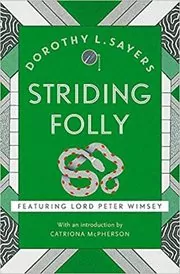
Striding Folly
by Dorothy L. Sayers
1973
A collection containing the final three Lord Peter Wimsey stories. It includes a dream-led mystery, a case involving Peter as a new father, and a lighthearted puzzle where the Wimsey children are accused of stealing peaches.
Wilkie Collins a Critical and Biographical Study
by Dorothy L. Sayers
1977
An unfinished biographical and critical study of the Victorian novelist Wilkie Collins. Sayers admired Collins as a master of the sensation novel and detective fiction, and these drafts offer insight into her appreciation of his work.
Two Plays about God and Man
by Dorothy L. Sayers
1985
A volume containing two of Sayers' religious dramas, *The Devil to Pay* and *The Zeal of Thy House*. These plays explore themes of sin, redemption, and the role of the creator, blending theology with theatrical storytelling.
The Whimsical Christian
by Dorothy L. Sayers
1987
A collection of eighteen essays on religion and Christianity. Sayers writes with wit and clarity on topics ranging from the seven deadly sins to the importance of dogma, challenging comfortable assumptions about faith.
English Country House Murders
by Thomas Godfrey, Arthur Conan Doyle, Wilkie Collins, Robert Barr, Emma Orczy, R Austin Freeman, Gilbert Keith Chesterton, Agatha Christie, Dorothy L. Sayers, Ngaio Marsh, Margery Allingham, Freeman Wills Crofts, John Dickson Carr, Cecil Day-Lewis, PG Wodehouse, J. I. M. Stewart, Philip MacDonald, Ethel Lina White, Christianna Brand, Cyril Hare, Ruth Rendell, PD James & James G. Miles
1988
Edited by Thomas Godfrey, this anthology gathers classic British mystery stories set in and around country estates. The selection ranges from early detective fiction to later crime tales, with contributions from writers including Arthur Conan Doyle, Agatha Christie, Ngaio Marsh, Ruth Rendell, and P. D. James.
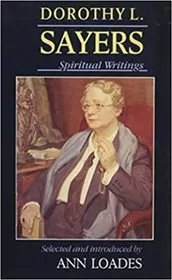
Spiritual Writings
by Dorothy L. Sayers
1993
A compilation of Sayers’ most significant religious essays and letters. This volume highlights her intellectual approach to Christianity, focusing on the Incarnation and the practical application of faith in daily life.
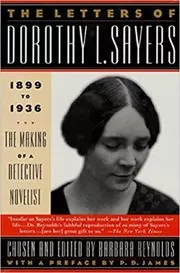
The Letters of Dorothy L. Sayers. Vol. 1, 1899-1936
by Dorothy L. Sayers
1996
The first volume of Sayers’ collected correspondence, covering her childhood, her time at Oxford, and her early career in advertising and writing. It offers a personal look at the development of her sharp intellect and the creation of Lord Peter Wimsey.
The Letters of Dorothy L. Sayers. Vol. 2, 1937-1943
by Dorothy L. Sayers
1998
This volume of letters covers the period when Sayers moved away from detective fiction toward theater and theology. It documents her life during the early years of World War II and the writing of *The Man Born to Be King*.
The letters of Dorothy L. Sayers. Vol. 3, 1944-1950
by Dorothy L. Sayers
1999
Covering the post-war years, these letters reveal Sayers' growing focus on Dante and her translation work. They also show her continued engagement with public debates on religion and society.
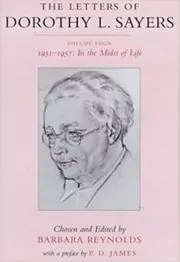
The Letters of Dorothy L. Sayers: 1951-1957
by Dorothy L. Sayers
2000
The final volume of correspondence tracks Sayers' life until her death. It focuses heavily on her immersion in Dante scholarship, her friendships, and her reflections on a lifetime of writing.
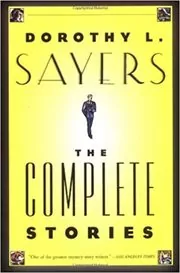
Dorothy L. Sayers: The Complete Stories
by Dorothy L. Sayers
2002
A comprehensive anthology bringing together all of Sayers’ short mystery fiction. It includes every Lord Peter Wimsey story, the Montague Egg puzzles, and her stand-alone tales of crime and the supernatural.
The Best Crime Stories Ever Told
by Dorothy L. Sayers
2002
An anthology edited by Sayers, collecting what she considered the finest examples of detective fiction. Her introduction is a classic piece of criticism, analyzing the history and mechanics of the genre.
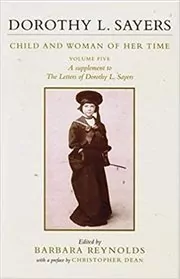
The Letters of Dorothy L. Sayers: Child and Woman of Her Time
by Dorothy L. Sayers
2002
A supplemental collection of letters providing further insight into Sayers’ personal development, her views on the changing role of women, and her navigation of the literary world in the early 20th century.
Letters to a Diminished Church
by Dorothy L. Sayers
2004
Sixteen essays examine why Christian doctrine matters beyond church walls. Dorothy L. Sayers connects beliefs about Christ, creation, sin, and morality with literature, work, history, and everyday problems, challenging readers to take theology’s practical implications seriously.
Where to start with Dorothy L Sayers
If you want the classic introduction: Whose Body? → Clouds of Witness → Unnatural Death
For the celebrated romance arc: Strong Poison → Have His Carcase → Gaudy Night → Busman's Honeymoon
For her masterpiece of atmosphere and setting: The Nine Tailors
Dorothy L Sayers sub-series and character series
Dorothy L Sayers collections, short stories, and related book types
Short Stories/Novellas
Short Story Collections
Chapbooks
Non-Fiction


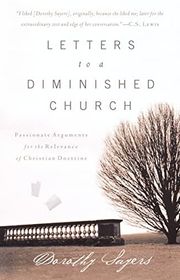
Letters to a Diminished Church
by Dorothy L. Sayers
2004Passionate Arguments for the Relevance of Christian Doctrine
Standalone Dorothy L. Sayers books

by Thomas Godfrey, Arthur Conan Doyle, Wilkie Collins, Robert Barr, Emma Orczy, R Austin Freeman, Gilbert Keith Chesterton, Agatha Christie, Dorothy L. Sayers, Ngaio Marsh, Margery Allingham, Freeman Wills Crofts, John Dickson Carr, Cecil Day-Lewis, PG Wodehouse, J. I. M. Stewart, Philip MacDonald, Ethel Lina White, Christianna Brand, Cyril Hare, Ruth Rendell, PD James & James G. Miles
1988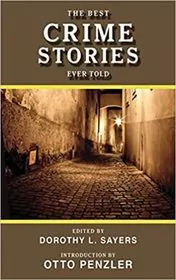
Author bio
Dorothy L. Sayers (1893–1957) was a brilliant and versatile writer who refused to be pinned down to just one genre. While most people know her today as one of the distinct "Queens of Crime" from the Golden Age of detective fiction, she was also a poet, a playwright, and a serious scholar.
Born in Oxford, Sayers grew up surrounded by books and learning. Her father was a chaplain, and she developed a sharp intellect from a young age. This background led her to become one of the very first women to ever receive a degree from Oxford University. It was a major achievement at the time and set the stage for a life of breaking barriers.
However, academic success didn't immediately pay the bills.
Before she became a full-time author, Sayers worked in the bustling world of London advertising. She spent nearly ten years as a copywriter, coming up with catchy slogans for successful national campaigns. She was quite good at it, too. This experience wasn't wasted; she later used the chaotic, high-energy atmosphere of her office as the setting for one of her most popular novels, Murder Must Advertise.
Despite her success in advertising, Sayers is best remembered for the world she created in her spare time. She introduced readers to Lord Peter Wimsey, an aristocratic amateur sleuth with a monocle, a fancy car, and a quick wit.
At first, Wimsey was a lighthearted figure solving clever puzzles in books like Whose Body?. But as Sayers grew as a writer, so did her character. He became more human, dealing with past trauma and complex emotions. The stories evolved from simple "whodunits" into rich novels that explored society and human nature.
This shift is most obvious in the books featuring Harriet Vane.
Harriet is a mystery writer herself who is introduced in Strong Poison. She was not written as a damsel in distress for Peter to save; she was his intellectual match. Through these novels, including the beloved Gaudy Night, Sayers explored difficult themes of love, independence, and the balance between heart and head. The relationship between Peter and Harriet remains one of the most satisfying and realistic partnerships in crime fiction.
But Sayers had more to say than just mystery stories. She was a devout Anglican with a deep interest in theology and culture.
In the middle of her career, she moved away from detective fiction to write for the stage and radio. Her series of radio plays, The Man Born to Be King, brought the story of Jesus to life in modern English. It was considered controversial by some at the time but became hugely popular for its fresh and accessible approach.
In her final years, she turned away from mysteries entirely to focus on her biggest intellectual challenge. She taught herself old Italian so she could translate Dante’s Divine Comedy. It was a passion project that consumed the rest of her life. To this day, her translation is respected by academics for capturing the spirit and rhyme of the original work.
Dorothy L. Sayers passed away in 1957, leaving behind a diverse and impressive collection of work. Whether you are looking for a clever mystery, a thought-provoking play, or a classic translation, her writing remains sharp, funny, and deeply intelligent.
Edited by
Software engineer whose passion for tracking book recommendations from podcasts inspired the creation of MRB.
Lead investor at 3one4 Capital whose startup expertise and love for books helped shape MRB and its growth.
Comments
Did we miss something? Have feedback?
Help us improve this page by sharing your thoughts