
Donald Harstad Books in Order
Browse Donald Harstad books in order, with Carl Houseman reading order, quick summaries, series background, and clear advice on the best place to start.
Last updated:
As an Amazon Associate, we earn from qualifying purchases (at no extra cost to you).
Donald Harstad books in publication order
7 books
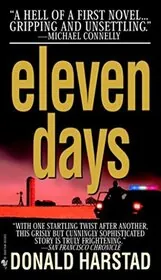
Eleven Days
by Donald Harstad
1998
A horrifying 911 call leads Deputy Sheriff Carl Houseman to a remote Iowa farmhouse and the start of an eleven-day nightmare. As outside investigators arrive, Carl must dig through local loyalties to find a killer.
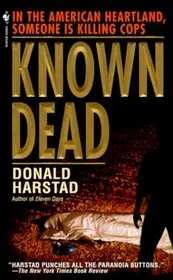
Known Dead
by Donald Harstad
1999
After an ambush in a marijuana field leaves a cop and a small-time dealer dead, Carl Houseman and his fellow officers face a murky case of automatic weapons, federal pressure, and violence close to home.
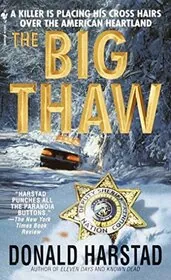
The Big Thaw
by Donald Harstad
2000
Two frozen brothers are found in a machine shed, and Carl Houseman quickly doubts the obvious suspect. As robberies, federal attention, and missing clues pile up, the case widens far beyond a simple double murder.
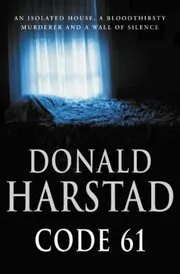
Code 61
by Donald Harstad
2002
Looking into the apparent suicide of a colleague's niece, Carl Houseman stumbles into a blood-drinking subculture and a suspect wrapped in vampire rumors. The case sounds absurd, until the danger turns brutally real.
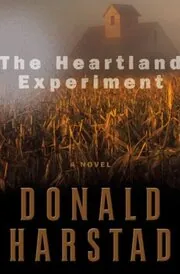
The Heartland Experiment / A Long December
by Donald Harstad
2003
An execution-style murder near Frog Hollow drags Carl Houseman into a case involving a kosher meat plant, immigrant labor, and fears that terrorism has reached Nation County.

Three Octobers
by Donald Harstad
2005
A standalone thriller from Harstad, set in his familiar rural Iowa world, where ordinary lives get pulled toward violence and the search for the truth becomes a tense, dangerous grind.
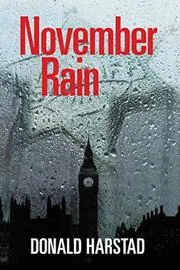
November Rain
by Donald Harstad
2009
When his daughter's friend is kidnapped in the UK, Carl Houseman leaves rural Iowa to work with Scotland Yard. What starts as a desperate rescue effort opens onto political extremism and a threat with far wider consequences.
Where to start with Donald Harstad
If you want the core Carl Houseman experience: Eleven Days → Known Dead → The Big Thaw
If you like detailed police procedurals: Code 61 → The Heartland Experiment / A Long December
If you want Harstad at his biggest scale: November Rain
If you want a standalone first: Three Octobers
Donald Harstad sub-series and character series
Standalone Donald Harstad books
Author bio
Donald Harstad was born in Los Angeles in 1945, but he mostly grew up in Elkader, Iowa. That mix of leaving and coming back matters in his books. He writes about rural places with the eye of someone who knows how people talk, work, and remember things.
After marrying Mary, his high school sweetheart, he spent several years in Los Angeles. He worked in the motion picture business, including jobs connected to CBS Theatrical Films and Four Star Television. After the couple had a daughter, they decided they did not want to raise a family there, so they moved back to Iowa in 1970. Harstad worked as a police dispatcher, while Mary began teaching.
He did not come to writing through a writing program or a newsroom.
In 1973 he became a deputy sheriff in Clayton County, in northeastern Iowa, and he stayed with the department until 1996. Over those years he worked patrol, intelligence, and investigations, and later served as chief investigator. That long stretch in law enforcement gave him the thing many crime writers have to fake: the rhythm of the job, the paperwork, the waiting, the jokes, the radio chatter, and the way a case can seep into every corner of daily life.
When Harstad started publishing fiction, that background was right there on the page. His debut, Eleven Days, introduced Deputy Sheriff Carl Houseman and earned an Anthony Award nomination for Best First Novel. The book drew on a real case Harstad had worked, but what readers often remember is not just the violence, it is the feeling of a quiet Iowa county being forced to look at what it would rather not see.
Then came Known Dead, The Big Thaw, Code 61, A Long December, and later November Rain.
Most of Harstad's fiction is set in the fictional Nation County, Iowa, with Carl Houseman at the center. Readers tend to come to these books for the procedural detail, but they stay for the voice. Carl is observant, steady, and dryly funny, and Harstad understands that police work is rarely glamorous. It is slow, tense, repetitive, and human. That makes the shocks hit harder when they come.
Harstad's stories also keep circling a few big ideas. One is that small towns are never as simple as they look from the highway. Another is that crime usually grows out of choices, bad ones made over time, by ordinary people. His novels look at farm country, local politics, rumor, outsiders, and the uneasy meeting point between neighborly life and sudden violence. Even when a plot turns big, Harstad keeps his feet on the ground.
He has also written the standalone thriller Three Octobers, and his books have reached readers well beyond Iowa, appearing in multiple countries and languages. But he never seems to have lost interest in the same basic question that shaped his police work in the first place: what happened here, and how did it happen?
These days, Harstad lives in Elkader with Mary. That feels fitting. He built a crime-writing career out of places that many thrillers overlook, and he proved that a rural deputy sheriff from Iowa could tell stories every bit as tense, strange, and memorable as anything set in a big city.





Edited by
Software engineer whose passion for tracking book recommendations from podcasts inspired the creation of MRB.
Lead investor at 3one4 Capital whose startup expertise and love for books helped shape MRB and its growth.
Comments
Did we miss something? Have feedback?
Help us improve this page by sharing your thoughts