
David Willis McCullough Books in Order
Explore David Willis McCullough's books in order, with quick summaries, the Ziza Todd series background, and a simple guide to where to start.
Last updated:
As an Amazon Associate, we earn from qualifying purchases (at no extra cost to you).
David Willis McCullough books in publication order
8 books
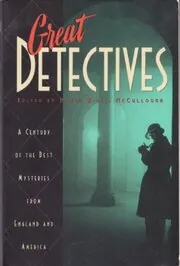
Great Detectives
by David Willis McCullough
1984
McCullough's anthology brings together a century of English and American mystery writing, with stories and novels by major detective authors. It is a big, inviting sampler for readers who want classic sleuths, puzzles, and crime fiction history.
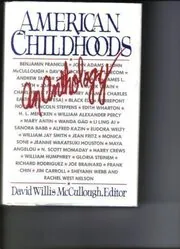
American Childhoods
by David Willis McCullough
1987
This anthology gathers memoir excerpts and journal pieces about growing up in America, from famous voices to lesser-known ones. The pieces range from funny and affectionate to hard and heartbreaking, giving childhood a broad, varied frame.
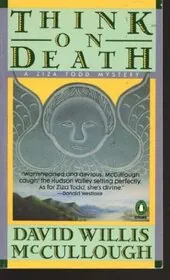
Think on Death
by David Willis McCullough
1991
In Smyrna, a faded utopian community in upstate New York, Ziza Todd is pulled into a case involving a missing husband, a widow's return, and a skeleton in a closet. The mystery is tangled up with the town's long memory.
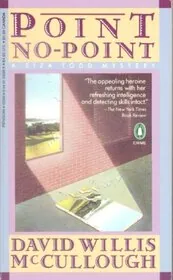
Point No-Point
by David Willis McCullough
1993
Ziza Todd arrives in Quarryville-on-the-Hudson as riverfront redevelopment fights turn deadly. With local egos, old rivalries, and three murders in play, she has to read the town as carefully as the clues.
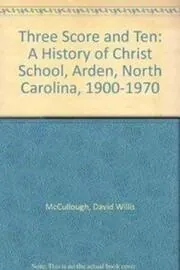
Three Score and Ten
by David Willis McCullough
1996
A history of Christ School in Arden, North Carolina, this book looks back on the institution's first seventy years. McCullough traces the people, traditions, and changes that shaped the school and its community.
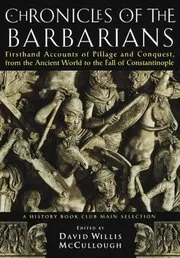
Chronicles of the Barbarians
by David Willis McCullough
1998
McCullough gathers firsthand accounts of invaders and empires, from ancient writers to witnesses of the fall of Constantinople. The result is a brisk tour of conquest, fear, and cultural collision across the ancient and medieval world.
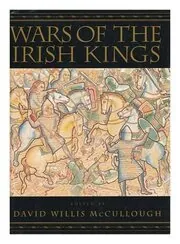
Wars Of The Irish Kings
by David Willis McCullough
2000
This anthology follows Ireland's early history through myths, raids, feuds, and rebellions, using classic and eyewitness accounts. McCullough links the pieces so readers can watch Irish identity take shape across a thousand turbulent years.
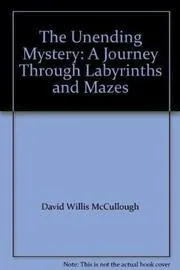
The Unending Mystery A Journey Through Labyrinths And Mazes
by David Willis McCullough
2004
McCullough traces labyrinths and mazes from ancient Crete to cathedral floors and modern cornfield puzzles. It is a curious history of how people have used these winding forms for myth, worship, play, and design.
Where to start with David Willis McCullough
If you want the Ziza Todd mysteries: Think on Death → Point No-Point
If you like history through original voices: Chronicles of the Barbarians → Wars of the Irish Kings
If you want a single curious nonfiction pick: The Unending Mystery: A Journey Through Labyrinths and Mazes
If you enjoy anthologies and samplers: Great Detectives → American Childhoods
David Willis McCullough sub-series and character series
David Willis McCullough collections, short stories, and related book types
Non-Fiction
Author bio
David Willis McCullough was born in Canonsburg, Pennsylvania, on October 2, 1937. He later grew up in the Albany, New York, area, which helps explain why so much of his writing feels rooted in real places and local memory. He studied at the University of Rochester, graduating in 1959, and then spent a year at Stanford.
He came to writing through publishing first.
For many years McCullough worked at the Book-of-the-Month Club, first in the editorial department and later on the editorial board. That long stretch inside the book world seems to have shaped everything that followed. He read widely, interviewed writers, and learned how to present books to curious general readers instead of a narrow specialist crowd.
One result was People, Books, and Book People, a collection that grew out of his "Eye on Books" interviews. Another was his work as an editor and anthologist. In Great Detectives, he gathered a century of English and American mystery writing into one big sampler. In American Childhoods, he pulled together memoir and journal pieces from famous and lesser-known voices. He clearly liked books that let many people speak.
That instinct for curation never really left him.
McCullough also wrote nonfiction that turns research into something approachable and lively. Brooklyn . . . and How It Got That Way looks at the borough through its streets, industries, neighborhoods, and odd corners of history. Later books such as Chronicles of the Barbarians and Wars of the Irish Kings use firsthand and classic accounts to move readers through large historical stretches without losing the human detail. Even The Unending Mystery follows that pattern, taking labyrinths and mazes from ancient Crete to cathedral floors and modern cornfields.
His fiction carries over many of the same interests, only in murder-sized form. Think on Death and Point No-Point introduce Ziza Todd, a young Presbyterian minister who finds herself solving crimes in small New York communities full of old loyalties, private griefs, and awkward local politics. Readers who enjoy these books often respond to the sense of place, the dry humor, and the way the past keeps pressing into the present. McCullough is less interested in flashy sleuthing than in the stories towns tell about themselves, and the secrets those stories hide.
That work did not go unnoticed. Brooklyn . . . and How It Got That Way received a Books-across-the-Sea Ambassador of Honor Award in 1984, and Think on Death was named a Washington Irving Book Selection in 1993.
His personal life stayed close to books as well. He married Frances Monson, an editor and writer, in 1965, and they had two children, Benjamin and Katherine. Later author notes place him in Hastings-on-Hudson, New York, and local records show him taking part in community history work there. That feels fitting. Whether he was editing old texts, interviewing authors, or writing about labyrinths, barbarians, Brooklyn, or a murder in the Hudson Valley, he kept circling back to the same question: how does a place remember itself, and who gets to tell the story?



Edited by
Software engineer whose passion for tracking book recommendations from podcasts inspired the creation of MRB.
Lead investor at 3one4 Capital whose startup expertise and love for books helped shape MRB and its growth.
Comments
Did we miss something? Have feedback?
Help us improve this page by sharing your thoughts