
David Waldstreicher Books in Order
Explore David Waldstreicher books in publication order, with short summaries and a reading guide to help you choose where to begin and what to read next.
Last updated:
As an Amazon Associate, we earn from qualifying purchases (at no extra cost to you).
David Waldstreicher books in publication order
7 books
The Armenian Americans
by David Waldstreicher
1988
The history, culture and religion of Armenians provide the background for an account of migration to North America. David Waldstreicher examines the forces encouraging emigration and the experience of acceptance as Armenian communities establish themselves within a new social setting.
In the Midst of Perpetual Fetes
by David Waldstreicher
1997
Political festivals helped Americans build national identities after the Revolution while exposing deep disagreements. Using celebrations and their circulation in print, David Waldstreicher examines how competing groups turned holidays into political arguments, with participation shaped by race, region, class and gender.
Runaway America
by David Waldstreicher
2004
Benjamin Franklin’s life as an escaped indentured servant, printer and slaveholder reveals contradictions within American freedom. David Waldstreicher connects Franklin’s rise with the economy of slavery, arguing that unfree labor was central to both his success and the Revolutionary project.
Slavery's Constitution
by David Waldstreicher
2009
David Waldstreicher examines slavery’s place in the Constitution despite the document’s avoidance of the word itself. Tracing debates from the Revolution through ratification, he argues that compromises over human bondage shaped the national government and helped sustain the institution.
John Quincy Adams and the Politics of Slavery
by David Waldstreicher
2016
Edited by Waldstreicher and Matthew Mason, selections from John Quincy Adams's diary trace his changing relationship with the politics of slavery. Introductions and commentary connect private reflections with public actions, showing how an issue once peripheral to his career became central to his political identity.
Revolutions and Reconstructions
by David Waldstreicher
2020
Historians examine Black political activity from the Revolutionary era through Reconstruction, treating emancipation and citizenship as connected struggles. Essays explore voting, migration, local institutions and activism, challenging accounts that confine African American political influence to a few exceptional moments.
The Odyssey of Phillis Wheatley
by David Waldstreicher
2023
Waldstreicher reconstructs the life and writing of Phillis Wheatley, kidnapped in West Africa and enslaved in Boston before becoming a celebrated poet. Close readings of her verse connect friendships, emancipation, literary ambition, and political engagement with the tensions surrounding slavery and the American Revolution.
Where to start with David Waldstreicher
For poetry and a life in the revolutionary era: The Odyssey of Phillis Wheatley
For slavery and the founding document: Slavery's Constitution
For Benjamin Franklin and unfree labor: Runaway America
Standalone David Waldstreicher books

In the Midst of Perpetual Fetes
by David Waldstreicher
1997The Making of American Nationalism, 1776-1820

Revolutions and Reconstructions
by David Waldstreicher
2020Black Politics in the Long Nineteenth Century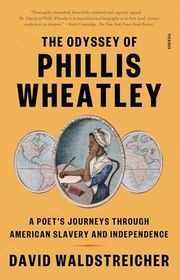
Author bio
David Waldstreicher is a historian of early America whose books examine the relationship between freedom and slavery. His subjects include political institutions, public culture and individual lives. Across these different approaches, the question is how ideas about liberty developed alongside practices that denied it to others, and how people challenged or accommodated that contradiction.
Waldstreicher studied history and English literature at the University of Virginia, then earned a master's degree and doctorate in American studies at Yale. He is a distinguished professor at the CUNY Graduate Center. Before joining CUNY, he taught at Temple, Notre Dame, Yale and Bennington.
His books can begin with a person or with a political document.
Runaway America uses Benjamin Franklin's life to reconsider familiar ideas of independence and the self-made man. Franklin's experience as an apprentice and his work as a printer become part of a wider account of unfree labor. The book connects individual advancement with an economy that advertised enslaved people and helped recover runaways. It suits readers interested in seeing a familiar founder within the social arrangements that made his career possible.
Slavery's Constitution turns to the founding document itself. Waldstreicher argues that slavery held a central place in the Constitution even without being named directly. He examines provisions protecting the interests of slaveholders and the political compromises that allowed the document to take shape. Readers seeking a focused argument about the founding and slavery can start here before moving toward the biographical work.
The Odyssey of Phillis Wheatley places a poet's life and writing at the center of the revolutionary era. Wheatley was kidnapped in West Africa and enslaved in Boston, where her literary work took shape amid arguments about liberty and human equality. Waldstreicher reads the poems alongside her relationships and circumstances, treating them as part of her engagement with the world around her.
That biography won both the George Washington Prize and the Francis Parkman Prize.
Its combination of historical reconstruction and close reading offers a way into Waldstreicher's work for readers who come to history through literature. Poetry matters as something made by a particular person, addressed to others and shaped by circumstances. The book asks readers to consider Wheatley as a writer making choices, as well as a life that exposes the limits of the freedom proclaimed around her.
Taken together, Runaway America, Slavery's Constitution and The Odyssey of Phillis Wheatley provide three connected perspectives on early American liberty: a founder's career, the institutions of the new nation and the work of an enslaved poet. They don't form a series that requires a fixed order. The best starting point depends on whether the reader wants biography, constitutional history or the relationship between poetry and politics.














Edited by
Software engineer whose passion for tracking book recommendations from podcasts inspired the creation of MRB.
Lead investor at 3one4 Capital whose startup expertise and love for books helped shape MRB and its growth.
Comments
Spotted a missing book, a wrong order or a mistake? Tell us and we'll fix this page.
We're a reading guide, not the author or publisher, so we can't send books or pass on messages.