
David Ignatius Books in Order
Browse all David Ignatius novels in order, with brief summaries, spy reading guides, and background on his journalism to help you decide where to start.
Last updated:
As an Amazon Associate, we earn from qualifying purchases (at no extra cost to you).
David Ignatius books in publication order
14 books
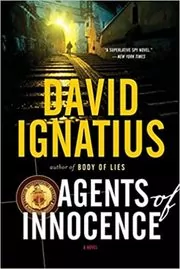
Agents of Innocence
by David Ignatius
1987
In 1970s Beirut, idealistic CIA officer Tom Rogers is ordered to infiltrate the PLO by cultivating a high-level insider. As Lebanon edges toward civil war, he learns how fragile trust becomes when every friendship might also be an operation.
Recommended by
1 person Anthony Bourdain recommended this book
Anthony Bourdain
"Very, very good." - Anthony Bourdain
Anthony Bourdain's recommendation of this book

Siro
by David Ignatius
1991
Restless with CIA bureaucracy, case officer Alan Taylor launches a risky covert plan to weaken the Soviet Union. Recruiting young analyst Anna Barnes, he pushes past legal and moral limits, drawing them both into a dangerous web of manipulation and betrayal.
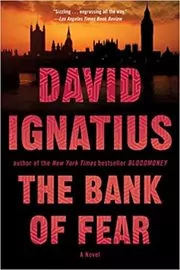
The Bank of Fear
by David Ignatius
1994
In London, private financial investigator Sam Hoffman uncovers a lethal trail behind a powerful Iraqi businessman who fronts for a brutal regime. With insider Lina Alwan, he follows missing millions through front companies and offshore accounts, drawing deadly attention.
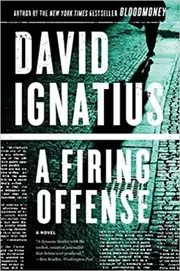
A Firing Offense
by David Ignatius
1997
Ambitious reporter Eric Truell thinks he has landed the scoop of a lifetime when a rogue CIA officer hands him explosive secrets. As he chases stories from Paris to Beijing, Eric blurs the line between journalist and spy, risking his career and his life.

The Sun King
by David Ignatius
1999
Billionaire Sandy Galvin storms into Washington determined to buy a venerable newspaper and reinvent the city’s power game. His real target, though, is Candace Ridgway, the brilliant editor who once broke his heart, pulling their shared past into today’s ruthless politics.
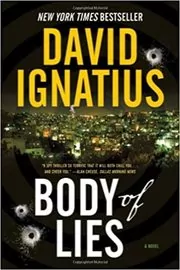
Body of Lies
by David Ignatius
2007
Badly wounded in Iraq, CIA operative Roger Ferris is sent to Jordan to hunt an elusive terrorist mastermind. He crafts an audacious deception built around a fictitious agent, only to discover that his greatest uncertainty lies in whom he can trust.

Body of Lies / House of Lies
by David Ignatius
2008
After a grievous injury in Iraq, CIA operative Roger Ferris seeks to infiltrate a terrorist network behind bombings in Europe. His plan draws on a World War II intelligence deception, testing the limits of tradecraft and trust in the modern Middle East.
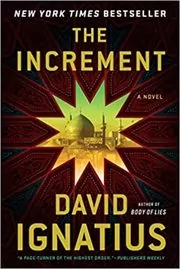
The Increment
by David Ignatius
2009
Harry Pappas, head of the CIA’s Iran desk, receives secret messages from a scientist inside Tehran’s nuclear program. To protect the source, he turns to an elite British unit known as the Increment and uncovers a maze of half-truths inside his own government.

Bloodmoney
by David Ignatius
2011
Young CIA officer Sophie Marx investigates a string of murders targeting members of a covert unit operating in Pakistan. Following money trails and digital footprints, she confronts double games between Washington and Islamabad and a revenge plot born from drone-war casualties.
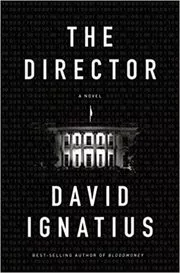
The Director
by David Ignatius
2014
New CIA director Graham Weber has barely settled into the job when a young hacker claims to have penetrated the agency’s deepest secrets. As Weber races to contain the breach, he navigates shifting alliances where nothing in the digital world can be taken at face value.
Blind Spot: America's Response to Radicalism in the Middle East
by Bernard Haykel, Farah Pandith, Shadi Hamid, Vali Nasr, Ryan Crocker, David Ignatius, William McCants, Graeme Wood, James E. Cartwright, Frances Townsend, Jared Cohen, Tom Pritzker, Dov Zakheim, Peter Feaver, Michele Flournoy, Richard Fontaine, Philip Zelikow, Sarah B. Sewall & Aspen Strategy Group
2015
A policy collection developed from the Aspen Strategy Group’s 2015 workshop examines the roots and appeal of Middle Eastern extremism, the trajectory of ISIS, and possible U.S. responses. Contributors offer contrasting analyses of radical groups and strategies for confronting Islamist extremism.
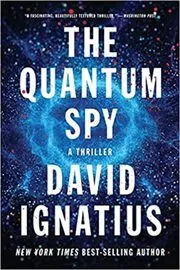
The Quantum Spy
by David Ignatius
2017
CIA officer Harris Chang is drawn into a race with Chinese intelligence to build the first operational quantum computer. Tracking leaks from U.S. research labs, he hunts a mole whose betrayal could upend global security and force him to question his loyalties.
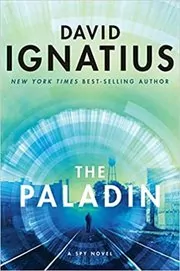
The Paladin
by David Ignatius
2020
Disgraced CIA operative Michael Dunne leaves prison convinced he was sacrificed after a covert cyber operation against a shadowy media collective collapsed. Determined to clear his name, he chases the hackers across Europe and uncovers a plot to weaponize fake news on a massive scale.

Phantom Orbit
by David Ignatius
2024
Russian scientist Ivan Volkov discovers a hidden vulnerability in global satellite systems that could cripple GPS and modern warfare. Haunted by personal loss and disillusioned with his government, he reaches out to the CIA, triggering a tense space-age espionage struggle among rival powers.
Where to start with David Ignatius
If you want his classic Middle East spy stories: Agents of Innocence → Siro → The Bank of Fear
If you like contemporary intelligence and tech: The Increment → The Director → The Quantum Spy
If you prefer high-stakes standalones: Body of Lies → The Paladin → Phantom Orbit
If you’re drawn to journalism and politics: A Firing Offense → The Sun King → Bloodmoney
David Ignatius collections, short stories, and related book types
Anthologies
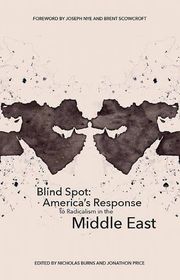
Blind Spot: America's Response to Radicalism in the Middle East
by Bernard Haykel, Farah Pandith, Shadi Hamid, Vali Nasr, Ryan Crocker, David Ignatius, William McCants, Graeme Wood, James E. Cartwright, Frances Townsend, Jared Cohen, Tom Pritzker, Dov Zakheim, Peter Feaver, Michele Flournoy, Richard Fontaine, Philip Zelikow, Sarah B. Sewall & Aspen Strategy Group
2015
Standalone David Ignatius books
Author bio
David Ignatius was born in 1950 in Cambridge, Massachusetts, and grew up in Washington, D.C., in a family where public service and politics were part of daily life. His father, Paul Ignatius, served as Secretary of the Navy and later led The Washington Post and a major airline trade group. His mother, Nancy Sharpless, worked in the nonprofit world, giving him an early sense that ideas and institutions both matter.
Ignatius attended St. Albans School in Washington before heading to Harvard College, where he studied political theory and wrote for the student newspaper. He graduated magna cum laude and then crossed the Atlantic on a fellowship to King's College, Cambridge, earning a diploma in economics. That mix of politics, economics, and writing would become his basic toolkit.
His first job out of school was as an editor at a small political magazine in Washington. From there he joined The Wall Street Journal, starting on the steel beat in Pittsburgh before moving back to Washington to cover the Justice Department, the CIA, and the U.S. Senate. In the early 1980s he became the paper's Middle East correspondent, reporting on the wars in Lebanon and Iraq and learning how intelligence and diplomacy work under real pressure.
Those years of watching case officers, diplomats, and militants up close gave him the material that would later power his fiction.
In 1986 Ignatius moved to The Washington Post, where he cycled through key editing roles: running the Sunday Outlook section, serving as foreign editor, and later overseeing business coverage. Since the late 1990s he has written a regular column on global politics and national security, drawing on frequent trips to the Middle East and other conflict zones. Along the way he has won major awards for commentary and diplomatic reporting while becoming a familiar voice in debates about American power.
Even while working full-time as a journalist, he began writing spy novels that tried to capture how intelligence work actually feels from the inside. His debut, Agents of Innocence, set largely in 1970s Beirut, follows a young CIA officer ordered to penetrate the Palestine Liberation Organization and shows the human cost of running agents as a city unravels. Later books such as Siro and The Bank of Fear returned to the Middle East, weaving together financial schemes, Iraqi politics, and the everyday compromises of people working in the shadows.
Body of Lies pushed his storytelling into the post-9/11 era, sending an injured CIA operative into Jordan to hunt a terrorist mastermind through an elaborate deception; the novel was later adapted into a film directed by Ridley Scott. The Increment imagines a secret channel into Iran's nuclear program and a covert team designed to act where diplomacy fails. Together, these books helped establish Ignatius as a novelist who writes about modern espionage with the specificity of a reporter.
In recent years his fiction has followed the headlines into cyberspace and, in the case of Phantom Orbit, into near-earth orbit.
The Director opens with news that the CIA's own systems have been hacked, plunging a new agency chief into the murky world of cyber-espionage, while The Quantum Spy tracks the race between the United States and China to build a working quantum computer and the mole hunt that follows. The Paladin looks at online disinformation, surveillance, and the risks of targeting journalists, and Phantom Orbit turns satellites and navigation systems into pieces on a strategic chessboard in space. Across these stories he keeps returning to a few core questions: how democracies use secret power without losing their footing, what double-dealing does to alliances, and how people hold on to integrity inside opaque institutions.
Beyond the newsroom and the novels, he has taught a course on the Arab Spring and international affairs at a public policy school and served as a senior fellow in a diplomacy program, sharing what he has learned from decades of reporting. He lives in Washington, D.C., with his wife, Dr. Eve Thornberg Ignatius, and they have three daughters. When he is not filing columns on current events, he is usually working on the next book, trying to imagine where the intelligence world might be headed a few years from now.









Edited by
Software engineer whose passion for tracking book recommendations from podcasts inspired the creation of MRB.
Lead investor at 3one4 Capital whose startup expertise and love for books helped shape MRB and its growth.
Comments
Did we miss something? Have feedback?
Help us improve this page by sharing your thoughts