
David H Freedman Books in Order
Browse David H Freedman books in order, with quick summaries, where to start suggestions, and background on his science, business, and technology writing.
Last updated:
As an Amazon Associate, we earn from qualifying purchases (at no extra cost to you).
David H Freedman books in publication order
5 books
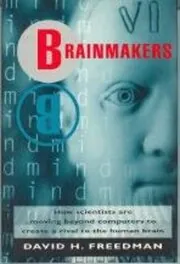
Brainmakers
by David H Freedman
1994
Freedman tours the labs trying to build machines that think, from neural nets to robotics and artificial life. It offers a clear snapshot of early AI research and the big ambitions driving it.
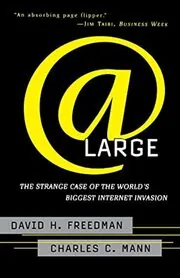
At Large
by David H Freedman
1997
Written with Charles C. Mann, this nonfiction thriller follows a sprawling hunt for an elusive hacker who breaks into major networks. It also serves as an early warning about how vulnerable the connected world had already become.
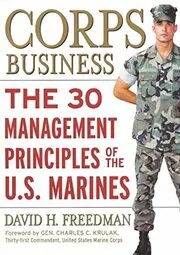
Corps Business
by David H Freedman
2000
Freedman studies the U.S. Marines as a model of fast, adaptable management. He translates battlefield-tested principles into lessons about leadership, decision-making, and how organizations can move quickly when conditions keep changing.
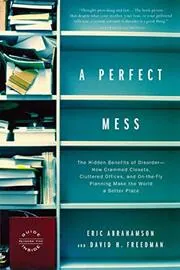
A Perfect Mess
by David H Freedman
2006
Co-written with Eric Abrahamson, this book argues that a bit of disorder can be useful. Through cases from work, home, and public life, it shows how messiness can save time, spark ideas, and make systems more flexible.
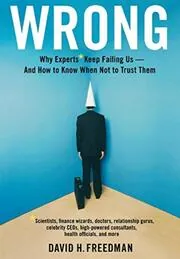
Wrong
by David H Freedman
2010
Freedman looks at why experts in science, medicine, finance, and other fields so often give bad advice. He shows how shaky research, institutional incentives, and media hype can turn confidence into misinformation.
Where to start with David H Freedman
If you want his sharpest skeptical read: Wrong → A Perfect Mess
If you're here for work and management ideas: Corps Business → A Perfect Mess
If you want his technology writing first: Brainmakers → At Large
If you want the full run in publication order: Brainmakers → At Large → Corps Business → A Perfect Mess → Wrong
David H Freedman collections, short stories, and related book types
Non-Fiction
Author bio
David H. Freedman is a journalist and author based in the Boston area who has spent more than 30 years writing about science, technology, business, and health. He has been a contributing writer at The Atlantic, a semi-regular cover-story contributor to Newsweek, and a byline in publications such as Scientific American, Discover, Wired, the New York Times, the Harvard Business Review, Politico, Quanta, and Inc. His books follow the same instinct as his reporting: take a complicated system, pull it apart, and explain what ordinary readers actually need to know.
He likes subjects that get messy.
Freedman has said very directly that he isn't a scientist, he is a journalist. That outsider-insider position shapes a lot of his work. He loves science, but he is especially interested in the parts that slow it down or send it off course, messy evidence, overconfident experts, flashy headlines, and the pressure to turn uncertainty into certainty.
He has also mentioned teaching physics and writing, which helps explain his comfort with technical material. Even when the subject is dense, his reporting aims to keep it readable for general audiences. He moves between labs, boardrooms, health studies, and internet culture without treating any of them like a closed club.
That range shows up early.
His first books lean heavily into technology. Brainmakers takes readers into labs chasing machine intelligence, at a moment when researchers were moving beyond classic computer models and looking to neuroscience, evolution, and robotics for new ideas. In At Large, written with Charles C. Mann, he turned a sweeping hacker investigation into a tense nonfiction story about computer crime and the growing fragility of life online.
Later books widened the frame. Corps Business looks at the U.S. Marines as an organization built for speed, clarity, and action under pressure, then asks what civilian managers can learn from that. A Perfect Mess, co-written with Eric Abrahamson, argues that a certain amount of disorder can actually save time, spark creativity, and make systems more resilient.
A later book, Wrong, brings one of his biggest concerns into the center of the page. It asks why experts in medicine, finance, management, and other fields so often fail us, and why the noisiest advice is often the least trustworthy. That theme runs through much of his magazine work as well, especially pieces on nutrition, public health, scientific research, and the way media turns tentative findings into confident claims.
Across his books, skepticism is a working tool, not a pose. He is interested in incentives, blind spots, oversold claims, and the friction between neat theories and real-world behavior. Whether he is writing about artificial intelligence, the military, clutter, medicine, or the internet, he keeps returning to the same question: how do smart people get important things so wrong?
He has also co-founded and run an online magazine about global healthcare. He still lives in the Boston area, and his byline usually includes the middle initial for a very practical reason, to keep him from being mixed up with the many other David Freedmans in public life. That small joke feels exactly right for his work. Precision matters, and so does a little perspective.












Edited by
Software engineer whose passion for tracking book recommendations from podcasts inspired the creation of MRB.
Lead investor at 3one4 Capital whose startup expertise and love for books helped shape MRB and its growth.
Comments
Did we miss something? Have feedback?
Help us improve this page by sharing your thoughts