
David Gibbins Books in Order
Explore David Gibbins books in order, from Jack Howard adventures to Roman historical fiction, with summaries, series guides, and help on where to start.
Last updated:
As an Amazon Associate, we earn from qualifying purchases (at no extra cost to you).
David Gibbins books in publication order
14 books
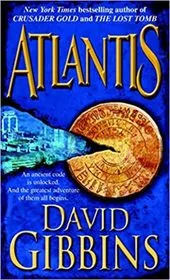
Atlantis
by David Gibbins
2005
Marine archaeologist Jack Howard follows a trail of clues toward the lost city of Atlantis. What begins as an astonishing dive becomes a fight against terrorists and a modern catastrophe tied to an ancient secret.
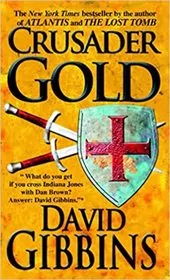
Crusader Gold
by David Gibbins
2006
Jack Howard hunts the lost menorah, following clues from Istanbul to Viking routes across the Atlantic. Murders, extremists, and a deepening historical puzzle turn the treasure hunt into a deadly race.
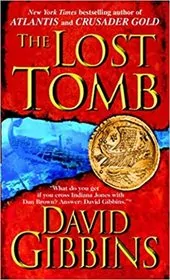
The Lost Tomb
by David Gibbins
2008
While excavating near Pompeii, Jack Howard uncovers clues to a long-hidden gospel linked to the early Roman Empire. The search sends him from Italy to Jerusalem with powerful enemies determined to bury the truth forever.

The Tiger Warrior
by David Gibbins
2009
A deep-sea discovery sends Jack Howard after the fate of missing Roman legionnaires and the mystery of his own ancestor's disappearance. The trail runs through Egypt, India, and Central Asia, with an old enemy guarding a dangerous secret.

The Mask Of Troy
by David Gibbins
2010
A shipwreck linked to Agamemnon's war fleet pulls Jack Howard into a chase tied to Schliemann, Nazi looting, and the legacy of Troy. Ancient treasure is only part of the danger.
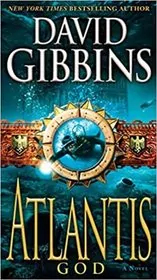
Atlantis God
by David Gibbins
2011
Haunted by unanswered questions from Atlantis, Jack Howard returns to the Black Sea and the buried world of Atlantis. Nazi expeditions, lost relics, and a terrifying modern threat make this sequel one of his darkest hunts.
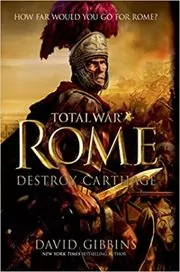
Destroy Carthage
by David Gibbins
2013
In the last decades of Rome's war with Carthage, legionary Fabius fights beside Scipio Aemilianus through battle, politics, and siege. The novel follows Rome's brutal path toward the destruction of its greatest rival.
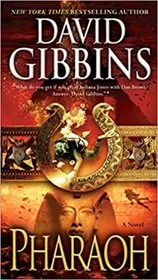
Pharaoh
by David Gibbins
2013
A discovery beneath the Nile sends Jack Howard from Akhenaten's Egypt to the doomed British expedition at Khartoum. As past and present close in on each other, a violent modern force wants the same secret.
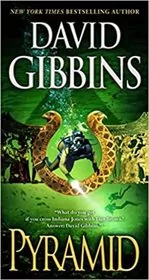
Pyramid
by David Gibbins
2014
A forgotten Victorian manuscript and strange evidence from the Red Sea send Jack Howard beneath Cairo and back to Akhenaten's reign. With Egypt in turmoil, he races to uncover a buried secret before extremists do.
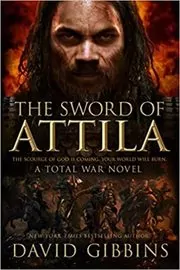
The Sword of Attila
by David Gibbins
2015
As the Western Roman Empire falters, young tribune Flavius and centurion Macrobius face Vandals, intrigue, and the advancing Huns. Their mission draws them toward Aetius, Attila, and a symbol of war that could decide Rome's fate.
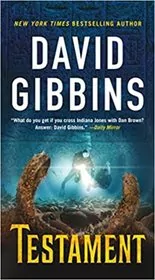
Testament
by David Gibbins
2016
A perilous dive on a Second World War wreck sends Jack Howard after an ancient voyage hidden inside a Nazi secret. The trail leads from Atlantic depths to Carthage and Ethiopia, with terrorists closing in on deadly cargo.
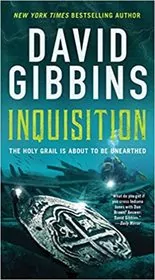
Inquisition
by David Gibbins
2017
A wreck off Cornwall and a baffling silver coin pull Jack Howard into a hunt that reaches Tangier, Port Royal, and South America. What begins as a maritime mystery becomes a deadly search for the Grail.

A History of the World in Twelve Shipwrecks
by David Gibbins
2024
In this nonfiction history, Gibbins uses twelve shipwrecks to trace trade, migration, war, and belief across the centuries. It blends underwater archaeology with big-picture storytelling and shows how the sea can reshape history.

Daughter of Attila
by David Gibbins
2025
Set in AD 450, this historical adventure follows Erecan, daughter of Attila, and her companions as the Roman and Hun worlds edge toward war. Their journey across the steppe becomes a coming-of-age story under real imperial pressure.
Where to start with David Gibbins
If you want the main Jack Howard story from the beginning: Atlantis → Crusader Gold → The Lost Tomb
If you want Egypt-focused archaeological suspense: Pharaoh → Pyramid
If you want Roman military historical fiction: Destroy Carthage → The Sword of Attila
If you want real-world shipwreck history: A History of the World in Twelve Shipwrecks
If you want a newer coming-of-age historical adventure: Daughter of Attila
David Gibbins sub-series and character series
David Gibbins collections, short stories, and related book types
Non-Fiction
Standalone David Gibbins books
Author bio
David Gibbins was born in 1962 in Saskatoon, Saskatchewan, to English parents who were both academic scientists. His childhood moved between Canada, New Zealand, and England, and he had already circled the globe by sea before he was six.
The sea got him early.
As a boy he was drawn to shipwrecks, diving, and the kind of exploration stories that make the past feel close enough to touch. Growing up in Ontario, he read widely about underwater discoveries and qualified as a scuba diver at fifteen, then started exploring wrecks in the Great Lakes. That mix of curiosity and cold water stayed with him.
It turned into an academic life. He took first-class honours at the University of Bristol, then completed a PhD in archaeology at Corpus Christi College, Cambridge. After that he spent almost ten years teaching archaeology and ancient history in England, much of the 1990s at the University of Liverpool.
He didn't have to invent his obsessions.
Gibbins led and joined expeditions on historic shipwrecks and other underwater sites in the Mediterranean, Britain, Canada, and Turkey. He has written scholarly work on maritime archaeology, and his field experience kept feeding new ideas back into his fiction. When he left academia to write full time, he took that whole background with him.
You can feel it in the novels. Atlantis, Crusader Gold, and The Lost Tomb all move like thrillers, but they are built from real archaeological problems, dive know-how, ancient texts, and the stubborn detail work of trying to prove something about the past. Later books such as Pharaoh and Inquisition keep widening the map, taking readers from Egypt and Khartoum to Cornwall, Tangier, and the colonial Atlantic, while still staying close to the nuts and bolts of discovery.
His stories usually begin with a relic, a wreck, or a scrap of evidence that should not matter as much as it does. Then the trouble starts. Again and again he returns to lost cities, buried archives, imperial frontiers, and the uneasy overlap between scholarship and danger. Even when the books get big in scale, there is usually a practical streak running through them, the diver checking a line, the archaeologist reading a layer of soil, the historian noticing that one detail does not fit.
He has also written straight historical fiction in the Total War Rome novels, and later turned to nonfiction with A History of the World in Twelve Shipwrecks, a book that lets him work directly with the material he knows best. Along the way he became a Fellow of the Royal Geographical Society, a Fellow of the Royal Society of Arts, and a Winston Churchill Memorial Trust Fellow. Those details matter less as decoration than as a clue to the life behind the books, one shaped by travel, research, and time in the field.
Today he continues to divide his time between England and Canada when he is not travelling or working on projects. He still writes from the overlap between archaeology and adventure, which is probably why his novels feel grounded even when the mysteries are huge. With Gibbins, the excitement usually starts with an old object in the dark and the sense that history is not finished speaking yet.




Edited by
Software engineer whose passion for tracking book recommendations from podcasts inspired the creation of MRB.
Lead investor at 3one4 Capital whose startup expertise and love for books helped shape MRB and its growth.
Comments
Did we miss something? Have feedback?
Help us improve this page by sharing your thoughts