
David Foster Wallace Books in Order
Explore David Foster Wallace books in order, with quick summaries, beginner-friendly starting points, and a clear guide to his fiction, essays, and nonfiction.
Last updated:
As an Amazon Associate, we earn from qualifying purchases (at no extra cost to you).
David Foster Wallace books in publication order
25 books
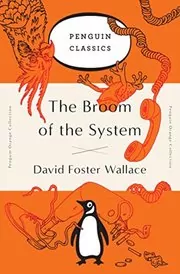
The Broom of the System
by David Foster Wallace
1987
Lenore Stonecipher Beadsman is trying to hold herself together after her great-grandmother vanishes from a nursing home with twenty-five other residents. Wallace turns the mystery into a funny, brainy novel about language, identity, and whether words run our lives.
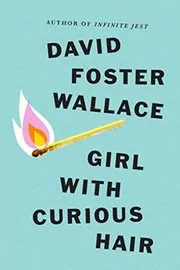
Girl With Curious Hair
by David Foster Wallace
1989
Wallace's first story collection is funny, eerie, and formally restless. It includes warped takes on political figures, television culture, and the title story's collision between punk nihilism and Young Republican confidence.
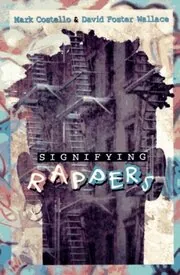
Signifying Rappers
by David Foster Wallace
1990
Written with Mark Costello, this book studies late 1980s rap and hip-hop with equal parts fandom, criticism, and self-awareness. Wallace and Costello look at music, race, language, and pop culture without pretending to stand outside any of it.
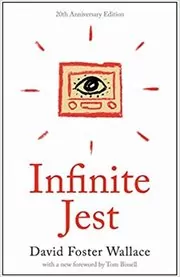
Infinite Jest
by David Foster Wallace
1996
In a near-future North America, a tennis academy, a recovery house, and a film so entertaining it destroys viewers begin to connect. The novel is sprawling, funny, sad, and deeply interested in addiction, loneliness, and what people worship.
Recommended by
4 people Peter Attia recommended this book
Peter Attia
"I have always wanted to read [this book]." - Peter Attia
Peter Attia's recommendation of this book  Mindy Kaling recommended this book
Mindy Kaling
"I totally pretended I’d read it because I wanted [Mike Schur] to think I was cool." - Mindy Kaling
Mindy Kaling's recommendation of this book  Amelia Boone recommended this book
Amelia Boone
"Probably one of my favorite books, but I also read it when I was 21." - Amelia Boone
Amelia Boone's recommendation of this book  Alexandria Ocasio-Cortez recommended this book
Alexandria Ocasio-Cortez
Alexandria Ocasio-Cortez recommended this book on Twitter.
Alexandria Ocasio-Cortez's recommendation of this book
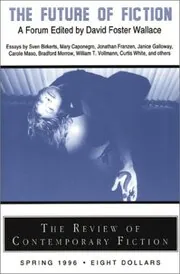
Review of Contemporary Fiction
by David Foster Wallace
1996
This journal issue gathers essays and debate around innovative fiction that resists easy labels and simple realism. With Wallace involved as editor, it offers a compact look at the literary arguments shaping ambitious fiction in the 1990s.
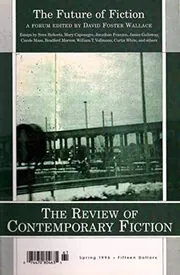
The Future of Fiction
by David Foster Wallace
1996
Edited by Wallace, this forum-sized volume brings together writers and critics asking where serious fiction might go next. It reads like a snapshot of a literary moment, full of argument about form, experimentation, and what novels are for.
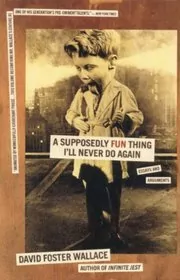
A Supposedly Fun Thing I'll Never Do Again
by David Foster Wallace
1997
These seven essays take on cruise ships, television, tennis, David Lynch, literary theory, and the Illinois State Fair. Wallace reports, digresses, and argues at once, turning ordinary assignments into funny, anxious, very human pieces of nonfiction.

Open City #5: Change or Die
by David Foster Wallace, Mary Gaitkill & Irvine Welsh
1997
The fifth issue of Open City brings together fiction, poetry, and essays by a varied group of late-1990s writers. Its table of contents includes work by David Foster Wallace, Rebecca Wolff, Nick Flynn, and Irvine Welsh, who contributes “The Rosewell Incident.”
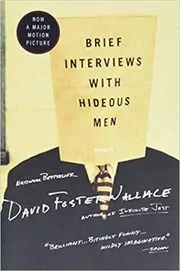
Brief Interviews with Hideous Men
by David Foster Wallace
1999
These stories mix formal tricks, black humor, and uncomfortable intimacy. Wallace sketches damaged relationships, lonely minds, and men talking around their own cruelty, with the title interviews and The Depressed Person among the standouts.
Recommended by
1 person Bill Gates recommended this book
Bill Gates
List of books Bill Gates read in 2019.
Bill Gates's recommendation of this book
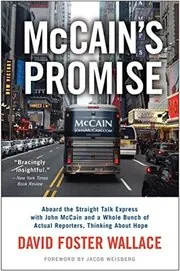
McCain's Promise
by David Foster Wallace
2000
Reporting from John McCain's 2000 campaign bus, Wallace tries to figure out whether the candidate's appeal is genuine or manufactured. The result is political journalism that is funny, suspicious, and surprisingly hopeful about the hunger for something real.
Up, Simba!
by David Foster Wallace
2000
This expanded version of Wallace's McCain campaign piece spends seven days on the trail of the anticandidate and the reporters around him. It is as interested in media performance and voter cynicism as it is in McCain himself.
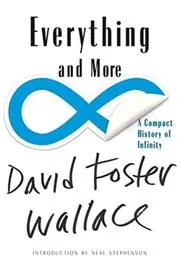
Everything and More
by David Foster Wallace
2003
Wallace traces the history of infinity through mathematics, especially the work of Georg Cantor. It is part intellectual history, part guided tour through hard ideas, written by someone who clearly loved both abstraction and explanation.
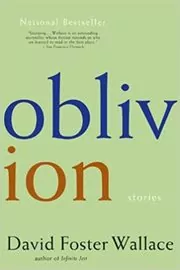
Oblivion
by David Foster Wallace
2004
This seven-story collection turns insomnia, office life, memory, and private dread into unsettling fiction. Wallace moves between eerie realism and outright strangeness, always circling consciousness, isolation, and the stories people tell themselves.
Recommended by
1 person Tavi Gevinson recommended this book
Tavi Gevinson
"[The 'Good Old Neon' story] addresses the inefficiency of language and the unlikelihood of true empathy." - Tavi Gevinson
Tavi Gevinson's recommendation of this book
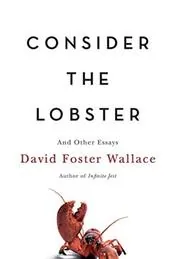
Consider the Lobster and Other Essays
by David Foster Wallace
2005
This essay collection moves from the Maine Lobster Festival and the adult video industry to John McCain's campaign and dictionary wars. Wallace is funny and meticulous, but the real subject is often how people justify what they do.
Recommended by
2 people- Alexandria Ocasio-Cortez recommended this book
Alexandria Ocasio-Cortez
Alexandria Ocasio-Cortez recommended this book on Twitter.
Alexandria Ocasio-Cortez's recommendation of this book  Emma Watson recommended this book
Emma Watson
On the "books read" section of Emma Watson's GoodReads profile.
Emma Watson's recommendation of this book
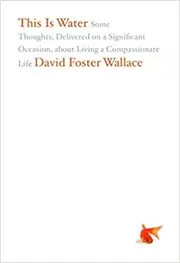
This Is Water
by David Foster Wallace
2009
Wallace's 2005 Kenyon College commencement address asks how to stay awake inside ordinary adult life. Short, clear, and quietly forceful, it argues for attention, choice, and treating other people as fully real.
Recommended by
3 people- Peter Attia recommended this book
Peter Attia
"I’ve listened more than 100 times to the audio [...] and now I’ll add this method of consumption to one of the most important speeches ever given (or at least ever heard by me...)" - Peter Attia
Peter Attia's recommendation of this book  Hugh Jackman recommended this book
Hugh Jackman
"I now gift [this book] very regularly." - Hugh Jackman
Hugh Jackman's recommendation of this book  James Clear recommended this book
James Clear
"[One of] the 10 best nonfiction books of all-time." - James Clear
James Clear's recommendation of this book
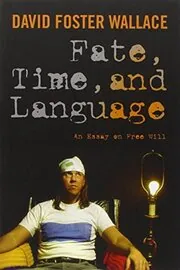
Fate, Time, and Language
by David Foster Wallace
2010
Originally Wallace's Amherst philosophy thesis, this book takes on Richard Taylor's argument for fatalism. It is dense but readable, and it shows how seriously Wallace thought about logic, free will, and the structure of an argument.
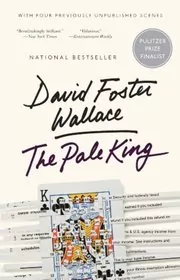
The Pale King
by David Foster Wallace
2011
Set at an IRS center in Peoria, this unfinished final novel follows workers learning how to endure repetition, boredom, and bureaucratic life. Wallace turns tax work into a strange, funny, serious novel about attention, duty, and the search for meaning.
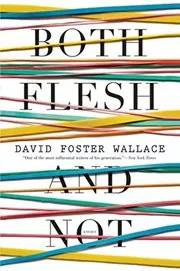
Both Flesh and Not
by David Foster Wallace
2012
This posthumous essay collection ranges from Roger Federer and Borges to grammar, criticism, and the problem of defining the essay itself. It also includes a selection from Wallace's own vocabulary list, which feels exactly right.
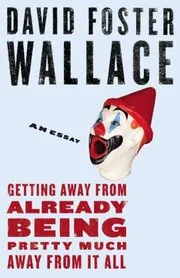
Getting Away from Already Being Pretty Much Away from It All
by David Foster Wallace
2012
In this stand-alone essay, Wallace heads to the Illinois State Fair and finds a whole comic, slightly sad map of Midwestern life. What starts as reporting becomes a sharp piece about spectacle, class, appetite, and belonging.
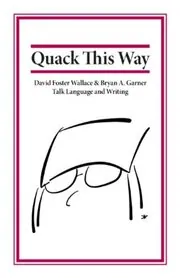
Quack This Way
by David Foster Wallace
2013
Built around Wallace's last long interview with Bryan A. Garner, this book is a lively talk about language, usage, dictionaries, and writing. It also shows the warmth and seriousness of Wallace's long friendship with a fellow word obsessive.
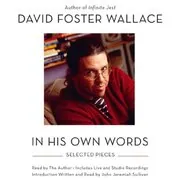
David Foster Wallace
by David Foster Wallace
2014
This interview collection brings together conversations from across Wallace's career, including the last one published before his death. It is one of the clearest ways to hear him think out loud about fiction, fame, boredom, discipline, and American life.
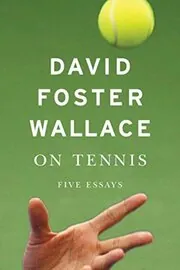
On Tennis
by David Foster Wallace
2014
This shorter collection gathers Wallace's five major essays on tennis, from junior competition in the Midwest to Roger Federer at full brilliance. It is a great entry point for readers who want the sports writing without the larger collected edition.
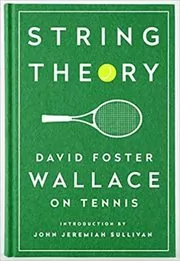
String Theory
by David Foster Wallace
2014
Wallace's five tennis essays, collected in one volume, move from his own Midwestern junior-player days to sharp pieces on Tracy Austin, Michael Joyce, the US Open, and Roger Federer. It is sportswriting full of close attention, awe, and argument.
Recommended by
2 people Ben Shapiro recommended this book
Ben Shapiro
"A fun bathroom book to read. The writing is really great." - Ben Shapiro
Ben Shapiro's recommendation of this book - Bill Gates recommended this book
Bill Gates
"I would say to anyone who likes tennis as much as I do, you have to read [this book]." - Bill Gates
Bill Gates's recommendation of this book

The David Foster Wallace Reader
by David Foster Wallace
2014
This large sampler is built for readers who want Wallace in one place. It brings together fiction, essays, novel excerpts, early work, and even teaching materials, giving a wide view of what he could do on the page.
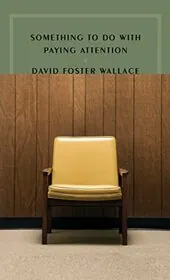
Something to Do with Paying Attention
by David Foster Wallace
2022
A young man drifting through the suburban Midwest finds his life altered by an unexpected encounter with advanced tax law. Drawn from Wallace's late work, this novella turns boredom, authority, and attention into something strangely moving.
Where to start with David Foster Wallace
If you want the big novel first: Infinite Jest
If you want the clearest nonfiction entry point: A Supposedly Fun Thing I'll Never Do Again → Consider the Lobster → This Is Water
If you want short fiction first: Girl With Curious Hair → Brief Interviews with Hideous Men → Oblivion
If you want to start at the beginning: The Broom of the System → Infinite Jest → The Pale King
David Foster Wallace collections, short stories, and related book types
Collections
Non-Fiction
The Last Interview Books
Standalone David Foster Wallace books
Author bio
David Foster Wallace was born in Ithaca, New York, on February 21, 1962, and grew up in Champaign-Urbana, Illinois, in a family of teachers. His father, James Wallace, taught philosophy at the University of Illinois. His mother, Sally Foster Wallace, taught English at Parkland College. He was serious, funny, and very bright, and as a teenager he was also a strong junior tennis player in the Midwest.
He was the kind of kid who liked both language and systems.
At Amherst College, he studied English and philosophy and graduated in 1985. He wrote the work that became The Broom of the System as his senior English thesis, and his philosophy thesis later became Fate, Time, and Language. While still a student, he also published the story The Planet Trillaphon as It Stands in Relation to the Bad Thing, an early sign of how directly depression would enter his work. After Amherst he earned an MFA at the University of Arizona, then briefly tried graduate study in philosophy at Harvard before turning back toward fiction.
Writing did not arrive as a tidy career plan.
It came out of the same mind that loved logic, argument, and the strange pressure of ordinary speech. Readers can feel that mix in Girl With Curious Hair and Brief Interviews with Hideous Men, books full of formal play, bad behavior, sharp comedy, and people trapped inside their own thinking. Even when the setups are odd, the feelings are usually painfully familiar. Across the fiction, certain concerns keep returning: loneliness, self-consciousness, addiction, shame, and the wish to get outside the prison of the self.
Then came Infinite Jest in 1996. Set around a tennis academy, a recovery house, and a culture drowning in entertainment, it made Wallace's name much bigger and helped define how many readers saw him. People still come to it for the size and the jokes, but they stay for its sadder questions about addiction, loneliness, family, and what happens when pleasure becomes the only goal.
His nonfiction matters just as much. In A Supposedly Fun Thing I'll Never Do Again and Consider the Lobster, he writes about cruise ships, state fairs, politics, dictionaries, food, and media with a reporter's eye and a worrier's brain. This Is Water, taken from his 2005 commencement address at Kenyon College, became one of his most widely shared pieces because it says something central to all his work in plain words: pay attention, and try to imagine other people as real.
Another side of him appears in the tennis essays collected in String Theory. He knew the sport from the inside, and he wrote about players like Michael Joyce, Tracy Austin, and Roger Federer with awe, technical care, and humor. Books such as Everything and More, his history of infinity, and Quack This Way, his conversation with Bryan A. Garner about usage and writing, show how broad his interests really were. He cared about grammar, mathematics, sports, and sentences with the same restless seriousness.
Wallace also taught creative writing at Emerson College, Illinois State University, and Pomona College. In 1997 he received a MacArthur Fellowship. He married the artist Karen Green in 2004, and they lived in Claremont, California.
Depression ran through much of his life, and readers often feel its presence in both the darkness and the tenderness of his work. He died in 2008 at age forty-six. His unfinished final novel, The Pale King, was published in 2011, and it feels like a fitting late book: quieter in some ways, still funny, and deeply interested in boredom, work, duty, and the hard job of staying awake inside ordinary life.






Edited by
Software engineer whose passion for tracking book recommendations from podcasts inspired the creation of MRB.
Lead investor at 3one4 Capital whose startup expertise and love for books helped shape MRB and its growth.
Comments
Did we miss something? Have feedback?
Help us improve this page by sharing your thoughts