
Daniel P. Bolger Books in Order
Explore Daniel P. Bolger books in order, with short summaries and a guide to the series and standalone titles to help you choose where to start reading.
Last updated:
As an Amazon Associate, we earn from qualifying purchases (at no extra cost to you).
Daniel P. Bolger books in publication order
9 books
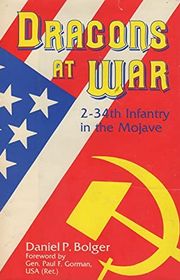
Dragons at War
by Daniel P. Bolger
1986
Bolger follows an infantry battalion through simulated combat at the Army’s National Training Center in the Mojave Desert. The soldiers’ experience reveals how demanding exercises test preparation, leadership and the ability to function under battlefield pressure.
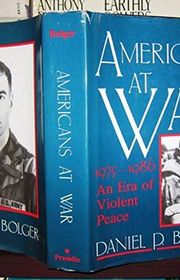
Americans at War, 1975-1986
by Daniel P. Bolger
1988
Bolger examines American military operations after Vietnam, tracing the emergence of limited engagements. His account considers tactics, planning and leadership alongside the political constraints that shaped how the United States used force during an uneasy period of peace.
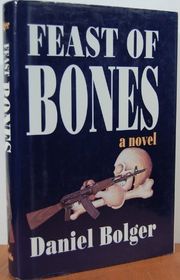
Feast of Bones
by Daniel P. Bolger
1990
Soviet paratrooper Dimitriy Donskov prepares to lead a reconnaissance mission deep into Afghanistan. Protecting his men requires confronting determined mujahidin fighters while navigating KGB treachery that threatens to make the dangers within his own side equally deadly.
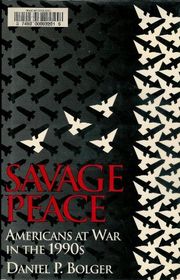
Savage Peace
by Daniel P. Bolger
1995
Bolger examines American peacekeeping missions after the Cold War, when hopes of stability met conflict in Somalia, Haiti and the former Yugoslavia. He explores the political and military pressures behind intervention and the costs of a superpower’s responsibilities.
The Battle for Hunger Hill
by Daniel P. Bolger
1997
An infantry battalion confronts realistic combat exercises at the Joint Readiness Training Center. Bolger examines how the unit prepares for war through demanding simulated battles, where decisions, teamwork and leadership are tested before troops face an actual enemy.
Death Ground
by Daniel P. Bolger
1999
Bolger traces the American infantry’s evolution from mass citizen armies to specialized professional forces. Case studies examine preparation and combat performance across different units, while questioning whether a smaller, highly trained infantry can endure the demands of prolonged war.
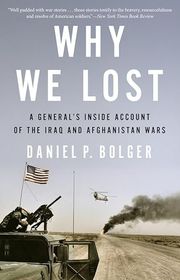
Why We Lost
by Daniel P. Bolger
2014
Drawing on his command experience in Iraq and Afghanistan, Bolger examines the decisions behind America’s wars after September 11. Battlefield accounts and high-level planning reveal failures of intelligence and understanding that, he argues, undermined the military’s efforts.
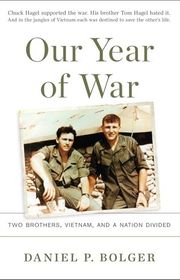
Our Year of War
by Daniel P. Bolger
2017
Chuck and Tom Hagel serve together in Vietnam during the upheaval of 1968, each saving the other under fire. Bolger follows their journey home, where shared combat experience leaves the brothers with sharply different views of the war.
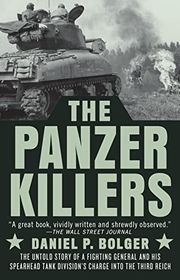
The Panzer Killers
by Daniel P. Bolger
2021
Bolger follows General Maurice Rose and the 3rd Armored Division from Normandy into Germany. Rose’s tactics and habit of leading from the front shape an account of tank warfare, command decisions and the struggle to break German defenses.
Where to start with Daniel P. Bolger
For Iraq and Afghanistan: Why We Lost
For a family’s Vietnam experience: Our Year of War
For World War II armour: The Panzer Killers
For military training: Dragons at War → The Battle for Hunger Hill
For a military novel: Feast of Bones
Standalone Daniel P. Bolger books
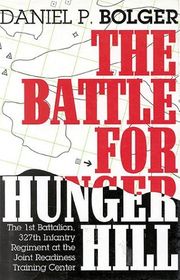
by Daniel P. Bolger
1997The 1st Battalion, 327th Infantry Regiment at the Joint Readiness Training Center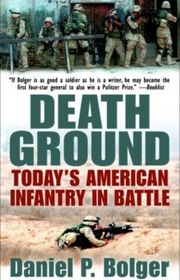
by Daniel P. Bolger
2021The Untold Story of a Fighting General and His Spearhead Tank Division’s Charge into the Third Reich
Author bio
Daniel P. Bolger writes military history from the overlapping perspectives of a professional soldier and a trained historian. He served thirty-five years in the United States Army, commanded in combat in Iraq and Afghanistan, and retired in 2013 as a lieutenant general. His books examine what armies ask of soldiers, how commanders make decisions and why success in a battle may fail to produce a successful war.
Bolger received his commission and bachelor's degree from The Citadel. He went on to earn a master's degree and doctorate in history at the University of Chicago. That academic work sits beside his operational experience rather than replacing it: the books are concerned with both the immediate demands of fighting and the larger assumptions that shape a campaign.
Training is part of the story before combat begins.
Dragons at War examines infantry training in the Mojave, while The Battle for Hunger Hill follows a battalion at the Joint Readiness Training Center. Such subjects bring attention to preparation, leadership and the gap between a plan and what people can actually carry out. They offer a different starting point from books focused on famous wartime victories, because the uncertainties appear while soldiers are still preparing for them.
Why We Lost turns to the wars in Iraq and Afghanistan. Bolger argues that American forces were drawn into prolonged counterinsurgency campaigns for which their strengths did not provide an adequate strategy. His account directs criticism towards senior military leadership, including himself. The distinction between the courage of individual service members and the decisions made above them is central to the book's argument.
Readers interested in a more tightly focused human story can turn to Our Year of War. It follows brothers Chuck and Tom Hagel through their service in Vietnam and the disagreements that followed them home. Shared danger does not lead automatically to a shared interpretation of the conflict. The brothers' relationship gives Bolger a way to connect fighting on the ground with the divisions that war created beyond it.
His subjects extend to an earlier generation of commanders.
The Panzer Killers follows Major General Maurice Rose and the 3rd Armored Division through the campaign from Normandy into Germany. It considers command through movement, tactics and the pressure of leading from the front. The emphasis on Rose and one division lets the account keep a particular fighting organisation in view while describing a much larger advance.
Bolger has also used fiction to approach military life. Feast of Bones centres on Soviet officer Dimitri Donskov, whose experience carries him from training into operations abroad. Looking through a Soviet soldier's perspective changes the position from which an American reader encounters the Cold War. The novel belongs alongside Bolger's nonfiction as another form for examining how a military institution trains people to act and understand their purpose.
Bolger has taught history at North Carolina State University in Raleigh. His books can be chosen by subject rather than read as a sequence: Why We Lost for his critique of recent American campaigns, Our Year of War for brothers divided by Vietnam, or The Panzer Killers for armoured warfare and command. Across them, the practical experience of soldiers remains connected to the responsibilities of those deciding where and how they fight.









Edited by
Software engineer whose passion for tracking book recommendations from podcasts inspired the creation of MRB.
Lead investor at 3one4 Capital whose startup expertise and love for books helped shape MRB and its growth.
Comments
Spotted a missing book, a wrong order or a mistake? Tell us and we'll fix this page.
We're a reading guide, not the author or publisher, so we can't send books or pass on messages.