
Daniel Goleman Books in Order
Find Daniel Goleman books in order, with short summaries and guides to the author's series that help you choose where to start and what to read next.
Last updated: 39 new books added
As an Amazon Associate, we earn from qualifying purchases (at no extra cost to you).
Daniel Goleman books in publication order
41 books
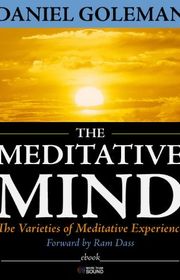
The Meditative Mind
by Daniel Goleman
1977
Goleman surveys meditation as understood and practiced across major spiritual traditions. Written for beginners as well as experienced practitioners, the book compares approaches to meditative training and explores the states of consciousness and kinds of experience described within those traditions.

Consciousness, the Brain, States of Awareness, and Alternate Realities
by Daniel Goleman
1979
This edited collection brings together readings on consciousness from anthropology, philosophy, and several branches of psychology. Its contributors examine theories of awareness and research into different mental states, offering contrasting disciplinary perspectives on how human experience is understood and investigated.
The Pleasures of Sociology
by Daniel Goleman
1980

What Psychology Knows That Everyone Should
by Daniel Goleman
1981
Goleman and Jonathan Freedman introduce psychological findings about everyday human experience, including perception, aging, sleep, sexuality, emotion, and intelligence. The book presents research and lesser-known observations for general readers seeking to connect psychological investigation with familiar aspects of their own lives.

Essential Psychotherapies
by Daniel Goleman
1982
Edited by Goleman and Kathleen Riordan Speeth, this collection presents influential approaches to psychological treatment through the work of major therapists. Contributions associated with figures including Freud, Rogers, Horney, and Reich examine competing understandings of mental illness and the practice of psychotherapy.

Introductory Psychology
by Daniel Goleman
1982
An introduction to psychology surveys the scientific study of thought and behavior. Its coverage moves through learning, perception, emotion and development before considering psychological disorders and social influences, connecting individual mental processes with the wider study of human experience.

Vital Lies, Simple Truths
by Daniel Goleman
1985
Goleman examines how individuals and groups avoid painful knowledge through self-deception. Drawing on brain research and social behavior, he traces the effects of selective awareness on relationships, everyday decisions, and shared assumptions, asking when psychological protection becomes a source of harm or limitation.

The Relaxed Body Book
by Daniel Goleman
1986
This illustrated guide presents stretches, massage, and relaxation exercises drawn from several bodywork traditions. It addresses tension in areas including the jaw, neck, back, and feet, and considers stress during everyday activities such as working and sleeping.

Psychology Updates
by Daniel Goleman
1991

The Consumer's Guide to Psychotherapy
by Daniel Goleman
1992
This guide explains considerations involved in seeking psychotherapy, from recognizing when help may be needed to choosing and paying a therapist. It also discusses professional ethics, different psychological difficulties, children's behavioral concerns, and psychiatric medication as part of understanding the available services.

The Creative Spirit
by Daniel Goleman
1992
Goleman, Paul Kaufman, and Michael Ray explore creativity as a human capacity that can be understood and encouraged. The book considers flow, innovative thinkers, and ways of developing creative potential, connecting accounts of inventive work with approaches readers can apply to their own activities.

Mind/Body Medicine
by Daniel Goleman
1993
Edited by Goleman and Joel Gurin, this volume examines relationships between psychological experience and physical health. Contributions discuss stress, social support, and approaches such as meditation and biofeedback, presenting research-oriented information about how mental and bodily processes interact within medical care.
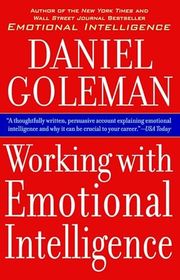
Working with Emotional Intelligence
by Daniel Goleman
1998
Daniel Goleman extends his discussion of emotional intelligence into the workplace. He examines emotional competencies, their proposed relationship with professional performance, and ways individuals and organizations can develop abilities such as self-awareness, motivation, empathy, and social skill.

Destructive Emotions
by Daniel Goleman
2000
Goleman reports on conversations between the Dalai Lama, scientists, and philosophers about anger, craving, fear, and other destructive emotions. Commentary connects Buddhist accounts of mental training with psychological and neurological research, considering emotional regulation, compassion, and the possibilities of education grounded in self-awareness.
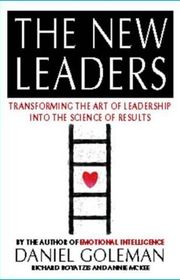
The New Leaders
by Daniel Goleman
2002
Goleman and his collaborators argue that effective leadership depends on emotional intelligence and the ability to build productive relationships. The book connects individual behavior with the emotional climate of teams and organizations, offering a framework for developing leadership capacities and putting them into practice.
Social Intelligence
by Daniel Goleman
2006
Goleman synthesizes research on the social brain to explore how relationships shape emotions, behavior, and well-being. Everyday encounters, empathy, attraction, cooperation, and harmful interpersonal patterns become starting points for understanding the connections between human biology and the ways people respond to one another.
What Makes a Leader
by Daniel Goleman
2006
This collection gathers Goleman's articles on emotional intelligence from Harvard Business Review and other business publications, alongside explanatory commentary. The pieces trace his developing ideas about leadership, relationships, organizational performance, and the relevance of neuroscience to the practical challenges of managing people.
Ecological Intelligence
by Daniel Goleman
2009
Goleman examines environmental consequences hidden throughout the production, distribution, use, and disposal of consumer goods. He argues that better information about these effects could help shoppers make informed choices and encourage businesses to compete through greater transparency and more responsible production.
The Brain and Emotional Intelligence
by Daniel Goleman
2011
Goleman introduces research on the brain systems underlying emotional intelligence, including empathy, motivation, creativity, ethical judgment, and social connection. The book links these findings with everyday applications in coaching, leadership, relationships, and efforts to improve attention and emotional skills.

Ecoliterate
by Daniel Goleman
2012
Stories of educators, students, and activists demonstrate approaches to integrating emotional, social, and ecological learning. Goleman, Lisa Bennett, and Zenobia Barlow connect environmental challenges with classroom practice, presenting core principles and professional-development guidance for teaching sustainability through engagement with communities and living systems.

Socially Intelligent Computing
by Daniel Goleman
2012
In dialogue with Goleman, internet theorist Clay Shirky explores why online groups succeed or fail at collaboration. The book considers emotional connection, fragmentation, polarization, and decision-making, offering models for strengthening relationships and improving the effectiveness of social and professional networks.

Working with Mindfulness
by Daniel Goleman
2013
Goleman joins Mirabai Bush to discuss mindfulness, workplace stress, and choosing relaxation practices suited to different people and circumstances. The conversation connects practical exercises with the demands of working life, exploring ways to create periods of recovery amid persistent pressures.
The Triple Focus
by Daniel Goleman
2014
Goleman and Peter Senge propose education that develops attention to oneself, other people, and the systems connecting human activity. Examples from schools illustrate how these complementary capacities can support learning in a distracted, interconnected world and suggest approaches for introducing them into educational practice.

A Force for Good
by Daniel Goleman
2015
Goleman presents the Dalai Lama's vision of compassion translated into practical social action. Scientific findings and stories of people applying these principles connect inner motivation with efforts to address prejudice, inequality, conflict, education, economic systems, and environmental responsibility.
Achievement Orientation
by Daniel Goleman
2017
Daniel Goleman and colleagues examine how leaders pursue excellence without losing sight of their organizations and relationships. Research and practical perspectives explore the balance between ambition, feedback and collective needs, showing how achievement depends on more than individual drive or external rewards.
Adaptability
by Daniel Goleman
2017
Daniel Goleman and colleagues explore adaptability as the capacity to respond flexibly to change, uncertainty and competing demands. Perspectives from neuroscience, psychology and team development examine how leaders can adjust their approach while maintaining effectiveness when familiar strategies no longer fit.
Coach and Mentor
by Daniel Goleman
2017
Daniel Goleman and colleagues examine the leadership skills involved in supporting another person’s long-term growth. Examples and practical reflections address feedback, effective coaching and sustained behavioral change, considering how mentoring can strengthen development in both professional relationships and wider organizational life.
Conflict Management
by Daniel Goleman
2017
Daniel Goleman and colleagues explore ways leaders can address disagreement without damaging relationships. Combining emotional intelligence, mindfulness and practical examples, they examine how understanding different perspectives and bringing tensions into the open can help people find workable solutions and preserve shared commitments.
Emotional Self-Awareness
by Daniel Goleman
2017
Daniel Goleman and colleagues introduce emotional self-awareness as a foundation for effective leadership. They examine the relationship between bodily sensations, emotions and behavior, offering perspectives on recognizing internal reactions and understanding how those responses influence individuals, teams and the people around them.
Emotional Self-Control
by Daniel Goleman
2017
Daniel Goleman and colleagues examine how leaders remain effective when strong emotions and stressful circumstances threaten their judgment. Combining neuroscience, team perspectives and practical approaches, they distinguish recognizing and managing reactions from suppressing feelings, exploring ways to sustain calm and deliberate action.
Empathy
by Daniel Goleman
2017
Daniel Goleman and colleagues explore empathy as the ability to understand others’ emotions and perspectives. Research and leadership examples examine attentive listening, communication and relationship building, presenting empathy as a skill that can be developed within individuals and teams.
Influence
by Daniel Goleman
2017
Daniel Goleman and colleagues examine how leaders build support for ideas through awareness, collaboration and understanding other people. Examples and practical discussion explore influence within teams and organizations, emphasizing shared purpose and engaged participation in the work of moving from ideas to action.
Inspirational Leadership
by Daniel Goleman
2017
This primer examines inspirational leadership as the ability to connect people with shared purpose and encourage their best work. Goleman and colleagues combine research, coaching perspectives, and examples to explain the competency and suggest ways to develop it in personal and organizational settings.
Organizational Awareness
by Daniel Goleman
2017
Goleman and his collaborators examine how leaders recognize informal networks, emotional currents, and power relationships within organizations. Drawing on psychology, team research, and systems thinking, this primer explains organizational awareness as a learnable skill and offers approaches for developing it in professional settings.
Positive Outlook
by Daniel Goleman
2017
This primer explores positive outlook as a component of emotional and social intelligence in leadership. Goleman and colleagues connect resilience, opportunity, and sustained focus with research on the brain and group dynamics, then offer practical strategies for strengthening the competency beyond simple encouragement to remain optimistic.
Teamwork
by Daniel Goleman
2017
Goleman and colleagues explore teamwork as a learnable emotional and social intelligence competency. The primer examines shared goals, communication, responsibility, and group identity, drawing on leadership and systems perspectives to offer approaches for becoming a more effective team member or leader.

Ecology, Ethics, and Interdependence
by Daniel Goleman
2018
Edited by John D. Dunne and Goleman, these conversations bring the Dalai Lama together with scientists, ethicists, and activists to examine environmental crisis. Participants consider ecological interdependence, competing human and nonhuman needs, practical change, and sustaining commitment when progress is difficult.
The Emotionally Intelligent Leader
by Daniel Goleman
2019
Three Harvard Business Review articles connect emotional intelligence with effective leadership. Goleman examines self-awareness and social skills, the different forms of attention leaders need, and six leadership styles, showing how interpersonal capacities and flexible behavior influence teams and organizational results.
Why We Meditate
by Daniel Goleman
2022
Goleman and Tsoknyi Rinpoche combine explanations of meditation with practical exercises addressing attention, compassion, worry, and difficult thought patterns. The guide brings scientific and contemplative perspectives together to introduce seven practices intended to help readers develop a steadier relationship with their own minds.
Optimal
by Daniel Goleman
2024
Goleman and Cary Cherniss examine how emotional intelligence can support consistent, satisfying performance without relying on rare peak experiences. Drawing on research into productive days, they offer practical approaches for individuals and leaders seeking sustainable engagement, effective work, and organizational conditions that reduce burnout.

Focus
by Daniel Goleman
Daniel Goleman explores attention as a foundation for performance and effective leadership. Distinguishing focus on oneself, other people, and the wider world, he examines how these forms of awareness shape decisions, relationships, and responses to complex systems.
Daniel Goleman sub-series and character series
Building Blocks of Emotional Intelligence books in order
Explore this seriesStandalone Daniel Goleman books


















Edited by
Software engineer whose passion for tracking book recommendations from podcasts inspired the creation of MRB.
Lead investor at 3one4 Capital whose startup expertise and love for books helped shape MRB and its growth.
Comments
Spotted a missing book, a wrong order or a mistake? Tell us and we'll fix this page.
We're a reading guide, not the author or publisher, so we can't send books or pass on messages.